

Key Takeaways
- Most car batteries last 3-5 years; extreme temperatures and short trips accelerate decline.
- Parasitic drain from accessories or faulty components can quietly kill a battery overnight.
- A load test is more reliable than a simple voltage check for assessing true battery health.
- Slow cranking, dashboard dimming, and repeated jump-starts are key warning signs to act on.
- Replacing a battery proactively costs far less than an emergency roadside situation.
How Car Batteries Work (and Why They Fail)
Most passenger vehicles use a 12-volt lead-acid battery. Its job is to deliver a powerful burst of electricity to the starter motor, which turns the engine over. Once running, the alternator takes over, powering the vehicle's electrical systems and recharging the battery simultaneously.
Inside the battery, chemical reactions between lead plates and sulfuric acid electrolyte produce electricity. Over time, those plates corrode and the electrolyte degrades. Heat accelerates the breakdown of internal components; cold reduces the battery's ability to deliver power on demand. Neither extreme is gentle - which is why batteries in climates with both hot summers and cold winters often sit at the shorter end of the lifespan range.
“The battery is the heart of a vehicle's electrical system. When it weakens, every connected system - from the starter to the fuel pump to the safety electronics - is affected.”
— Robert Sinclair Jr., Senior Manager of Media Relations, AAA Northeast
Common Causes of Battery Drain
Understanding what drains a battery helps you prevent premature failure. The causes fall into two categories: acute drain (a single event) and chronic drain (gradual depletion over time).
- Lights left on: Interior dome lights or headlights left on while the engine is off are among the most common causes of a dead battery found in the morning.
- Parasitic drain: All modern vehicles draw a small amount of current even when switched off - for the clock, alarm, and memory functions. A healthy system draws under 50 milliamps. A faulty relay, a malfunctioning module, or an aftermarket accessory wired incorrectly can push this into hundreds of milliamps, silently depleting the battery over days.
- Infrequent use: A battery that sits without being recharged will self-discharge. Vehicles parked for weeks at a time are particularly vulnerable.
- Faulty charging system: If the alternator is not producing sufficient voltage, the battery runs down during normal driving. This is often misdiagnosed as a battery problem when the alternator is the real culprit.
Short Trips Are Harder on Batteries Than You Think
Trips under 10-15 minutes often do not give the alternator enough time to fully recharge what the starter motor used. Drivers who take many short daily trips - especially in cold climates - tend to see batteries fail well before the five-year mark. If this describes your routine, more frequent battery checks are worthwhile.
Warning Signs Your Battery Is Declining
Batteries rarely fail without warning. Recognizing the early signs gives you time to address the issue before it becomes a roadside emergency.
- Slow or labored cranking: If the engine turns over noticeably more slowly than usual - especially on a cold morning - the battery is struggling to deliver its rated power.
- Dimming headlights or dashboard: Lights that appear dimmer than normal, particularly at idle, suggest the battery or alternator is not maintaining adequate voltage.
- Frequent jump-starts needed: Needing a jump-start once after leaving lights on is normal. Needing one repeatedly is a clear warning sign.
- Battery warning light: This light indicates the charging system - which includes the battery and alternator - is outside normal operating parameters. Do not ignore it.
- Swollen battery case: Excessive heat can cause the battery casing to bulge. A visibly swollen battery should be replaced promptly and handled with care.
How to Test a Car Battery
Two common methods are used to assess battery condition:
Voltage Test
A fully charged battery at rest (engine off for at least two hours) should read 12.6 volts or above on a digital multimeter. A reading of 12.4 V indicates a partially discharged battery; below 12.0 V suggests significant discharge or a damaged battery. This test is easy but limited - a battery can pass a voltage test and still fail under load.
Load Test
A load tester applies a simulated electrical load to the battery and measures how well it holds voltage during that stress. This is a far more accurate indicator of real-world performance. Most auto parts retailers offer this test at no charge, and many shops include it in routine inspections. If a battery drops sharply in voltage during a load test, it is near the end of its service life even if it appears fine at rest.
AGM Batteries Behave Differently
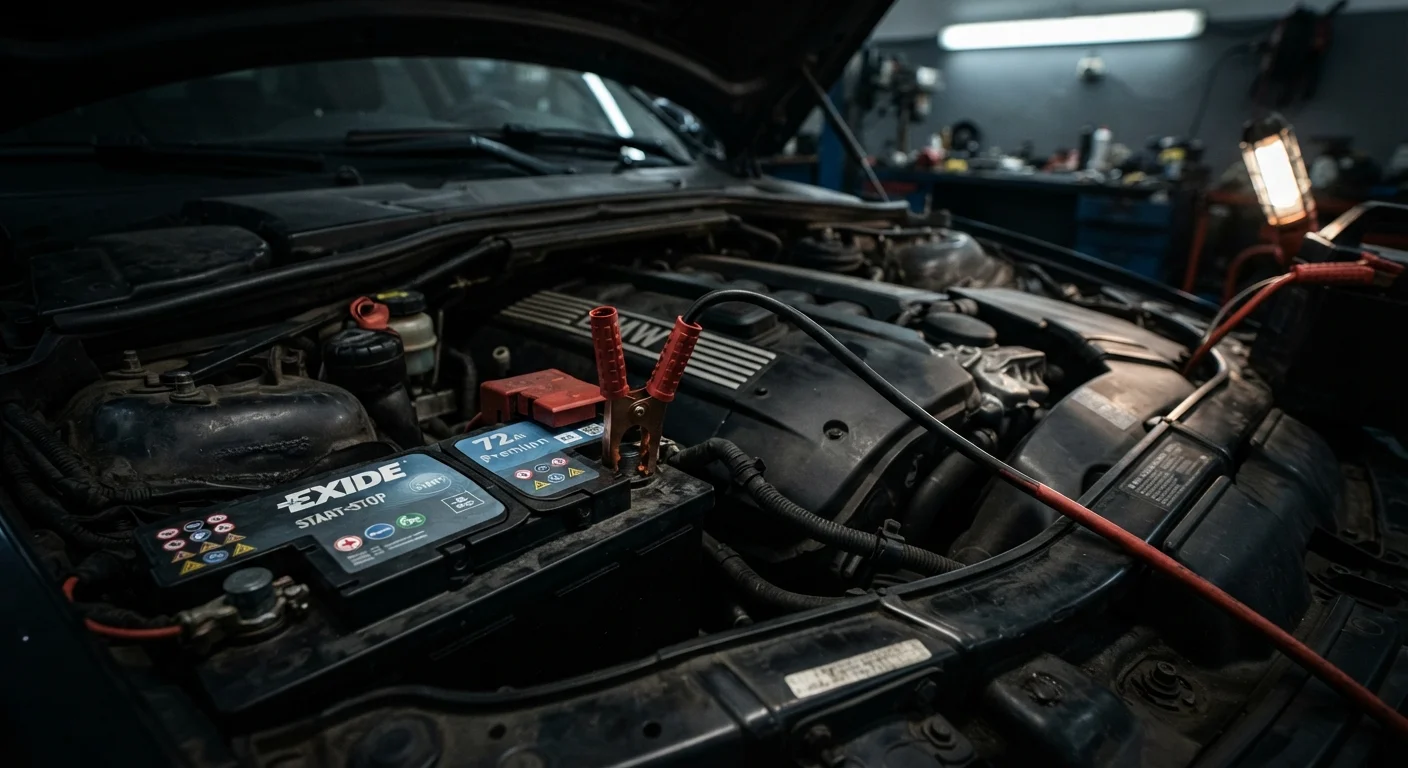
Absorbent Glass Mat (AGM) batteries, common in newer vehicles with start-stop systems, are more tolerant of deep discharge and typically last longer than standard flooded lead-acid batteries. However, they require a compatible charger - using a standard charger can damage them. Check your owner's manual to confirm which battery type your vehicle uses before testing or charging.
Before any long road trip, have your battery load-tested at an auto parts store or shop - most do it free. A battery reading fine at rest can still fail under the strain of starting on a cold highway morning.
Load testing stresses the battery under simulated starting conditions, revealing weaknesses that a static voltage reading misses entirely.
If your vehicle sits unused for more than two weeks at a time, consider connecting a trickle charger or battery maintainer to keep the charge from dropping into damaging ranges.
Prolonged discharge below 12.0 volts causes sulfation - a buildup of lead sulfate crystals on the plates - which permanently reduces capacity.
When to Replace Your Battery
No single factor determines the right replacement interval - age, climate, driving habits, and test results all matter. As a practical framework:
- Under 3 years old, passing load test: No immediate action needed; continue routine monitoring.
- 3-5 years old: Have the battery load-tested at least once a year. Many shops do this during oil change visits.
- Over 5 years old: Consider proactive replacement, even if the battery appears to be functioning. The risk of unexpected failure rises considerably after this point.
- Any age, failing a load test: Replace without delay.
If you are weighing the broader financial picture of your vehicle, it helps to think about battery replacement as routine maintenance - part of the cost of keeping any car reliable. For a deeper look at how maintenance costs factor into long-term ownership decisions, see the financial reality of keeping a car long-term.
Never Ignore Repeated Jump-Start Needs
If your car needs a jump-start more than once in a short period, that is a strong signal the battery - or the charging system - has a serious problem. Continuing to jump-start without investigation risks being stranded at an unsafe location. Have the battery and alternator professionally tested promptly.
Extending Battery Life: Practical Habits
While no battery lasts forever, consistent habits meaningfully extend service life.
3-5 years
Typical car battery lifespan
According to AAA, most lead-acid car batteries require replacement within three to five years under normal driving conditions.
1 in 5
Vehicles with weak or failing batteries
AAA vehicle battery testing data has found that roughly one in five cars inspected had a battery in poor or marginal condition.
~33%
Battery capacity lost at 0°F vs. 80°F
The Battery Council International notes that cold temperatures can reduce a lead-acid battery's available power by roughly a third.
- Drive regularly and long enough: Regular drives of 20 minutes or more allow the alternator to maintain a full charge. Short errand-only driving is genuinely harder on batteries.
- Minimize accessory use at idle: Running the heater, stereo, or phone charger for extended periods with the engine off draws down the battery without the alternator to compensate.
- Keep terminals clean and tight: Corroded or loose terminals increase resistance and reduce charging efficiency.
- Store vehicles correctly: If a vehicle will sit unused for more than a few weeks, disconnect the battery or connect a quality battery maintainer to prevent deep discharge.
- Park in a garage when possible: Shielding a battery from extreme cold or heat extends its effective lifespan.
Keep Battery Terminals Clean
White or bluish crust around battery terminals is corrosion and it increases electrical resistance, making your battery work harder. A paste of baking soda and water, applied with an old toothbrush and rinsed off, clears light corrosion safely. Always disconnect the negative terminal first - and if you are unsure, have a qualified mechanic handle it.
It is worth noting that battery management principles have parallels across technologies. If you are curious about how similar degradation dynamics play out in consumer electronics, why smartphone batteries lose capacity over time covers that topic in depth.
AAA Battery Testing & Replacement Service
AAA offers mobile battery testing and replacement. Their published guides on battery maintenance are a reliable reference for understanding testing standards.
Battery Council International (BCI) Resources
The BCI publishes educational materials on battery types, ratings, and safe handling practices - useful for understanding specifications in your owner's manual.
Vehicle Owner's Manual
Your manufacturer's owner's manual specifies the correct battery group size, cold cranking amps rating, and type required - always the first reference before any replacement.