

Key Takeaways
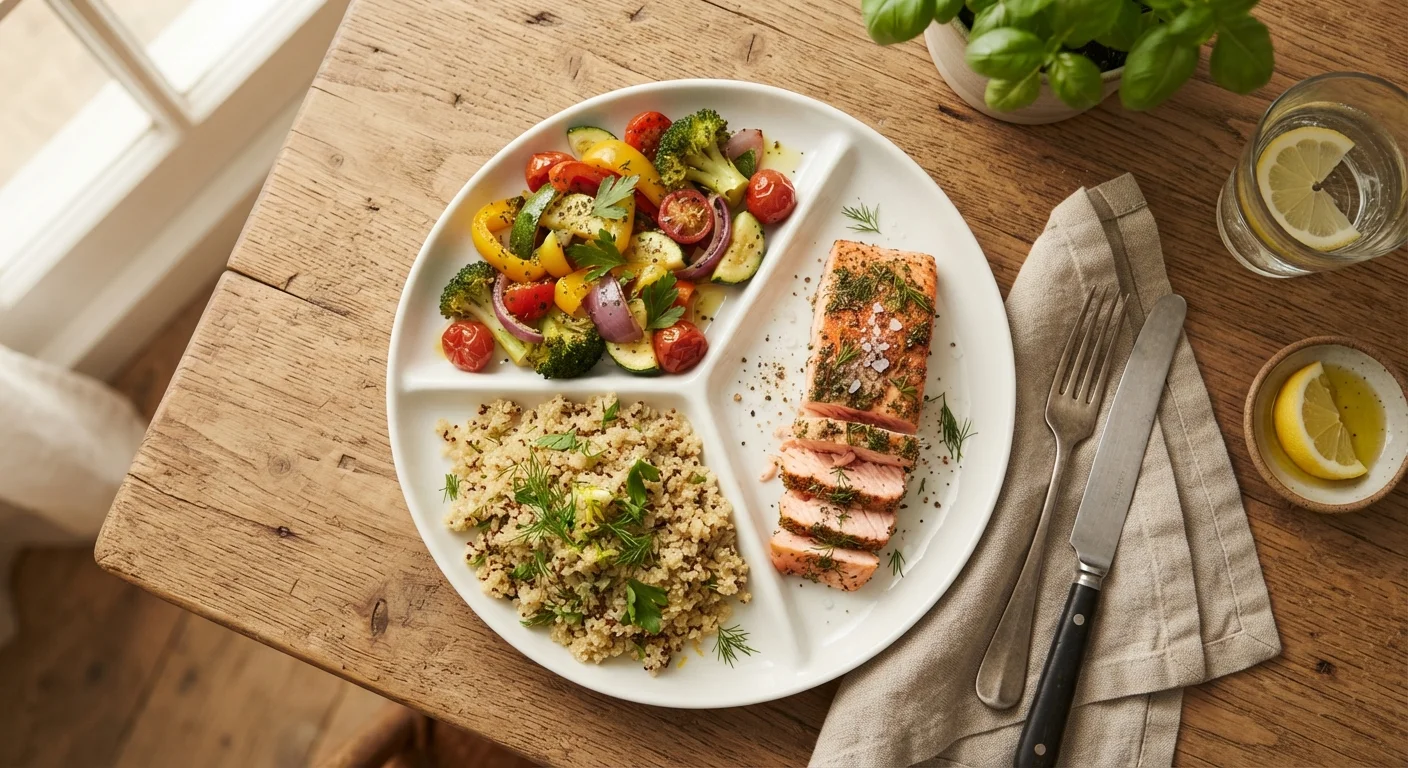
- Half your plate should be vegetables or fruit at most meals, using visual cues instead of measurements.
- A quarter of the plate goes to whole grains or starchy foods; the final quarter to a protein source.
- Healthy fats belong at every meal but in smaller amounts - think a thumb-sized portion.
- Calorie counting is not the only way to manage intake; plate proportions work well for most people.
- Consistent plate-building habits over time matter more than perfection at any single meal.
What you will need
Why Plate Proportions Beat Calorie Math for Most People
Counting every calorie can be a useful tool for some, but for many people it becomes tedious, error-prone, or anxiety-inducing. Research in behavioral nutrition consistently shows that sustainability is the biggest predictor of long-term dietary success - and rigid tracking is hard to sustain. For a deeper look at where calorie-counting works and where it falls short, see our article on the real limits of calorie math.
Plate-based frameworks offer a practical alternative. By dividing your plate into rough visual zones - rather than weighing grams or logging numbers - you create nutritional structure without the mental overhead. The approach is backed by dietary guidelines used by public health authorities and is flexible enough to apply at home, at a restaurant, or when cooking for a family. If you're new to thinking about food in structured terms at all, our nutrition fundamentals guide is a good starting point.
Visual Cues Work Better Than You'd Expect
Studies on portion perception show that people are reasonably accurate at estimating rough proportions when given a clear visual anchor - like a divided plate. You don't need to be exact. Being in the right ballpark consistently is what produces results over time, not precision at any individual meal.
What You'll Need Before You Start
No special equipment is required, but a few things will make the habit easier to build:
What you will need
Standard dinner plate (9-10 inches)
Provides a consistent visual frame for dividing portions - oversized plates skew perception.
Measuring cups (for learning phase only)
Useful in the first few days to calibrate what a quarter-plate portion actually looks like before relying entirely on visual cues.
Variety of vegetables (fresh, frozen, or canned)
Fills half the plate and provides the fiber, micronutrients, and volume that anchor the method.
Step-by-Step: How to Build Your Balanced Plate
Follow these steps each time you plate a meal. With practice, the proportions become second nature - you'll stop thinking in steps and start seeing it automatically.
Choose an appropriately sized plate
Start with a standard dinner plate - roughly 9 to 10 inches in diameter. Oversized plates (12 inches or more) make portions look smaller than they are, which can lead to unconsciously serving more food. A normal-sized plate gives your visual proportions an accurate frame of reference.
Fill half the plate with vegetables or fruit
The largest section of your plate should be non-starchy vegetables - leafy greens, broccoli, peppers, tomatoes, cucumbers, carrots, or similar. These foods provide fiber, vitamins, minerals, and water content that support fullness and overall health. Fruit can fill part of this half, particularly at breakfast or lighter meals.
- Aim for variety in color across the week - different pigments reflect different beneficial plant compounds.
- Cooked and raw vegetables both count.
- Corn, peas, and potatoes are starchy - they belong in the grain or starch quarter instead.
Devote one quarter to whole grains or starchy foods
One quarter of your plate should contain an energy-providing carbohydrate source. Whole grain options - brown rice, quinoa, oats, whole wheat bread or pasta, farro - retain more fiber and nutrients than their refined counterparts. Starchy vegetables like potatoes, sweet potatoes, corn, and legumes also fit here.
A reasonable visual portion for this section is roughly the size of a cupped hand or a standard scoop.
Fill the remaining quarter with a protein source
The final quarter of the plate is for protein: lean poultry, fish, eggs, tofu, tempeh, legumes (which also count as a starch), or lean cuts of meat. Protein supports muscle maintenance and contributes significantly to satiety - meaning you stay full longer after eating.
- A palm-sized portion is a reliable visual guide for most protein sources.
- Plant-based proteins like lentils and chickpeas pull double duty, contributing both protein and complex carbohydrates.
Add a small amount of healthy fat
Fat is not a plate section - it's an addition. Include a modest amount of a healthy fat source: a drizzle of olive oil, a few slices of avocado, a small handful of nuts or seeds, or a serving of a nut-based dressing. Fat improves flavor, helps the body absorb fat-soluble vitamins (A, D, E, and K), and supports satiety.
A thumb-sized portion is a useful visual reference - roughly one teaspoon to one tablespoon of an oil or spread.
Choose a beverage that supports the meal
What you drink alongside a meal affects overall intake. Water is the default best choice. Unsweetened beverages - plain coffee or tea, sparkling water - are good options. Sugary drinks, juice, and alcohol add calories without contributing meaningful nutrition and can undermine the balance you've built on the plate.
For guidance on reading packaged food labels - useful when ingredients aren't obvious - see our article on decoding nutrition facts labels.
Making the Habit Stick
The plate method works best when your kitchen environment supports it. A well-stocked pantry filled with versatile staples - legumes, whole grains, canned fish, and a variety of vegetables - means you can build a balanced plate even on a busy weeknight. Our pantry stocking guide offers a practical checklist to get there.
Don't expect every meal to look perfect. Lunch at your desk, a meal out with friends, or a simple breakfast of yogurt and fruit won't always map neatly onto a divided plate - and that's fine. The goal is a general pattern across your week, not flawless execution at every sitting. For a deeper dive into the proportions and food group principles behind this approach, see balanced plate proportions explained.
The Plate Method Has Limits for Some Needs
This framework is well-suited for most generally healthy adults. However, people managing chronic conditions such as diabetes, kidney disease, or cardiovascular disease may need to adjust proportions significantly based on individualized medical guidance. If you have a diagnosed condition or specific nutritional concerns, work with a registered dietitian rather than relying solely on general plate models.
This article is for general informational and educational purposes only and is not a substitute for personalized nutrition or medical advice. Consult a qualified healthcare professional or registered dietitian for guidance specific to your health needs.