

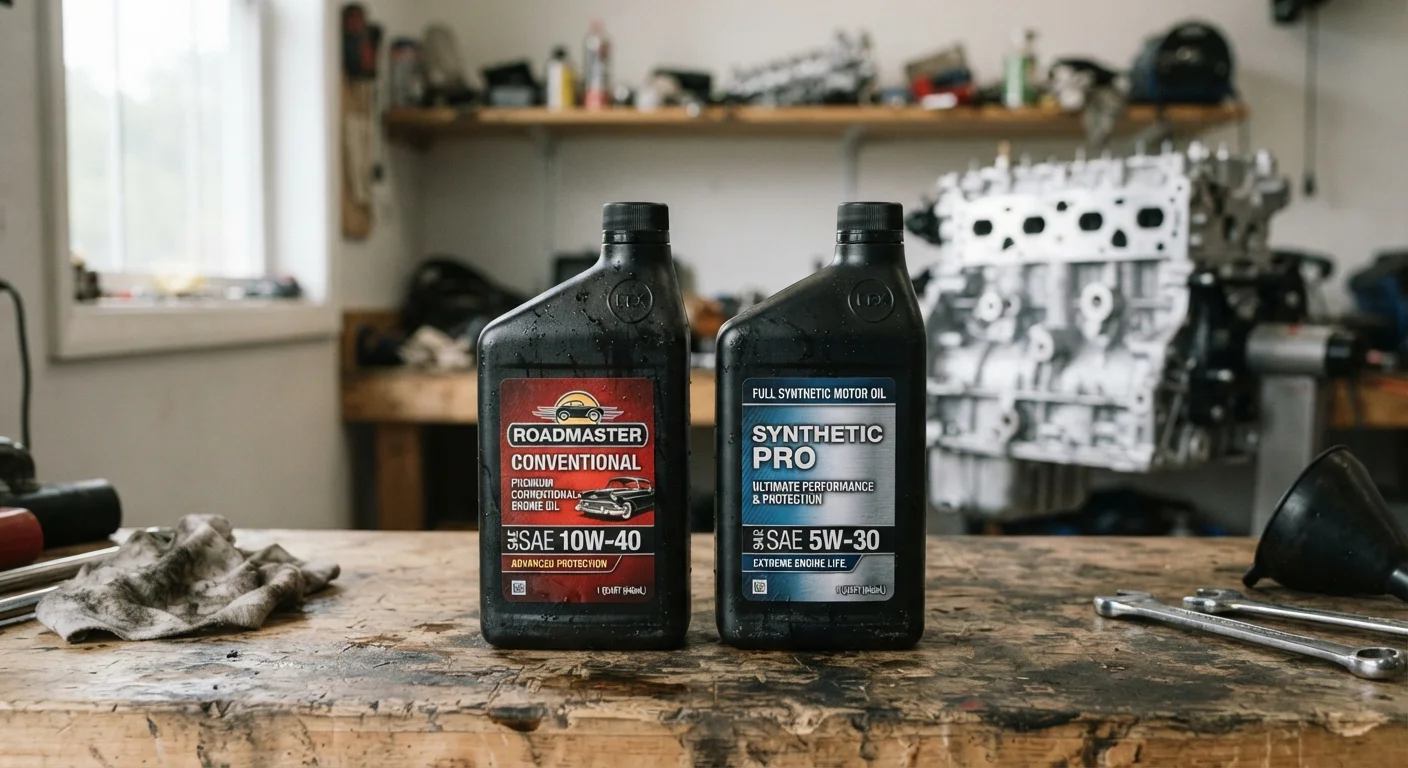
Key Takeaways
- Synthetic oil outperforms conventional in temperature extremes, flow at cold starts, and resistance to breakdown under stress.
- Many modern vehicles require synthetic oil - check your owner's manual before making any switch.
- Conventional oil remains a perfectly adequate choice for older, simpler engines driven under normal conditions.
- The higher upfront cost of synthetic is often offset by longer recommended change intervals.
- High-mileage formulas exist for both types, specifically formulated to address wear in engines past 75,000 miles.
Option A
Conventional Motor Oil
The time-tested, widely available standard.
Best for: Older vehicles, low-mileage drivers, and engines with straightforward operating conditions.
Option B
Synthetic Motor Oil
The engineered upgrade built for demanding conditions.
Best for: Modern turbocharged engines, extreme climates, high-mileage vehicles, and drivers stretching oil change intervals.
If you drive an older vehicle under normal, everyday conditions
Conventional Motor Oil
Conventional oil meets the needs of most older engines without the added expense, provided you follow recommended change intervals consistently.
If your vehicle has a turbocharged or high-performance engine
Synthetic Motor Oil
Turbos run at intense heat and RPM; synthetic oil's superior thermal stability protects components that conventional oil may struggle to lubricate adequately.
If you live in a region with extreme cold or heat
Synthetic Motor Oil
Synthetic formulas flow faster at cold startup and hold viscosity better in high heat, reducing wear during the moments engines are most vulnerable.
If you're trying to minimize maintenance frequency
Synthetic Motor Oil
Synthetics typically support longer change intervals - sometimes up to 10,000-15,000 miles - reducing the number of service visits needed per year.
If you own a high-mileage vehicle and want seal protection
Synthetic Motor Oil
High-mileage synthetic blends contain additives that condition aging seals and reduce oil burn-off, helping older engines stay cleaner and run longer.
What Makes These Two Oils Different
Motor oil has one core job: reduce friction between moving metal parts while carrying heat away from the engine. Both conventional and synthetic oils do this - but they're made very differently and perform differently under pressure.
Conventional motor oil is refined directly from crude petroleum. The refining process removes many impurities, but the resulting molecules are irregular in size and shape, which affects how consistently the oil behaves across temperature ranges.
Synthetic motor oil is chemically engineered - either built from scratch using base chemicals or further processed from petroleum to create uniform, purpose-designed molecules. That molecular consistency is what gives synthetic oil its performance edge: it flows more predictably, breaks down more slowly, and handles heat and cold more reliably than conventional oil.
There's also a middle option - synthetic blend oil - which mixes conventional and synthetic base stocks. It offers some of synthetic's benefits at a lower price point, and is worth considering for drivers not ready to fully commit to full synthetic.
| Criterion | Conventional Motor Oil | Synthetic Motor Oil |
|---|---|---|
| Base material | Refined crude petroleum | Chemically engineered base stocks |
| Cold-weather flow | Slower at startup | Faster, better cold-start protection |
| Heat resistance | Breaks down faster under high heat | Holds viscosity longer under stress |
| Typical change interval | 3,000-5,000 miles | 7,500-15,000 miles (varies by vehicle) |
| Cost per quart | Lower | Higher |
| Required for modern engines | Rarely | Frequently (check owner's manual) |
| High-mileage formulas available | Yes | Yes |
When Conventional Oil Is the Right Call
Conventional oil has a long track record and continues to serve millions of vehicles reliably. If your vehicle is an older model with a naturally aspirated (non-turbocharged) engine, has modest annual mileage, and operates in a temperate climate, conventional oil can be entirely appropriate - provided you follow the change schedule in your owner's manual.
It's also typically less expensive per quart than full synthetic, which matters if you're managing a tight maintenance budget. For engines designed in an era before synthetic was standard, conventional oil is often what manufacturers tested and validated their tolerances around.
That said, "cheaper" doesn't mean better. Skipping or delaying oil changes with conventional oil accelerates sludge buildup and wear far more than using the right oil on the right schedule. See how neglected maintenance compounds into larger costs for a fuller picture.
~40%
Engine wear occurring at cold startup
Industry engineering estimates suggest a significant portion of total engine wear happens in the first moments after a cold start, before oil fully circulates.
10,000-15,000 mi
Typical full synthetic change interval
Many automakers specify extended oil change intervals for full synthetic - though actual intervals depend on driving conditions and manufacturer guidance.
75,000+ miles
Threshold for high-mileage oil formulas
Most high-mileage oil products - both conventional and synthetic - are formulated for vehicles with odometer readings above 75,000 miles.
When Synthetic Oil Is Worth the Premium
Synthetic oil earns its higher price in specific situations. Modern engines - particularly those with turbochargers, variable valve timing systems, or tight machining tolerances - generate more heat and demand oil that won't thin out or break down quickly. Many automakers now specify full synthetic as a requirement, not a recommendation, for these engines.
Cold-weather performance is another real advantage. Synthetic oil flows faster at startup temperatures well below freezing, meaning critical engine components receive lubrication within seconds rather than waiting for thicker conventional oil to circulate. Most engine wear happens during cold starts - so this matters.
Drivers who put significant highway miles on their vehicles, or who tow and haul regularly, also benefit. Thermal breakdown is a constant risk under sustained load, and synthetic holds its viscosity - its resistance to flow - far longer under heat stress.
If you're holding onto a high-mileage vehicle, keeping an aging engine healthy often involves switching to a high-mileage synthetic formula with seal conditioners and additional detergents.
Don't Mix Oil Types Without Guidance
Topping off synthetic oil with conventional oil - or vice versa - won't immediately damage your engine, as the two are generally compatible. However, mixing dilutes the performance advantages of synthetic and can shorten the effective service life of the oil in the crankcase. If you need to top off and only have the wrong type available, it's a short-term fix - not a strategy. Get a proper oil change at your next earliest opportunity and stick to one type going forward.
How to Know What Your Engine Actually Needs
The single most reliable guide is your vehicle's owner's manual. It specifies the oil viscosity grade (such as 5W-30 or 0W-20) and whether synthetic is required. Ignoring that guidance - in either direction - can void warranty coverage or cause accelerated wear.
If your manual allows either type, your decision comes down to driving conditions, climate, and how long you plan to keep the vehicle. For drivers stretching oil change intervals, understanding what oil change interval recommendations actually mean will help you match oil type to mileage schedule correctly.
One common misconception: switching from conventional to synthetic in a high-mileage engine will cause leaks. This concern is largely outdated. Modern synthetics are compatible with most seals, and high-mileage formulas are specifically designed to recondition older gaskets rather than degrade them. If you're unsure, consult a qualified mechanic before switching.
Whether you're deciding on oil type as part of a larger ownership strategy or simply trying to keep repair bills predictable, your choice of oil sits alongside decisions like how long to keep a vehicle before replacing it - small maintenance decisions compound over time.