

Key Takeaways
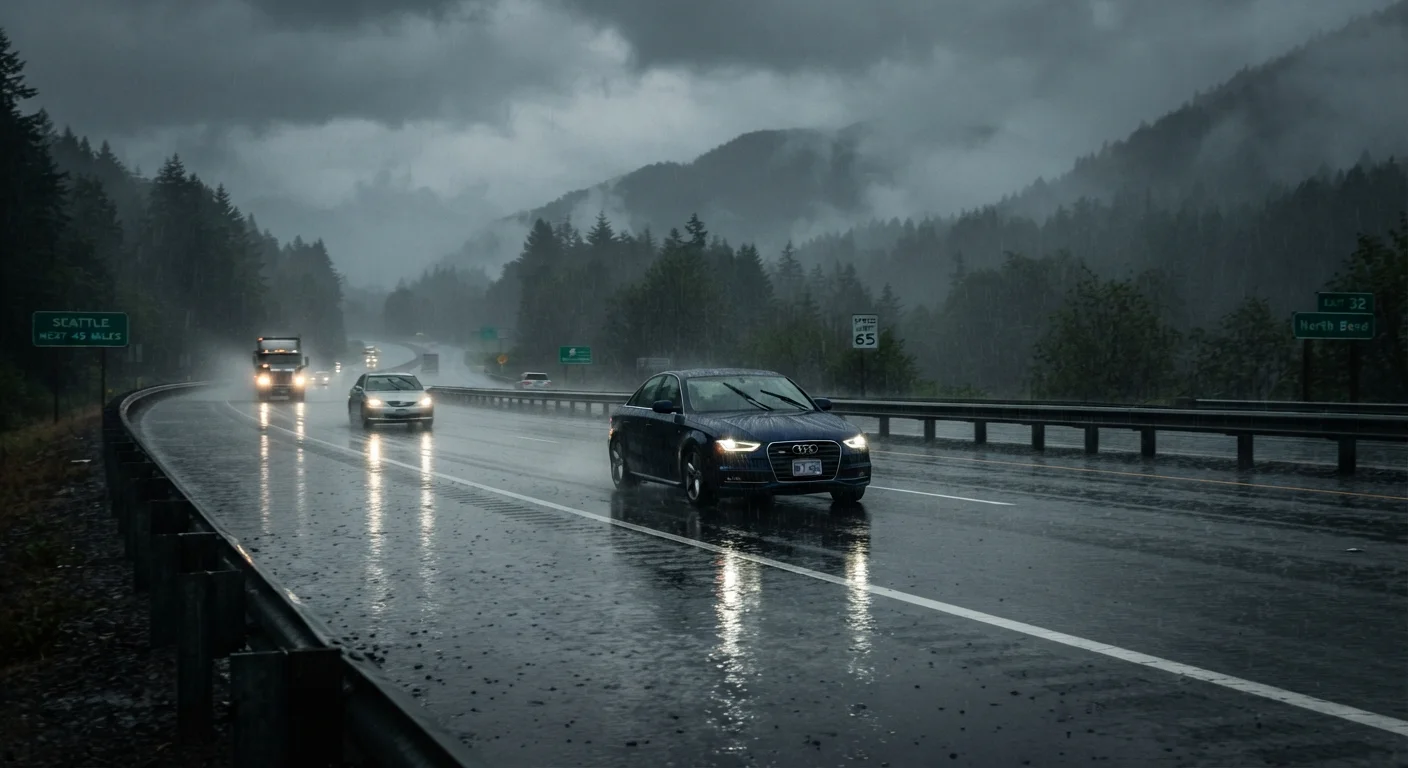
- Rain, snow, and fog each require distinct adjustments to speed, following distance, and lighting.
- Doubling your following distance is one of the most effective ways to prevent weather-related collisions.
- Low-beam headlights - not high beams - improve visibility in fog without creating dangerous glare.
- Black ice forms near freezing temperatures and is nearly invisible; bridges and overpasses freeze first.
- A well-maintained vehicle is your first line of defense before weather conditions deteriorate.
What you will need
Why Weather Demands a Different Approach
Adverse weather is a factor in roughly 21% of all vehicle crashes in the United States, according to data compiled by the Federal Highway Administration. That translates to hundreds of thousands of collisions each year - most of which involve ordinary drivers on roads they travel regularly. Familiarity breeds complacency, and complacency is dangerous when conditions shift.
Rain reduces pavement friction, narrows sight lines, and creates spray that obscures road markings and other vehicles. Snow and ice extend stopping distances dramatically - on glare ice, a car traveling at 30 mph may need four to ten times the braking distance required on dry pavement. Fog isolates drivers in a corridor of reduced visibility where depth perception and speed judgment both deteriorate. Each condition calls for a specific, deliberate response rather than a generic slowdown.
The adjustments in this guide are grounded in physics and traffic safety research. They are not suggestions for cautious drivers only - they are the evidence-based baseline for anyone operating a vehicle in less-than-ideal conditions. As you build these habits, they reinforce the broader defensive driving mindset that reduces collision risk across all conditions.
All-season or winter tires with adequate tread
Provides the traction needed to accelerate, steer, and stop on wet, snowy, or icy roads.
Functioning windshield wipers and washer fluid
Clears rain, sleet, and road spray to maintain an unobstructed view of the road ahead.
Properly adjusted headlights and fog lights
Increases your visibility to other drivers and illuminates the road in rain, snow, and fog.
Ice scraper and snow brush
Removes ice and snow from all windows, mirrors, and lights before driving in winter conditions.
Tire pressure gauge
Allows you to verify tire inflation before cold weather or wet-road driving.
What You'll Need Before You Start
Safe driving in adverse weather starts with a vehicle that's ready for the conditions. Before you focus on technique, confirm your equipment is up to the task.
What you will need
Prepare Your Vehicle Before the Weather Hits
Tires, wipers, and lights are your primary weather-safety systems. Check tread depth and tire pressure before winter or rainy-season driving - underinflated tires perform significantly worse on wet or icy roads. See our seasonal vehicle care guide for a full pre-season checklist.
Step-by-Step: Adjusting Your Driving for Weather
Assess Conditions Before You Leave
Before pulling out of your driveway, take 60 seconds to identify what weather you're heading into. Check the temperature - anything near or below 32°F (0°C) means ice is possible, especially on bridges, overpasses, and shaded stretches. Note whether it has been raining long enough for oil residue to wash away (the first 10-15 minutes of rain on dry pavement produce the slipperiest conditions). Review our pre-drive vehicle check to confirm your lights, tires, and wipers are ready.
Reduce Speed Below the Posted Limit
Posted speed limits reflect ideal, dry-road conditions. In rain, reduce your speed by 5-10 mph as a baseline. In heavy rain, snow, or slush, reductions of 15-20 mph or more may be appropriate. In dense fog or blowing snow, travel only as fast as your visible stopping distance allows - if you can see 100 feet ahead, you need to be able to stop within 100 feet. Speed is the single largest factor in whether a weather-related incident becomes a fatal crash.
Increase Your Following Distance
The standard 3-second following distance is designed for dry roads. In rain, extend that to at least 5-6 seconds. On snow or ice, allow 8-10 seconds or more. To measure your following distance, pick a fixed point - a sign or overpass - and count the seconds from when the car ahead passes it to when you reach it. Larger gaps give you more time to react and more room to stop. This is especially important because wet and icy surfaces dramatically extend braking distances even with ABS. The defensive driving mindset treats following distance as one of the most controllable variables in crash prevention.
Use Headlights Correctly for Each Condition
Turn on your headlights whenever visibility is reduced - in most US states, this is also required by law when wipers are running. In rain and snow, low beams are appropriate. In fog, use low beams or dedicated fog lights only; high beams reflect off moisture particles directly back into your eyes and reduce visibility rather than improving it. Never rely solely on daytime running lights (DRLs) in low-visibility weather - they do not activate taillights in most vehicles, leaving you invisible from behind.
Brake and Steer Smoothly and Early
Abrupt inputs - sudden braking, sharp steering, or hard acceleration - break traction on slippery surfaces. Begin braking earlier than you normally would, applying steady, progressive pressure. If your vehicle has ABS, press the brake pedal firmly and hold it; you will feel a pulsing sensation, which is normal. Do not pump the brakes - let the system do its job. On curves and corners, reduce speed before the turn, not during it. Steering through a turn while simultaneously braking on wet or icy pavement is a reliable way to lose control.
Adapt Continuously as Conditions Change
Weather rarely stays constant. Temperature drops as the sun sets, rain can intensify quickly, and fog can appear suddenly in low-lying areas or near water. Treat your adjustments as ongoing, not one-time. Scan farther ahead than usual - at least 12-15 seconds down the road - so you see changing conditions before you're in them. On longer trips, factor in rest breaks and re-check conditions. If roads deteriorate significantly, delay your trip if the destination isn't critical. No appointment is worth the risk of a preventable crash. For more on environment-specific risk factors, see our guide to highway vs. city driving risks.
Hydroplaning Can Happen at Any Speed
Hydroplaning - where your tires lose contact with the road surface and ride on a film of water - can occur at speeds as low as 35 mph on worn tires. If you feel the steering go light and unresponsive, ease off the accelerator gradually and avoid sudden braking or sharp steering inputs until you feel grip return.
When to Pull Over and Stop
If visibility drops to the point where you cannot safely see other vehicles or road markings, pull completely off the road - ideally into a parking lot or rest area - and turn on your hazard lights. Continuing to drive in near-zero-visibility conditions significantly increases crash risk. Do not stop on a highway shoulder unless it is a genuine emergency, as stopped vehicles are frequently struck in low-visibility situations.
Common Mistakes and How to Avoid Them
Even experienced drivers fall into predictable patterns when weather worsens. One of the most common is matching the speed of surrounding traffic rather than conditions - if every car around you is speeding in rain, it feels normal, but collective overconfidence doesn't change the physics of wet pavement. Drive to the conditions, not the crowd.
Another frequent error is relying entirely on all-wheel drive (AWD) or four-wheel drive (4WD) for safety. These systems improve traction during acceleration, but they provide no significant advantage when braking or cornering. An AWD vehicle with worn tires will stop no faster on ice than a front-wheel-drive vehicle with good tires - often slower. Tires remain the most critical traction variable.
Distraction compounds every weather risk. Managing a phone, adjusting music, or reaching for something in a bag takes your eyes and attention off the road at the exact moment conditions demand full engagement. Visibility and reaction time are already reduced; layering distraction on top is a dangerous combination. For a broader review of visibility-related habits, our night driving guide covers additional techniques that also apply in fog and heavy precipitation.