

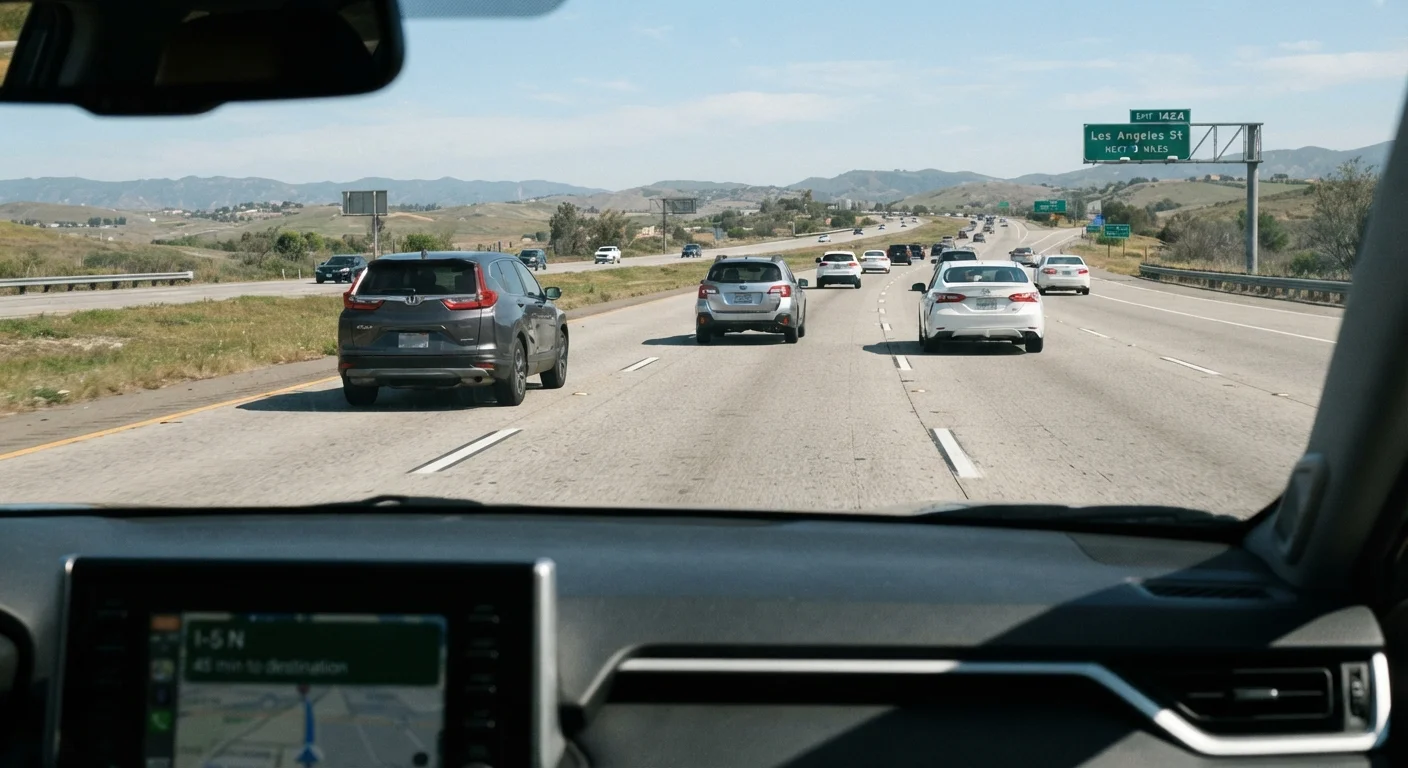
Key Takeaways
- The two-second rule is a minimum baseline, not a guaranteed safe distance in all conditions.
- Car-length counting is unreliable because it changes with speed and vehicle size.
- Reaction time alone - before braking begins - consumes significant distance at highway speeds.
- Adverse weather, fatigue, and distraction all require increasing your following distance substantially.
- Tailgating is a leading contributor to rear-end collisions, which are largely preventable.
Why Following Distance Myths Persist
Following distance is taught early, repeated often, and - despite that - widely misapplied. Part of the problem is that many popular guidelines were designed as simplified teaching aids and gradually became treated as universal rules. When drivers adopt a shortcut without understanding its limitations, gaps in safety practice emerge. This article examines the most persistent myths about safe following distance and explains what the evidence actually supports.
Myth
The two-second rule guarantees a safe following distance in any situation.
Fact
The two-second rule is a useful minimum for ideal, dry-road conditions - it does not account for speed, weather, fatigue, or vehicle type.
Driver education programs have long taught the two-second rule as a practical starting point, and it remains a reasonable baseline. However, it was designed for alert drivers on dry pavement at moderate speeds. At 70 mph, two seconds translates to roughly 205 feet - which may leave little margin if the vehicle ahead brakes hard. Many safety researchers and state agencies recommend a three- to four-second gap as a more realistic buffer, particularly at highway speeds. Conditions like rain, heavy loads, or older braking systems require even more space. Think of the two-second rule as a floor, not a ceiling.
Myth
Counting car lengths is a reliable way to judge following distance.
Fact
Car-length counting is inconsistent because vehicle sizes vary and the required number of lengths changes dramatically with speed.
The old "one car length per 10 mph" guideline has intuitive appeal but is difficult to apply accurately while driving. At 60 mph, that would require six car lengths - roughly 90 feet for an average sedan, but far more for a truck or SUV. Meanwhile, time-based methods (counting seconds) automatically scale with speed, making them more reliable and easier to use in real conditions. Stopping distance physics confirms that speed has an outsized effect - doubling speed quadruples stopping distance, something car-length counting doesn't intuitively capture.
Myth
If you're paying attention, you can stop in time from any following distance.
Fact
Human reaction time alone - before the brakes even engage - can consume 60 to 100 feet at highway speeds, regardless of attentiveness.
Even a fully alert driver requires time to perceive a hazard, decide to brake, and physically move their foot to the pedal. This perception-reaction sequence typically takes around 1.5 seconds under normal circumstances - and longer when fatigued or distracted. At 65 mph, that reaction window alone covers approximately 143 feet before braking begins. This is why close following is risky even for attentive drivers: the physics of reaction time are fixed, and no amount of focus eliminates that gap. See our deeper look at tailgating risks for more on the physics involved.
Myth
Following distance only matters at high speeds.
Fact
Low-speed collisions in urban traffic account for a large proportion of rear-end crashes, where frequent stops make short gaps especially dangerous.
City and suburban driving involves rapid, unpredictable stops - pedestrians crossing, traffic signals changing, vehicles pulling out suddenly. At 30 mph, a fully engaged stop still requires around 75 feet, yet many drivers follow within one or two car lengths in slow traffic. Urban rear-end collisions may cause less catastrophic injury than highway crashes, but they represent a significant share of crash frequency and are a leading source of vehicle damage and minor injuries. Consistent spacing habits at all speeds build safer reflexes overall.
Myth
Leaving a larger gap just invites other drivers to cut in front of you.
Fact
Even when another vehicle merges into your gap, simply easing off the throttle to re-establish distance is safer than maintaining a dangerously short following distance.
This concern is real - other drivers do sometimes fill available space - but it does not justify eliminating your safety buffer. When a vehicle merges into your gap, the correct response is to gradually increase your following distance again by lifting slightly off the accelerator. Aggressive tailgating to prevent merge attempts creates a far more dangerous situation than the minor inconvenience of a brief gap closure. New driver guidance consistently emphasizes this adaptive approach as a foundational safe-driving habit.
Putting the Evidence Into Practice
The common thread across these myths is that no single number or formula fully captures the complexity of stopping safely. Following distance is dynamic - it should increase with speed, decrease in visibility, account for vehicle load, and adapt to your own alertness level.
Adverse Conditions Demand More Space
Rain, snow, ice, fog, and heavy traffic all extend stopping distances well beyond dry-pavement norms. Transportation safety experts generally recommend doubling or tripling your following gap in poor conditions. Treating fair-weather guidelines as universal in all weather is a significant and common error.
A practical approach: use a three-second count as your default minimum, check your gap whenever conditions change, and rebuild your space after any merge without frustration. Over time, these habits become automatic. For a broader foundation in safe driving principles, the complete guide for new drivers covers following distance alongside other essential skills in full detail.
Following Distance Is a Safety-Critical Skill
Rear-end collisions are among the most common - and preventable - crash types in the U.S. Choosing an inadequate following distance significantly reduces your ability to stop safely in an emergency. No rule of thumb replaces attentive, adaptive driving adjusted to actual road conditions.
~29%
Of all U.S. crashes involving rear-end collisions
According to data from the National Highway Traffic Safety Administration (NHTSA), rear-end crashes consistently represent a significant share of total reported collisions annually.
1.5 sec
Typical driver perception-reaction time
Transportation research literature commonly cites approximately 1.5 seconds as a baseline perception-reaction time for alert drivers under normal conditions.
205 ft
Distance covered in 2 seconds at 70 mph
Basic physics: at 70 mph, a vehicle travels roughly 103 feet per second, meaning a two-second gap spans about 205 feet - less than many drivers assume.