

Key Takeaways
- Fixed expenses stay the same each month; variable expenses fluctuate based on usage or behavior.
- Knowing your total fixed costs reveals your true financial floor - the minimum you must earn to stay afloat.
- Variable expenses are your primary opportunity to adjust spending and free up cash.
- Most realistic budgets contain both types; the goal is understanding, not eliminating one category.
- Irregular income earners especially benefit from tracking the fixed-versus-variable split carefully.
Option A
Fixed Expenses
The predictable, non-negotiable costs of daily life.
Best for: Building a reliable budget baseline - these amounts don't change month to month, making them easy to plan around.
Option B
Variable Expenses
The flexible costs that rise and fall with behavior and circumstances.
Best for: Finding room to cut spending - since these amounts shift, they're the primary lever for adjusting your monthly cash flow.
If you want to know your true monthly minimum obligation
Fixed Expenses
Adding up your fixed costs gives you an immediate, accurate floor - the number below which your income cannot fall without serious financial strain.
If you need to free up cash quickly
Variable Expenses
Variable costs are where behavioral change has the fastest impact. Reducing dining out, subscriptions, or discretionary shopping can show results within a single billing cycle.
If you're building a budget for the first time
Fixed Expenses
Start by listing every fixed cost. This creates a dependable structure before you attempt to estimate and manage the more unpredictable variable side of your spending.
If your income changes month to month
Variable Expenses
When earnings are unpredictable, keeping variable costs low gives you the flexibility to absorb leaner months without defaulting on obligations.
What Makes an Expense Fixed or Variable
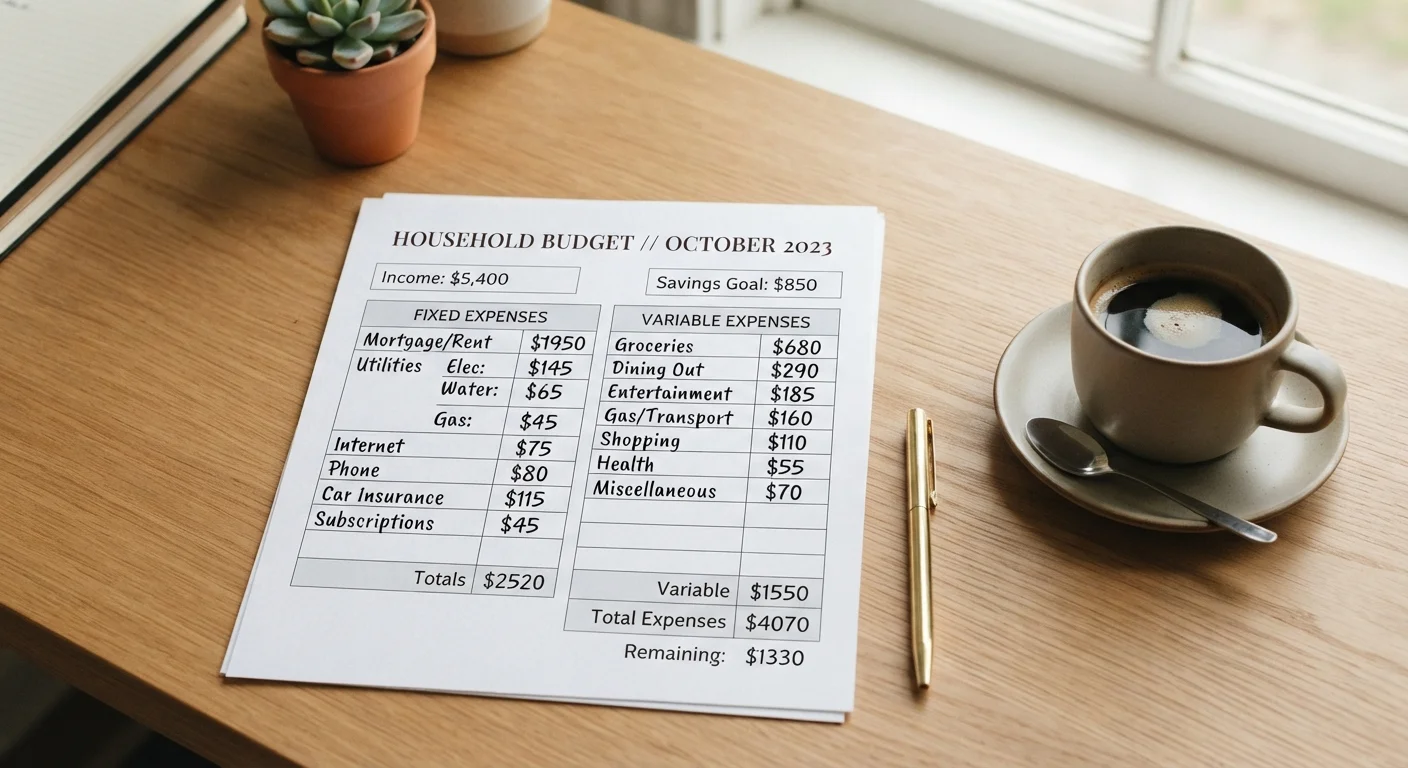
Every dollar you spend each month falls into one of two categories: fixed or variable. Fixed expenses are costs that remain the same regardless of how much you use a service or how your month unfolds. Rent or mortgage payments, car loan installments, insurance premiums, and most subscription services are classic examples. You owe the same amount in January as you do in July.
Variable expenses, by contrast, shift from month to month based on your choices and circumstances. Groceries, gasoline, dining out, utilities, clothing, and entertainment all fall here. Even if you spend roughly the same amount most months, the precise figure changes - and that variability is exactly what makes them manageable levers in a budget.
A third informal category worth knowing: periodic or irregular expenses. These are costs like annual insurance renewals, car registrations, or semi-annual dental visits that are technically fixed in amount but don't appear every month. Dividing them by 12 and setting aside that portion monthly prevents them from blindsiding your budget. For a full picture of what belongs in each category, see what spending categories belong in a monthly budget.
Head-to-Head: Fixed vs. Variable at a Glance
The table below outlines the core differences between these two expense types across the dimensions that matter most when building a spending plan.
| Criterion | Fixed Expenses | Variable Expenses |
|---|---|---|
| Amount each month | Stays the same | Changes based on behavior or usage |
| Predictability | High - easy to plan around | Lower - requires estimation |
| Examples | Rent, car loan, insurance | Groceries, gas, dining, utilities |
| Control level | Low in the short term | High - adjustable each month |
| Budget role | Sets your financial floor | Primary lever for saving or cutting |
| Impact of income drop | Immediate risk if uncovered | Can be reduced to compensate |
One important nuance: some costs straddle both categories. A cell phone plan with a fixed base rate but overage charges, or a utility bill that varies with the season, behaves partly like each type. Label these as variable in your budget to avoid underestimating them.
Why This Distinction Shapes Every Budget Decision
Understanding which expenses are fixed does something that no budgeting app shortcut can replicate: it tells you your financial floor. Add up every fixed obligation and you instantly know the minimum monthly income required just to keep the lights on and obligations met. If your income dips below that number, you face structural shortfalls - not a lifestyle problem.
Variable expenses, meanwhile, are where financial agency lives. Rent doesn't bend; a restaurant habit does. When you need to redirect money toward savings or pay down debt, variable costs are the first place to look. Even modest reductions - fewer takeout meals, a pause on streaming services, smarter grocery planning - can meaningfully shift monthly cash flow without requiring a lifestyle overhaul.
~33%
Average share of income spent on housing alone
According to the U.S. Bureau of Labor Statistics Consumer Expenditure Survey, housing typically represents the single largest fixed expense for American households.
~15%
Share of spending on food (at home and away)
The same BLS survey data shows food consistently ranks among the top variable expense categories, with significant variation based on household habits.
This distinction also matters when income isn't steady. Freelancers and gig workers face particular pressure because their earnings vary at the same time their fixed obligations do not. If that describes your situation, budgeting on an irregular income walks through strategies built specifically for variable-pay earners.
Putting It Into Practice: Building From Fixed to Variable
A practical approach to building a budget starts with the fixed side. List every non-negotiable, same-amount-every-month obligation. This is your anchor - the number that must be covered before anything else is considered.
Next, estimate your variable costs using two to three months of actual bank or credit card statements. Don't rely on memory; the figures are almost always higher than expected. Group them into logical categories: food, transportation, personal care, entertainment. Then compare your fixed plus estimated variable totals against your take-home income.
If the gap is tight or negative, variable categories are where adjustments happen. If there's meaningful surplus, those funds can be directed toward an emergency fund, debt repayment, or savings goals - decisions best made with your full financial picture in mind and, for complex situations, with guidance from a licensed financial adviser.
Once your budget is running, a regular review keeps it honest. A monthly budget review checklist can help you track where money actually went versus where you planned for it to go. And if a surprise expense ever threatens to derail the plan, building a budget that survives an unexpected expense covers structural adjustments that create durability over time.
Fixed Doesn't Mean Permanent
A fixed expense stays constant month to month, but it can still be renegotiated over time. Refinancing a mortgage, shopping for a lower insurance premium at renewal, or canceling an unused subscription are all ways to reduce your fixed cost floor. The key distinction is that these changes require deliberate action - they don't flex automatically the way variable costs can.
This article provides general financial information for educational purposes only and is not personalized financial advice. Consult a qualified financial professional regarding decisions specific to your circumstances.