

Key Takeaways
- Sinking funds cover predictable irregular expenses that monthly budgets typically overlook.
- They differ from emergency funds, which are reserved for truly unexpected events.
- You can maintain multiple sinking funds simultaneously for different expense categories.
- Even small monthly contributions add up to cover large annual bills without financial strain.
- Sinking funds reduce the temptation to put irregular expenses on a credit card.
Sinking Fund
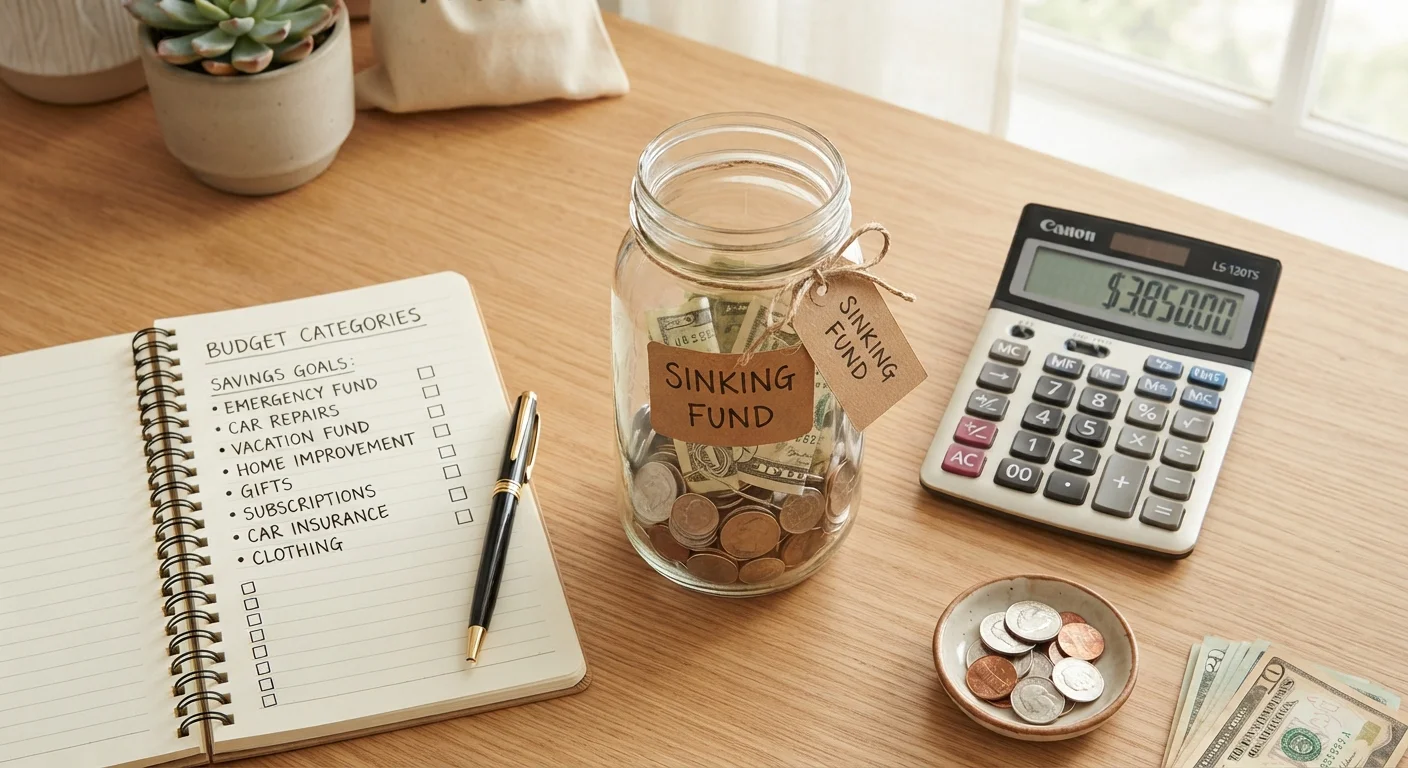
A sinking fund is a dedicated savings bucket where you set aside a small amount of money each month to cover a known future expense. Instead of being caught off guard by a car registration bill or holiday spending, you spread the cost over time. The money is earmarked for one specific purpose and spent when that expense arrives.
Unlike an emergency fund - which covers unexpected costs - a sinking fund targets predictable, irregular expenses with a known or estimated cost and timeline.
Why Budgets Break Down Mid-Month
Most household budgets account well for recurring monthly bills - rent, utilities, groceries. Where they consistently fall short is irregular expenses: the car registration that arrives every October, the holiday season that somehow feels unexpected every December, the annual insurance premium due in March. These costs are predictable in the sense that they happen every year, yet they routinely crater otherwise well-planned budgets.
This is the core problem a sinking fund solves. As covered in common reasons a budget stops working mid-month, irregular but foreseeable expenses are one of the most overlooked sources of overspending - not a lack of discipline.
1 in 3
Americans have no dedicated savings for irregular expenses
Federal Reserve surveys consistently find that a significant share of U.S. adults would struggle to cover an unexpected $400 expense without borrowing or selling something.
$1,000+
Typical holiday spending per U.S. household
National Retail Federation annual surveys regularly show average holiday spend exceeding $1,000 per household - a predictable but often unplanned expense.
78%
Workers living paycheck to paycheck at some income levels
PYMNTS and LendingClub research has found that a majority of consumers across income brackets report living paycheck to paycheck, often citing irregular expenses as a key driver.
How a Sinking Fund Actually Works
The mechanics are straightforward. You identify a future expense, estimate its total cost, determine when you'll need the money, and divide that amount by the number of months until then. That monthly figure becomes a line item in your budget, transferred to a dedicated savings account on a regular schedule.
For example: if you expect to spend $900 on holiday gifts and travel in December, and it's currently June, you'd set aside $150 per month for six months. When December arrives, the money is already there - no credit card required.
You can run multiple sinking funds at the same time, each aimed at a different category. Common ones include:
- Vehicle maintenance and registration
- Holiday and birthday gifts
- Annual insurance premiums
- Home repairs and appliances
- Vacations and travel
- Back-to-school costs
Label Your Accounts to Stay Honest
Keeping sinking fund money in a clearly labeled sub-account - separate from your day-to-day checking - reduces the temptation to spend it on something else. Many online banks offer free savings buckets or sub-accounts you can name by purpose. Out of sight and clearly labeled means the money stays where it belongs.
Sinking Funds vs. Emergency Funds
These two savings tools are frequently confused, but they serve opposite purposes. An emergency fund is a financial safety net for genuinely unpredictable events - a job loss, an unexpected medical bill, a sudden appliance failure. Withdrawing from it should feel like a last resort.
A sinking fund, by contrast, is spent on purpose. You build it knowing exactly what it's for, and spending it when the time comes is the plan working correctly. For a fuller comparison and guidance on sizing an emergency fund, see emergency fund fundamentals.
Keeping these two types of savings clearly separated - ideally in labeled accounts - prevents the common mistake of raiding emergency savings for predictable costs, leaving yourself exposed when a true emergency arrives.
Getting Started Without Overcomplicating It
The biggest barrier to using sinking funds is the perception that managing multiple savings buckets is complicated. In practice, starting small keeps it manageable. Choose one or two expenses that have caught you off guard in the past year. Estimate what each will cost. Divide by months remaining. Add those amounts to your budget today.
Many online banks let you create labeled sub-accounts within a single savings account - so you can have a "Car Fund" and a "Holiday Fund" without opening separate accounts at separate institutions.
If your income varies month to month, the sinking fund approach still applies - contributions may fluctuate, but consistent targeting of each goal is what matters. The guide to budgeting on an irregular income walks through how to structure savings goals when your paycheck isn't the same each month.
Sinking funds don't require a perfect budget to work. They work best when they become a habit - a small, automatic transfer that transforms an annual financial shock into a monthly non-event.
“The goal of a sinking fund is simple: to make the irregular regular. When you save a little every month for a known future cost, that cost stops being a crisis and starts being a plan.”
— Finance Editorial Team, Personal Finance Education
This article is for general informational and educational purposes only and does not constitute personalized financial advice. Consult a qualified financial professional for guidance specific to your situation.