

Key Takeaways
- You can save and pay down debt simultaneously - the key is sequencing your priorities clearly.
- A small emergency fund should come before aggressive debt payoff to avoid new borrowing.
- Every savings plan must start with an accurate picture of your actual monthly cash flow.
- Automating small savings transfers removes the temptation to skip contributions.
- Your debt repayment strategy directly affects how much you can realistically save each month.
What you will need
Why Saving and Debt Repayment Can Coexist
Many people treat savings and debt repayment as an either/or choice - but this framing often leads to stalling on both fronts. The more useful question is: in what order and proportion should you address each?
The reality is that carrying debt while saving is not irrational. It reflects how most American households actually operate. According to Federal Reserve consumer finance data, a significant share of households simultaneously hold debt and some form of savings - not because they are making a financial mistake, but because both serve different purposes. Debt is a past obligation; savings is a buffer for future uncertainty.
Without any savings cushion, even a minor financial shock - a medical bill, a car repair, a missed shift - leads back to borrowing. That cycle is harder to escape than the slow progress of building a small reserve while making debt payments. The steps that follow help you structure both so neither is ignored.
This Is General Education, Not Personal Advice
This article provides general financial information only. It is not personalized financial, tax, or legal advice. Your situation - income, debt type, interest rates, family obligations - is unique. Before making significant changes to your budget or debt strategy, consider speaking with a licensed financial counselor or adviser.
What You Need Before You Start
Getting this process right depends on using real numbers, not estimates. Before working through the steps below, gather the prerequisites listed here.
What you will need
You'll also benefit from a clear framework for how to think about debt payoff options. Understanding the difference between approaches like debt consolidation and debt management plans may be relevant if your debt load is complex enough that restructuring it is on the table.
Bank statements (2-3 months)
Provides accurate data on actual spending patterns and recurring debt payments.
Budgeting app or spreadsheet
Helps categorize expenses, track monthly cash flow, and monitor savings progress.
Separate savings account
Creates a clear boundary between spending money and savings to reduce accidental spending.
Automatic transfer setting
Schedules savings contributions without requiring a manual decision each pay period.
Debt balance tracker
Keeps a running record of outstanding balances so you can see progress and plan reallocations.
Step-by-Step: Building Your Plan
Work through the following steps in order. Each one builds on the last - skipping ahead tends to produce savings goals that look good on paper but collapse in the first tight month.
High-Interest Debt Demands Honest Attention
If you carry credit card balances at high interest rates, aggressively building savings in a low-yield account while that debt compounds can cost you more than you save. The math rarely favors large savings contributions over minimum debt payments when interest rates are far apart. Acknowledge this trade-off explicitly in your plan.
Map Your Real Monthly Cash Flow
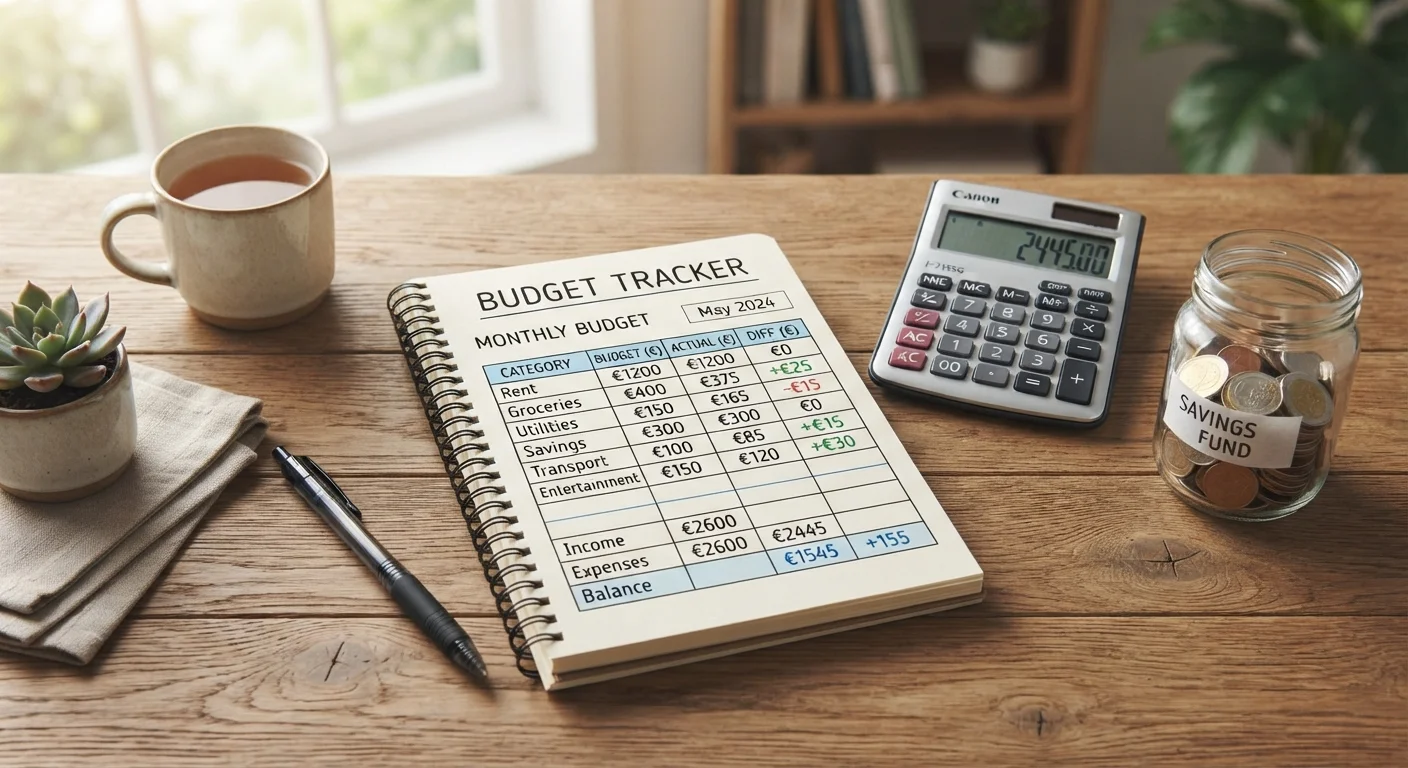
Before you can allocate a single dollar to savings, you need an honest accounting of what actually comes in and goes out each month. Pull your last three bank statements and categorize every transaction: fixed expenses (rent, loan minimums, insurance), variable necessities (groceries, utilities, transportation), discretionary spending, and any irregular but predictable costs.
Total your debt minimum payments separately. This number is non-negotiable - it belongs in your budget before savings does. See budgeting fundamentals for a structured way to build this picture from scratch.
Define a Modest Emergency Fund Target First
Financial practitioners widely recommend establishing at least a small cash reserve - often cited as $500 to $1,000 - before directing extra money toward debt payoff. The reason is practical: without a buffer, one unexpected car repair or medical copay forces new borrowing, undoing recent progress.
Set this as your first savings milestone. It is intentionally modest and achievable. Once it is funded, you can shift your focus more aggressively toward debt reduction. If you're currently in a cycle where minimum payments consume nearly all available income, strategies for breaking that pattern may help before you proceed.
Choose a Debt Repayment Approach That Informs Your Budget
The strategy you use to pay down debt determines how much discretionary cash you have available for saving. Two widely discussed approaches are the debt avalanche - paying highest-interest balances first - and the debt snowball - paying smallest balances first for motivational momentum. Each has different cash flow implications month to month.
Comparing these two methods in detail can help you choose the one aligned with both your math and your habits. Once you commit to a method, your monthly savings allocation becomes whatever remains after minimum payments and your chosen extra debt payment.
Set a Specific, Proportional Savings Goal
With your cash flow mapped and your debt strategy decided, you can set a realistic monthly savings figure. Rather than a fixed percentage rule - which may not apply to your situation - anchor your savings goal to what your budget actually shows as surplus after all debt obligations are met.
Consider naming specific savings buckets: emergency fund completion, an upcoming irregular expense, or a longer-term goal. Sinking funds are a practical way to earmark savings for predictable future expenses so they never land on a credit card.
Automate the Transfer Before You Can Spend It
Set up an automatic transfer to your savings account on payday - even if the amount feels small. Automation removes the decision point that derails most savings intentions. Schedule the transfer for the same day income arrives, treating it like any other fixed obligation.
If your bank allows sub-accounts or labeled savings buckets, use them to reinforce your goals visually. Watching a labeled emergency fund grow - even slowly - provides concrete feedback that the plan is working.
Revisit and Adjust as Debt Balances Change
A savings plan built around debt is not static. Each time a debt is paid off, you gain freed-up cash flow. Intentionally redirect a portion of that freed payment toward savings before lifestyle expenses absorb it - a concept sometimes called a payment raise.
If your financial situation has been disrupted by a setback, approaches for rebuilding from a low baseline can give you additional perspective. Also make sure any plan changes account for retirement-related considerations - see what to weigh before tapping retirement accounts if that option has crossed your mind.
Start Smaller Than You Think You Should
Even $25 per paycheck directed to savings builds the habit and creates a buffer. Small, consistent contributions tend to stick longer than ambitious targets that get abandoned after one tight month. Once the habit is established, gradually increasing the amount is much easier.
This article is for general informational and educational purposes only and does not constitute personalized financial, tax, or legal advice. Consult a qualified financial professional before making decisions about your specific financial situation.