

Key Takeaways
- All decaffeination happens on green (unroasted) beans, not after roasting.
- Three main methods are used: solvent-based, Swiss Water Process, and supercritical CO2.
- No decaf process removes 100% of caffeine - a small amount always remains.
- The Swiss Water Process uses no chemical solvents and is certified organic-friendly.
- Solvent-based methods are the most common globally and are considered safe by food regulators.
- CO2 decaffeination best preserves flavor but is the most expensive method.
Decaffeination
Decaffeination is the process of removing most of the caffeine from coffee beans before they are roasted and ground. The goal is to reduce caffeine content significantly while keeping the flavor compounds that make coffee taste like coffee. No method removes caffeine completely, but commercially decaffeinated coffee must meet regulatory thresholds for how little caffeine remains.
In the US, coffee labeled 'decaf' typically retains about 1-3% of its original caffeine content. The FDA does not set a specific maximum, but industry standards generally aim for at least 97% caffeine removal.
Why Decaffeination Happens Before Roasting
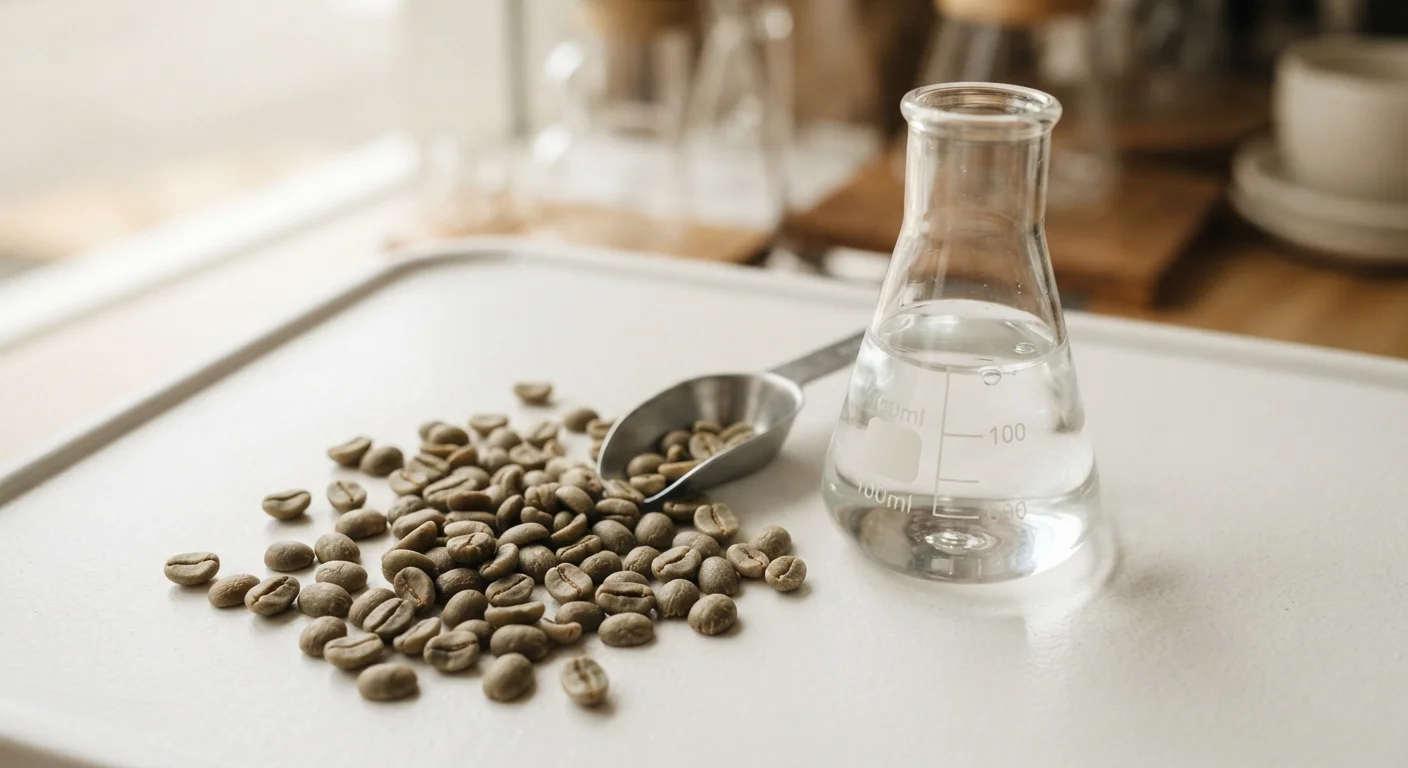
Most people picture a cup of dark roasted coffee when they think about decaf, but the caffeine is actually removed long before heat ever touches the bean. Green, unroasted coffee beans are used because they are porous and swell easily when soaked in liquid - making it possible for solvents or water to penetrate and carry caffeine out. Once beans are roasted, their cell structure locks down and they become far harder to treat effectively.
This also matters for flavor. Roasting creates hundreds of aromatic compounds through a series of chemical reactions. If those compounds were already present when the decaffeination process ran, most of them would be stripped away alongside the caffeine. Treating green beans preserves the roasting potential so that flavor development can still happen normally afterward.
To understand what else is in your finished cup beyond caffeine, see what's actually in your cup of coffee.
The Three Main Decaffeination Methods
Commercial decaffeination uses one of three approaches. Each works on the same principle - separating caffeine from everything else - but the chemistry, cost, and flavor outcomes differ meaningfully.
Solvent-Based Methods
The most widely used approach worldwide involves chemical solvents, typically methylene chloride or ethyl acetate. Beans are either steamed to open their pores and then washed directly with solvent, or soaked in hot water first and the water is treated separately with solvent. The caffeine binds to the solvent, which is then drained off. Remaining traces of solvent evaporate during roasting at high temperatures. Regulatory agencies including the FDA have evaluated residue levels and consider approved solvents safe at the concentrations found in finished coffee.
Swiss Water Process
Developed in Switzerland and now run commercially in Canada, this method uses no chemical solvents at all. Green beans are soaked in very hot water, which pulls out caffeine along with flavor compounds. That water is then passed through an activated charcoal filter sized to trap caffeine molecules while allowing the smaller flavor molecules to pass through. The resulting flavor-rich, caffeine-free water - called Green Coffee Extract - is used to soak the next batch of beans. Because the water is already saturated with flavor compounds, only caffeine migrates out of the new batch. The process is certified organic and is a popular choice for specialty roasters.
Supercritical CO2 Method
This is the most technologically advanced option. Carbon dioxide is pressurized until it enters a supercritical state - behaving like both a liquid and a gas simultaneously. In this form, CO2 acts as a highly selective solvent that binds almost exclusively to caffeine molecules, leaving flavor compounds largely untouched. The caffeine-laden CO2 is then depressurized, the caffeine falls out, and the CO2 can be recycled and reused. The flavor retention is considered superior to other methods, but the equipment is expensive, making this process less common and typically reserved for premium products.
97%
Minimum caffeine removal required for decaf
Industry and international standards generally require at least 97% of caffeine to be removed for a coffee to be labeled decaffeinated.
2-15 mg
Caffeine per 8 oz cup of decaf
According to research published in the Journal of Analytical Toxicology, decaf coffees tested varied widely in residual caffeine content across brands and methods.
3
Primary commercial decaffeination methods
Solvent-based, Swiss Water Process, and supercritical CO2 are the three established methods used by commercial decaf producers worldwide.
What 'Decaf' Actually Means on a Label
No decaffeination process achieves complete caffeine removal. The industry standard, and one reflected in many international regulations, targets at least 97% caffeine removal. That means a bean that originally contained 200 milligrams of caffeine per serving could still have around 6 milligrams after processing. Brewing style also affects the final number - a larger dose of grounds or a longer steep will extract more of whatever caffeine remains.
For most people, this residual amount is negligible. But for individuals who are highly sensitive to caffeine or who have been advised by a doctor to avoid it entirely, decaf is not a zero-caffeine option. This distinction is worth understanding clearly rather than assuming the label means caffeine-free.
Decaf Is Not Caffeine-Free
Residual caffeine in decaf is small but real. People who are pregnant, highly caffeine-sensitive, or managing a health condition that requires strict caffeine avoidance should be aware of this. For personal guidance on caffeine limits, consult a qualified healthcare professional rather than relying solely on product labeling.
Brewing method also shapes the final experience significantly regardless of caffeine level. Espresso and drip coffee extract very differently from the same grounds, which applies equally to decaf beans.
Does the Method Affect Your Coffee's Flavor?
Flavor loss is the central trade-off in decaffeination. Because caffeine does not sit in a isolated pocket inside the bean, any process that draws it out will inevitably disturb neighboring compounds. Solvent-based methods are efficient and cost-effective but can remove some delicate aromatic compounds, which is why some decaf coffees taste flatter than their caffeinated counterparts. The Swiss Water Process retains more character than older solvent methods, particularly when used with high-quality single-origin beans. CO2 decaffeination is widely regarded as the closest to a full-flavor result because its selectivity minimizes collateral extraction.
The quality of the original bean matters just as much as the method. A low-grade green bean decaffeinated with CO2 will still produce a mediocre cup. Roasters who invest in specialty-grade sourcing before decaffeination tend to produce the most satisfying decaf offerings.
Ask Your Roaster Which Method They Use
Many specialty roasters list the decaffeination method on their packaging or website. If flavor is your priority, look for CO2 or Swiss Water Process decaf. If you simply want a lower-caffeine option without strong flavor preferences, solvent-based decaf from a quality source is a perfectly reasonable choice.