

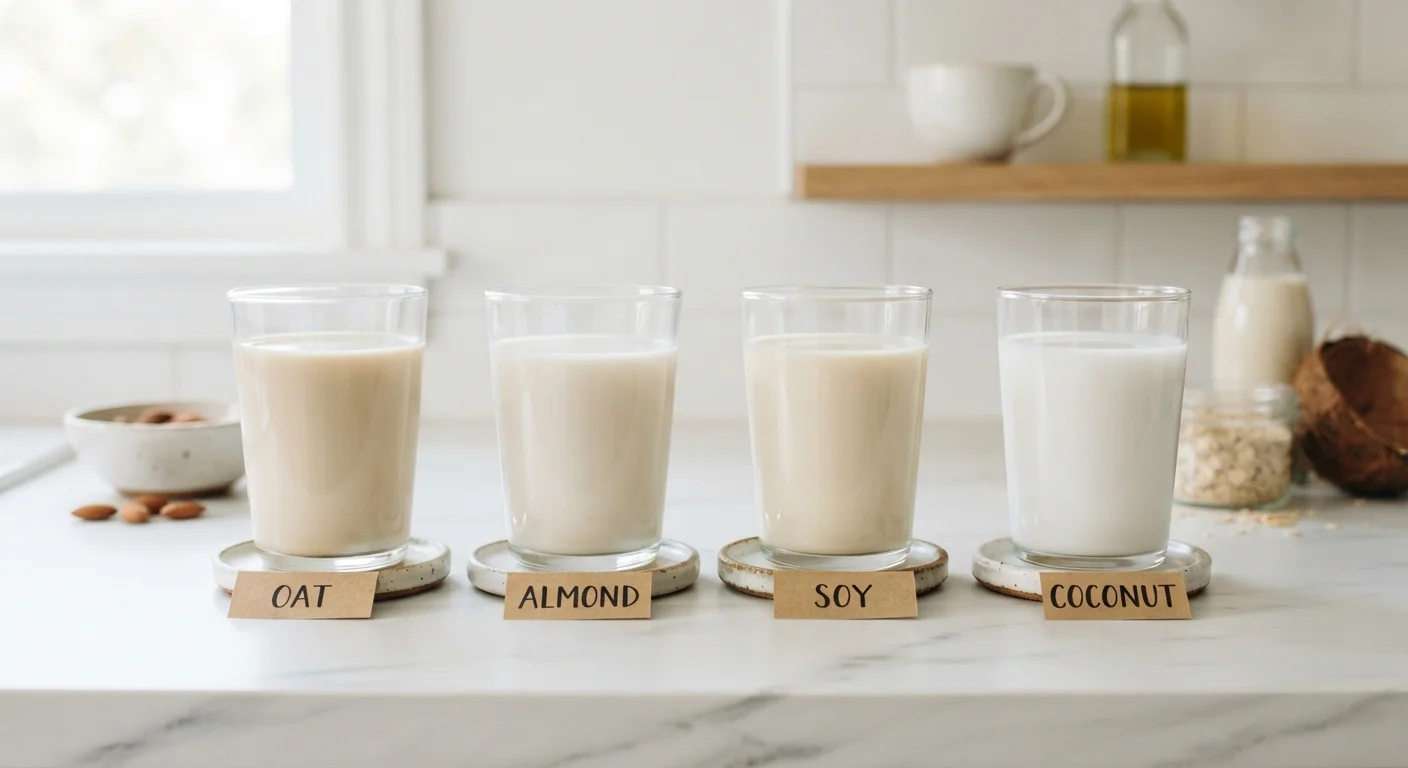
Key Takeaways
- Soy milk has the highest protein content among popular plant-based milks, closely matching dairy.
- Oat milk is naturally higher in carbohydrates and tends to froth well for coffee drinks.
- Almond milk is low in calories but also low in protein unless fortified.
- Coconut milk (the carton variety) is higher in saturated fat than the other three options.
- Fortification levels vary by brand, so checking the nutrition label is essential for accurate comparisons.
Our Verdict
No single plant-based milk is the clear winner for every person or every use. Soy milk leads on protein, oat milk excels in coffee applications, almond milk suits lower-calorie needs, and coconut milk offers a distinct flavor profile. The right choice depends on your nutritional priorities, taste preferences, and how you plan to use the milk.
| Best for | Recommended |
|---|---|
| Those prioritizing protein intake | Soy milk |
| Coffee drinks and lattes | Oat milk |
| Lower-calorie everyday use | Almond milk |
| Distinct flavor in smoothies or baking | Coconut milk |
What These Milks Are Made From
Each plant-based milk starts with a different base ingredient, which shapes everything from flavor to nutrient content.
- Oat milk is made by blending rolled oats with water, then straining out most of the solids. Natural enzymes are sometimes used to break down the oat starch, which gives oat milk its characteristic mild sweetness.
- Almond milk is produced by soaking and blending almonds with water, then filtering out the pulp. The resulting liquid is thin, with a subtle nutty flavor.
- Soy milk is made from whole soybeans or soy protein isolate blended with water. It has a creamier texture than almond milk and a more neutral flavor than oat.
- Coconut milk in carton form (not canned) is diluted coconut cream or coconut extract blended with water. It is lighter than canned coconut milk and has a noticeable tropical flavor.
For a broader look at how plant foods fit into a balanced diet, see our article on plant-based eating strengths and gaps.
Nutritional Profiles Side by Side
The figures below reflect typical unsweetened, fortified carton versions per 8-ounce (240 ml) serving. Values vary meaningfully by brand, so always check the label.
| Oat Milk | Almond Milk | Soy Milk | Coconut Milk (Carton) | |
|---|---|---|---|---|
| Calories (per 8 oz) | ~120 | ~30-40 | ~80-100 | ~45-50 |
| Protein | ~3g | ~1g | ~7-8g | ~0-1g |
| Total Fat | ~5g | ~2.5g | ~4g | ~4-5g |
| Saturated Fat | ~0.5g | ~0g | ~0.5g | ~4g |
| Carbohydrates | ~16g | ~1-2g | ~4g | ~1g |
| Typically Fortified? | Yes, usually | Yes, usually | Yes, usually | Sometimes |
A few points worth noting: soy milk is the only plant-based milk that provides a protein profile comparable to cow's milk. Oat milk is notably higher in carbohydrates due to its starch content. Almond and coconut milks are low in most macronutrients in their base form, making fortification with calcium, vitamin D, and B12 especially important for those relying on them regularly.
Always Read the Nutrition Label
Fortification levels differ significantly between brands and product lines. Two cartons labeled 'oat milk' can contain very different amounts of calcium, vitamin D, or added sugar. Getting into the habit of comparing labels - rather than relying on front-of-pack claims - gives you a much clearer picture of what you're actually consuming.
How Each Milk Behaves in Drinks
Nutritional content is only part of the story - texture, flavor, and heat stability all matter depending on your intended use.
Oat Milk
Oat milk steams and froths well, making it a popular choice for lattes and cappuccinos. Its mild sweetness complements espresso without overpowering it. However, it can become gluey if overheated due to its starch content.
Almond Milk
Almond milk is thin and can separate when added to hot coffee or tea. It works better in cold drinks, smoothies, and cereals. Its low fat content makes it less stable under heat.
Soy Milk
Soy milk has the most neutral flavor of the four and behaves similarly to low-fat dairy milk. It froths adequately and holds up well in hot drinks, though some varieties can curdle slightly when mixed with acidic coffee.
Coconut Milk (Carton)
Carton coconut milk adds a distinct tropical flavor that not everyone wants in a morning coffee. It blends smoothly into cold drinks and works well in smoothies. Its higher fat content gives it a richer mouthfeel than almond or oat milk.
7-8g
Protein per serving in soy milk
Soy milk provides more protein per cup than any other common plant-based milk, approaching the ~8g found in cow's milk.
~16g
Carbohydrates per serving in oat milk
Oat milk's higher carb content compared to other plant milks reflects the natural starch from its oat base.
Things to Watch on the Label
Plant-based milks vary widely depending on whether and how they are fortified. Some key label considerations:
- Fortification: Many brands add calcium, vitamin D, vitamin B12, and sometimes vitamin A. The amount differs between products, so compare labels rather than assuming all are equivalent.
- Added sugar: Unsweetened varieties are available for all four types. Sweetened versions can add 5-12 grams of sugar per serving.
- Additives: Carrageenan, sunflower lecithin, and various gums are commonly used for texture and shelf stability. These are generally recognized as safe by US food regulators, though some consumers prefer additive-free options.
- Allergens: Soy and tree nuts (almond, coconut) are among the major food allergens recognized in the US. Anyone with relevant allergies should check labels carefully.
This article is for general informational purposes only and is not intended as medical or dietary advice. Consult a qualified healthcare or nutrition professional for guidance specific to your health needs or conditions.