

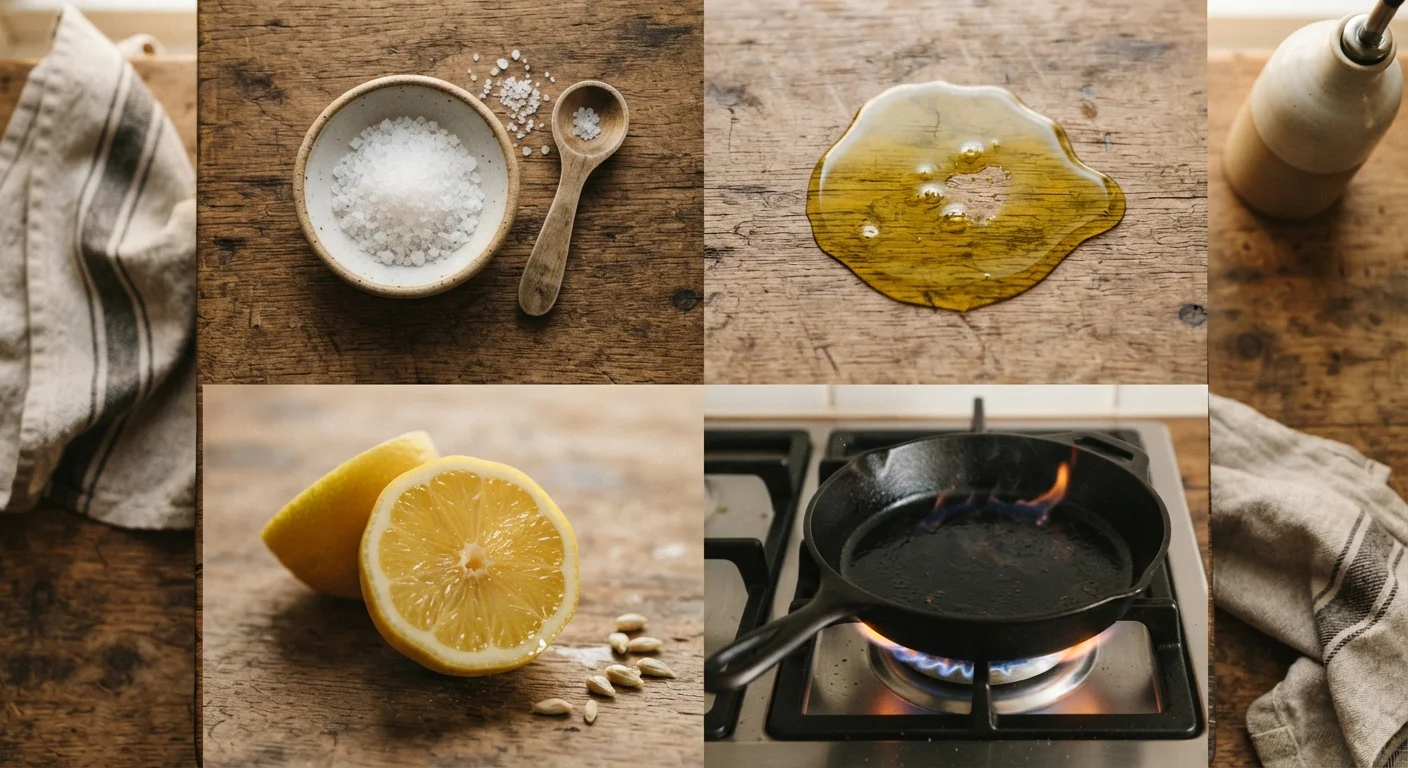
Key Takeaways
- Salt doesn't just add flavor - it draws out moisture, suppresses bitterness, and strengthens other tastes.
- Fat carries fat-soluble flavor compounds and creates texture through emulsification, browning, and richness.
- Acid brightens dishes, balances richness, and can chemically 'cook' proteins without heat.
- Heat triggers flavor-building reactions like caramelization and the Maillard reaction that create depth and color.
- Understanding these four elements lets you adjust any dish by feel, not just by recipe.
Salt, Fat, Acid, Heat
Salt, fat, acid, and heat are the four fundamental elements that shape flavor, texture, and structure in cooking. Together, they explain why food tastes the way it does - and why dishes succeed or fail. Mastering how each element works gives cooks the ability to troubleshoot and improve any recipe, not just follow it.
These principles draw from food chemistry and culinary science; the framework was notably popularized in the culinary community as a way to teach intuitive rather than rote cooking.
Salt: The Flavor Multiplier
Salt is the most foundational seasoning in cooking, but its role goes far beyond making food taste salty. At a chemical level, sodium ions suppress bitterness receptors on the tongue, which allows sweeter and savory flavors to come through more clearly. This is why a pinch of salt in baked goods or even coffee can make them taste rounder and more complex.
Salt also draws moisture from food through osmosis. When you salt vegetables or meat before cooking, liquid migrates to the surface - taking dissolved flavor compounds with it. Depending on timing, this can either help build a better sear (if you allow the surface to dry) or pre-season the interior of proteins over a longer rest. Salting pasta water generously seasons noodles from the inside out, something no amount of sauce can replicate.
The form of salt matters too. Coarse kosher salt, fine table salt, and flaky finishing salts dissolve differently and distribute differently on food. Using the right type at the right stage is part of cooking with intention rather than habit.
Salt Early - and Taste as You Go
Season in layers throughout cooking rather than all at once at the end. Adding salt early gives it time to penetrate and distribute evenly through proteins and vegetables. Finishing salt adjustments at the end are about fine-tuning, not catching up from an under-seasoned start.
Fat: Texture, Richness, and Flavor Transport
Fat does three critical things in cooking: it carries flavor, creates texture, and enables browning. Many of the aromatic compounds in herbs, spices, and aromatics are fat-soluble - meaning they only release their full flavor into fat, not water. Blooming spices in oil before adding liquid is a direct application of this chemistry.
Fat also creates the physical sensations we associate with richness - the creaminess of a sauce, the tenderness of a pastry, the crispness of fried food. In emulsification, fat and water are suspended together with the help of an emulsifier (like egg yolk lecithin in mayonnaise), creating smooth, stable textures that neither ingredient could produce alone.
It's worth noting that not all fats behave identically - in the kitchen or in the body. For a deeper look at how different fat types affect health, see our plain-language breakdown of saturated, unsaturated, and trans fats. For cooking purposes, matching fat to method - high-smoke-point oils for searing, butter for finishing - makes a measurable difference in results.
~420°F
Typical Maillard reaction start temperature
Food scientists generally identify the Maillard reaction as beginning around 280-330°F (140-165°C) on the food's surface, with peak activity at higher temperatures depending on moisture levels.
25%
Reduction in perceived bitterness with salt
Research in taste science has shown that sodium suppresses bitterness perception, which explains why salt enhances flavor complexity rather than simply adding saltiness.
Acid: Brightness and Balance
Acid is the most commonly underused of the four elements in home kitchens. Vinegar, citrus juice, fermented ingredients like yogurt or wine, and even certain vegetables (tomatoes, tamarinds) all contribute acidity. What acid does functionally is stimulate salivation and activate taste receptors in a way that makes other flavors seem sharper, cleaner, and more distinct.
Acid also balances richness. A fatty braise or cream sauce that tastes heavy and one-dimensional often simply needs a splash of wine or a squeeze of lemon at the end. That small addition restructures how the palate perceives the dish - the fat no longer dominates.
Acid can also denature proteins chemically. In preparations like ceviche, citrus juice causes the proteins in raw fish to firm up similarly to how heat would. This is a demonstration of acid's structural power - though it's important to note that chemical denaturation does not eliminate foodborne pathogens the way proper heat does. Anyone preparing acid-marinated raw proteins should understand that distinction clearly.
Heat: The Transformation Engine
Heat is where raw ingredients become food as we know it. Two reactions are central to understanding what heat does: caramelization and the Maillard reaction. Caramelization occurs when sugars are exposed to high temperatures and break down into hundreds of new flavor compounds - producing the golden color and complex sweetness of browned onions or roasted carrots.
The Maillard reaction is distinct but related: it occurs when amino acids (from proteins) and reducing sugars react under heat, producing the deep brown crust on seared steak or the color of toasted bread. Both reactions require relatively dry, high-heat conditions - which is why moisture is the enemy of browning. Patting proteins dry before searing, and not crowding a pan, are practical applications of this science.
How heat is applied matters as much as how much. Boiling, steaming, roasting, and frying all move heat through food differently and produce different textures and flavors. Our companion article how heat transforms food explores these methods in depth. Once you understand the mechanism, you can adapt any recipe to the tools and time you actually have.
“The cook who understands why something works will always outperform the one who only knows what to do. Technique is just applied understanding.”
— Michael Ruhlman, Culinary author and food writer, known for works on cooking technique and food science
Using All Four Together
These four elements are not independent switches - they interact with and amplify each other. A well-seasoned dish balances salt against acid and richness. Heat unlocks fat-carried aromas and creates the browned surfaces that give savory food its depth. Acid added at the end of a long braise lifts flavors that heat-cooking has mellowed into softness.
The practical takeaway is diagnostic: if a dish tastes flat, it likely needs salt or acid. If it tastes harsh or thin, fat or more controlled heat can smooth it. If it lacks complexity, more aggressive browning - more Maillard reaction - may be the answer. Learning to taste analytically through this framework makes you a more adaptable cook, one who can improve a dish rather than just follow a recipe. For readers building a broader understanding of how food works in the body and on the plate, our nutrition fundamentals guide pairs well with the kitchen-side knowledge here.
These Are Tools, Not Rules
Salt, fat, acid, and heat are diagnostic lenses, not a checklist to run through for every dish. Some preparations intentionally minimize one element - low-fat steamed dishes, mildly seasoned foods for infants or clinical diets - and that's entirely appropriate. The value of understanding these elements is in knowing when and why to adjust, not in applying all four to maximum effect every time.