

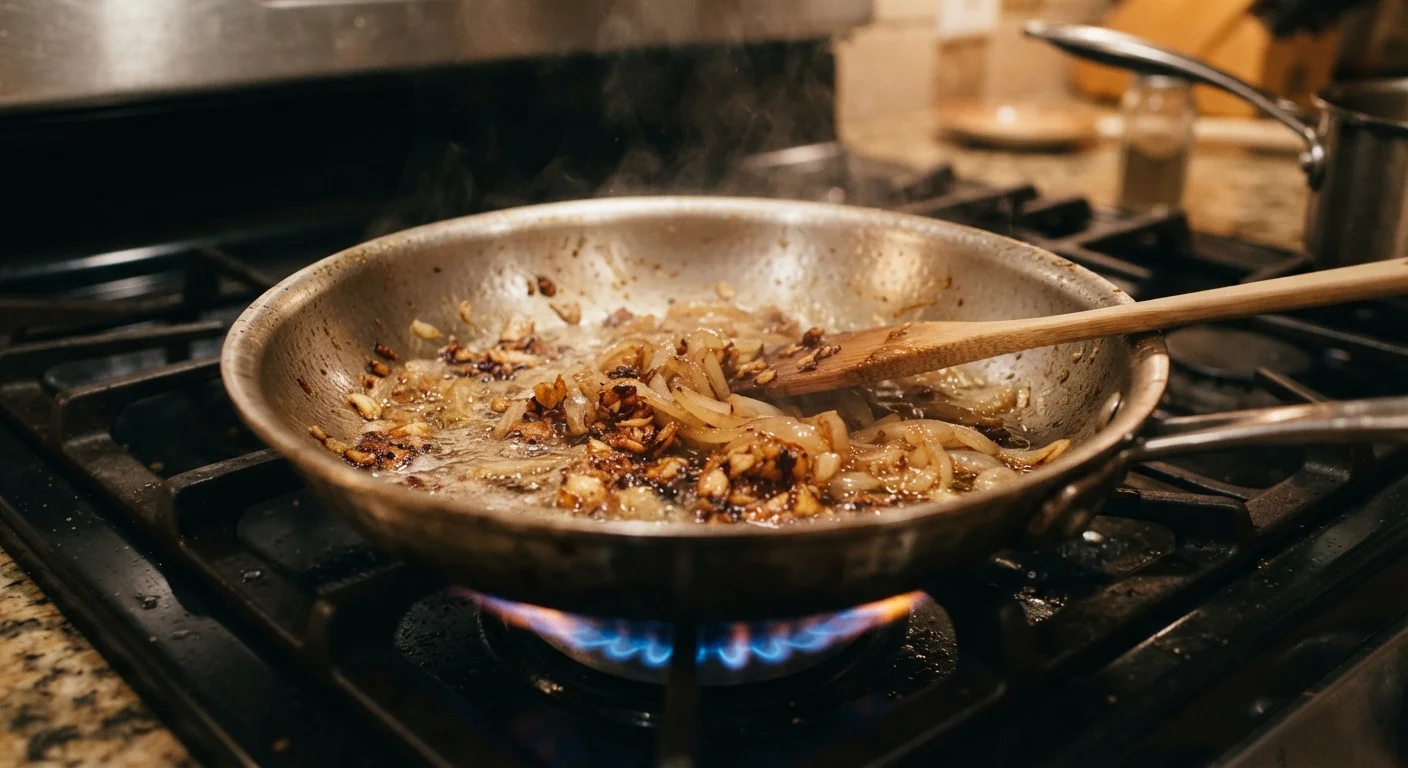
Key Takeaways
- Garlic burns in as little as 30 seconds over medium-high heat, while onions need 5-10 minutes to soften.
- The high sugar content and small size of garlic make it far more vulnerable to scorching than onions.
- Adding garlic after onions have softened is the most reliable way to prevent bitter, burnt flavors.
- Heat level matters: high heat accelerates garlic browning dramatically and leaves little room for error.
- Burnt garlic is bitter and cannot be rescued - starting over is often the only real fix.
Why Garlic and Onions Don't Cook at the Same Rate
Most recipes list onions and garlic together as if they're interchangeable aromatics that behave the same way in a pan. They don't. Understanding why requires a quick look at what's actually happening when you apply heat to each one.
Onions are dense, layered, and high in water content. Softening them means driving off moisture and breaking down cell walls - a process that takes time. Over medium heat, you're typically looking at 5 to 10 minutes before they turn translucent and sweet.
Garlic is a different animal. It's small, thin, and contains significantly more sugar relative to its mass. Under heat, those sugars caramelize - and then burn - very quickly. At medium-high heat, minced garlic can go from golden to acrid in under 30 seconds. See our introduction to cooking science for a deeper look at why sugar content changes how foods respond to heat.
Common Mistakes That Lead to Burnt Garlic
Most home cooks make one of a handful of predictable errors when working with these two aromatics. Recognizing them is the first step to avoiding them.
Adding garlic to the pan at the same time as onions.
Why it happens: Most recipes list both aromatics together, implying they go in simultaneously. Cooks follow the list order without accounting for the difference in cook time.
Cooking aromatics over heat that's too high.
Why it happens: Higher heat feels like faster progress, but it dramatically shortens the window before garlic scorches - sometimes to just seconds.
Walking away from the pan after adding garlic.
Why it happens: Cooks get distracted by prepping other ingredients or multitasking, not realizing how quickly garlic moves from golden to burnt.
Using garlic that's been minced too finely for a high-heat application.
Why it happens: Finely minced or microplaned garlic has a much larger surface area exposed to heat, causing it to brown and burn even faster than roughly chopped pieces.
Burnt Garlic Can't Be Saved
Once garlic turns dark brown or black, the bitter compounds it releases will flavor everything else in the pan. Adding more liquid, fat, or seasoning won't neutralize the bitterness. If you burn your garlic, wipe the pan clean, start the aromatics again, and proceed - it's a quick recovery and far better than pushing through with a compromised base.
Once garlic has burnt - turned dark brown or black with a sharp, bitter smell - the dish is compromised. Bitter compounds from scorched garlic don't cook out or mellow with time. If this happens, it's generally better to wipe the pan, start the aromatics again, and then continue with the rest of the recipe.
How to Sequence Aromatics Correctly
The fix is straightforward once you understand the timing difference. Start your onions (or shallots, leeks, or celery) in your fat of choice over medium heat. Let them cook until they've softened and become translucent - usually 5 to 8 minutes. Then, and only then, push them to the edges of the pan or reduce the heat slightly and add your garlic to the center.
From there, 30 to 60 seconds of stirring is usually all garlic needs before you move on to the next step in the recipe. You're not trying to cook the garlic through - you're blooming its flavor compounds into the fat just long enough to build depth without crossing into burnt territory.
This kind of sequencing is one of many skills hidden inside recipe instructions that assume prior knowledge. If you want to get better at reading between the lines, reading a recipe like a pro breaks down what those shorthand directions are really asking you to do.
30 sec
Time for minced garlic to burn at medium-high heat
Culinary instructors commonly cite this window when teaching students to sequence aromatics - it underscores how little margin for error exists.
5-10 min
Time needed to properly soften sliced onions
This is a general guideline for medium heat; cook time varies with onion thickness, pan material, and moisture level.
Heat management also plays a supporting role. Cooking aromatics over lower heat gives you more control and a wider margin for error - something worth keeping in mind if you're new to a particular stovetop or pan. And if you've heard that cranking the heat speeds up good flavor development, that's one of several kitchen myths worth revisiting.