

Key Takeaways
- Low-impact exercise reduces joint stress without sacrificing cardiovascular or strength benefits.
- Water-based, walking, cycling, and yoga-based activities are broadly accessible for people with joint pain.
- Consistency and gradual progression matter more than workout intensity when managing joint conditions.
- Always consult a qualified healthcare professional before starting a new exercise program with joint pain.
Movement Is Medicine - With the Right Approach
Joint pain - whether from osteoarthritis, inflammatory conditions, past injury, or general wear - creates a real and understandable barrier to physical activity. Pain signals feel like warnings, and for many people, the natural response is to rest. But prolonged inactivity can actually worsen joint stiffness, weaken the surrounding muscles that protect joints, and reduce overall quality of life.
The good news: exercise does not have to mean high-impact, high-intensity effort to be effective. Low-impact movement options can deliver meaningful cardiovascular, strength, and flexibility benefits while dramatically reducing the mechanical stress placed on vulnerable joints. The goal is finding approaches that work with your body rather than against it.
Joint Pain Is Not a Reason to Avoid All Exercise
While it may feel counterintuitive, physical inactivity often worsens joint stiffness and functional decline over time. General health guidelines from organizations such as the CDC and Arthritis Foundation support appropriate physical activity for most people with chronic joint conditions. That said, the right type, frequency, and intensity of exercise vary significantly by individual - always discuss a new movement plan with a physician or physical therapist before starting.
This article is for general informational purposes only and does not constitute medical advice. Always consult a qualified healthcare professional before beginning or modifying an exercise program, particularly when managing a diagnosed joint condition.
Six Low-Impact Movement Options Worth Considering
Water-Based Exercise (Aquatic Therapy and Pool Walking)
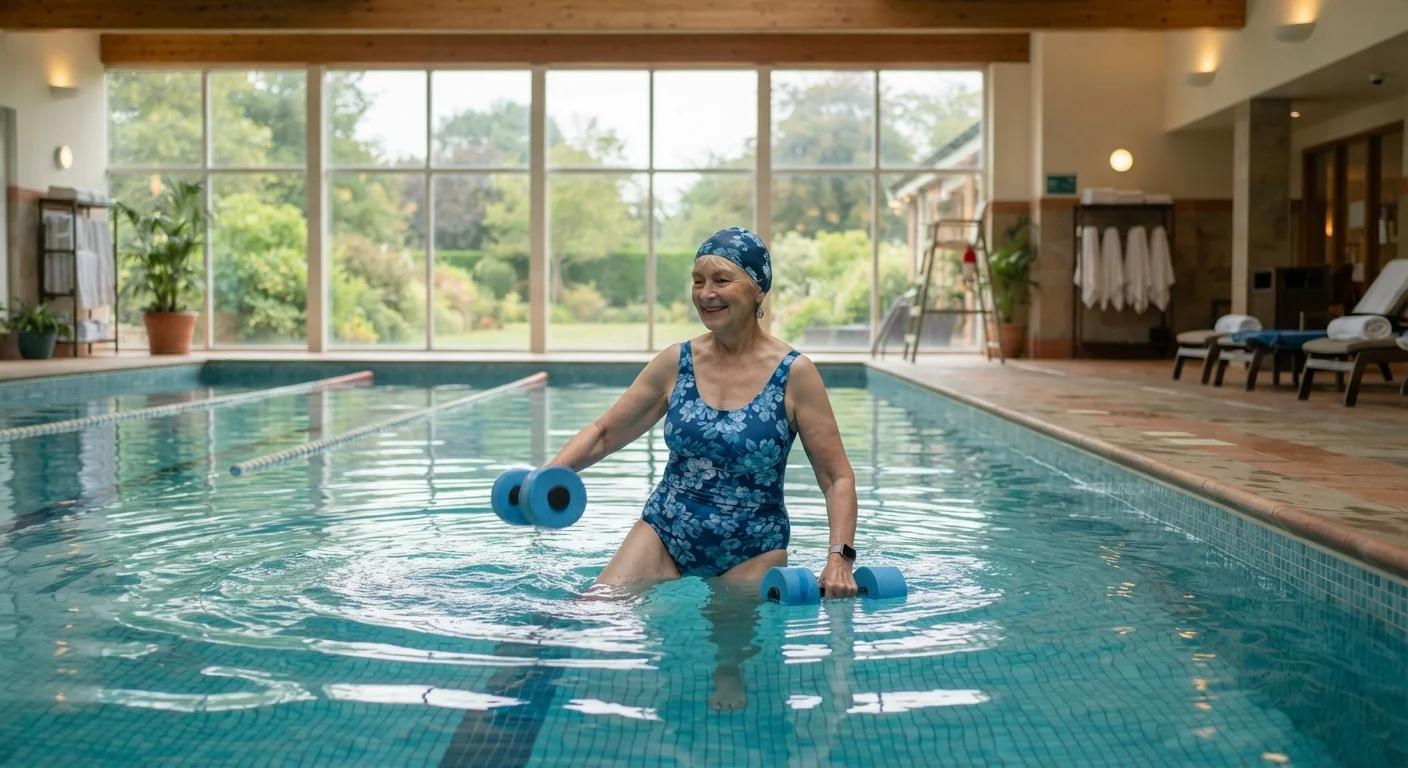
Water's buoyancy offsets a significant portion of body weight - research cited by the Arthritis Foundation suggests water can support up to 90% of body weight when submerged to neck level. This dramatically reduces compressive forces on hips, knees, and ankles. Pool walking, water aerobics, and gentle lap swimming all allow cardiovascular conditioning and muscle strengthening with minimal joint loading.
Water also provides natural resistance in every direction, meaning muscles work harder without adding load to cartilage or connective tissue. Community pools and aquatic centers frequently offer classes designed for older adults or those with mobility considerations.
Buoyancy can offset up to 90% of body weight, making water exercise uniquely joint-friendly.
Walking on Forgiving Surfaces
Walking remains one of the most accessible and well-studied forms of physical activity. While pavement generates some impact, choosing softer surfaces - grass, packed dirt trails, rubberized tracks - can meaningfully reduce stress transmitted through the lower extremities. Supportive, well-cushioned footwear makes an additional difference.
Short, consistent walks often outperform infrequent longer sessions for joint comfort and long-term adherence. As explored in why consistency matters more than intensity, regularity is a more reliable driver of fitness progress than pushing hard sporadically.
Soft surfaces and proper footwear can significantly reduce joint stress during everyday walking.
Stationary or Recumbent Cycling
Cycling - whether on a stationary upright, recumbent, or outdoor bike - keeps weight distributed across a seat rather than fully loaded through the knees and hips. Pedaling promotes synovial fluid circulation within the knee joint, which may support joint lubrication and comfort over time, according to general guidance from the American College of Sports Medicine.
Recumbent bikes in particular offer back support and a more neutral hip angle, making them a practical starting point for people managing osteoarthritis or recovering from lower-body injury. Resistance and duration should be increased gradually based on individual tolerance.
Cycling distributes body weight off the joints while actively promoting knee health through movement.
Yoga and Chair-Based Stretching
Yoga emphasizes controlled movement, breath awareness, and progressive range of motion - qualities well-suited to joint-sensitive populations. Chair yoga adapts traditional poses for those who cannot comfortably bear full weight through their knees or hips, and it has been studied in older adult populations with encouraging results for flexibility and pain perception.
Understanding the distinction between flexibility and mobility is useful here. As our guide to flexibility, mobility, and stretching explains, mobility work targets functional joint range of motion - particularly relevant when joint stiffness limits daily activities.
Chair yoga adapts movement for all ability levels, making it ideal for joint-sensitive individuals.
Tai Chi
Tai chi is a slow, flowing movement practice with a substantial body of research supporting its use for people with osteoarthritis. A widely cited 2016 study published in Annals of Internal Medicine found tai chi comparable to physical therapy for knee osteoarthritis outcomes, including pain reduction and functional improvement. Its emphasis on balance and coordination also addresses fall-prevention - a meaningful concern for those with lower-limb joint conditions.
Classes are widely available in community centers and online, and the practice requires no special equipment or high fitness baseline to begin.
Research supports tai chi as effective for knee osteoarthritis pain and functional improvement.
Resistance Training with Bands or in Water
Muscle strength around a joint directly supports its stability and reduces the load placed on cartilage during movement. Resistance band exercises allow progressive strength training at low load, with users controlling tension and range easily. Water-based resistance work - using pool noodles, paddles, or simply moving limbs against water resistance - achieves similar goals with added buoyancy benefit.
The key is starting conservatively and building progressively. Those returning to activity after a period of rest may find guidance on returning to exercise after a long break a helpful starting reference for pacing their reintroduction to strength work.
Stronger muscles around a joint reduce cartilage load and improve overall joint stability.
Start Slow and Track How Joints Respond
A useful rule of thumb: if joint discomfort during or after exercise rates above a 5 out of 10, or if pain persists more than a couple of hours post-activity, scale back the intensity or duration. Progress should feel gradual and sustainable - not forced. Keeping a brief activity log can help identify which movements feel beneficial versus those that reliably cause flare-ups.
Building a Routine That Lasts
Choosing a low-impact activity is the starting point - building it into a consistent routine is the longer game. Research consistently shows that adherence, not peak intensity, is the most reliable predictor of lasting fitness benefits. If you're setting movement goals, consider focusing on frequency and enjoyment rather than output metrics. Our article on fitness goals that actually stick offers useful framing for making physical activity a durable habit rather than a short-term fix.
It's also worth noting that movement supports more than physical health. Regular low-impact exercise has well-documented associations with improved mood and stress resilience - a connection explored in our piece on sustainable stress relief habits. Sustainable movement is one of the few health behaviors that benefits both body and mind simultaneously.
This article is for general informational purposes only and does not constitute medical advice. Consult a qualified healthcare professional before starting, modifying, or stopping any exercise program, especially when managing a joint condition or chronic illness.