

Key Takeaways
- Stress triggers a chain reaction of hormones, beginning with adrenaline and followed by cortisol.
- The fight-or-flight response is a survival mechanism, not a flaw - but it wasn't designed for modern chronic stressors.
- Chronic stress can affect cardiovascular health, immune function, sleep, digestion, and mood over time.
- Short-term stress can actually sharpen performance; it's prolonged activation that causes harm.
- Recognizing your body's stress signals is the first step toward managing them effectively.
The Stress Response
The stress response is the body's automatic reaction to a perceived threat or demand. It involves a rapid release of hormones that prepare your body to act - raising your heart rate, sharpening focus, and redirecting energy. While this system evolved to protect us from danger, it can become harmful when activated repeatedly over long periods.
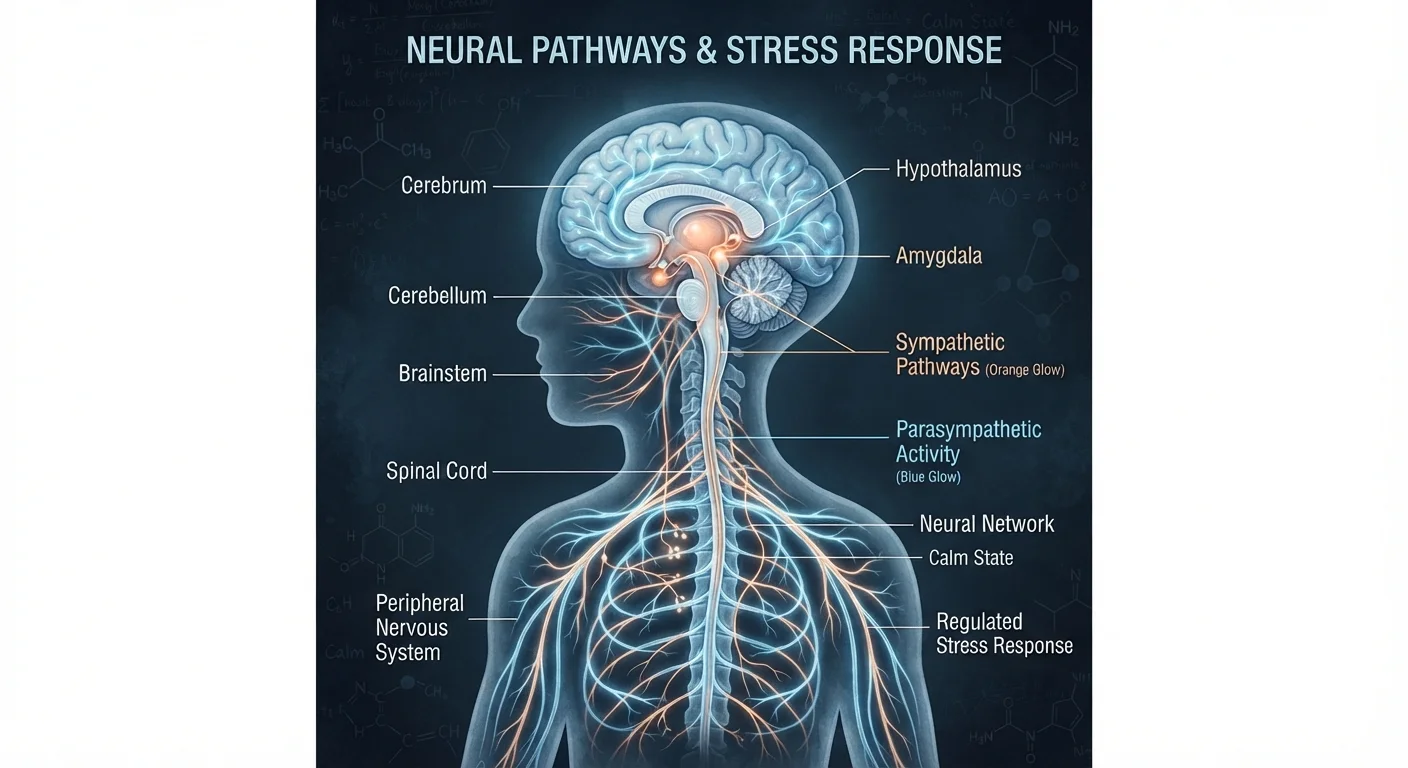
The stress response is primarily governed by the hypothalamic-pituitary-adrenal (HPA) axis and the sympathetic nervous system, both of which coordinate hormonal and neurological signals throughout the body.
The Alarm System: How Your Brain Detects a Threat
When your brain perceives a threat - whether it's a car veering into your lane or a tense conversation with your boss - a small structure called the amygdala fires an alert. This triggers the hypothalamus, which acts like a command center, signaling the rest of the body to prepare for action.
Within seconds, the adrenal glands release adrenaline (epinephrine), causing your heart to beat faster, your breathing to quicken, and your muscles to receive a surge of blood. Your pupils dilate. Digestion slows. Non-essential processes get deprioritized so that energy can be redirected to the systems most needed for survival. This is the fight-or-flight response - a deeply conserved biological mechanism that kept our ancestors alive.
The Brain Can't Always Tell the Difference
The amygdala - the brain's threat-detection center - responds to perceived danger, not just physical harm. Social rejection, financial worry, and performance pressure can all activate the same biological stress cascade as a physical threat. This is why "just calm down" is rarely as simple as it sounds; the response is neurological, not a choice.
Importantly, the brain does not always distinguish between a physical threat and a psychological one. A looming work deadline can activate the same alarm system as an approaching predator - even though no physical action is needed.
Cortisol: The Sustained Signal
If adrenaline is the immediate alarm, cortisol is the sustained broadcast. Released by the adrenal cortex minutes after a stressor is detected, cortisol keeps the stress response going. It raises blood sugar for available energy, suppresses inflammatory responses in the short term, and modulates metabolism.
Under normal circumstances, cortisol levels naturally rise in the morning and taper off by evening - a rhythm tied to the sleep-wake cycle. Stress disrupts this pattern. Elevated cortisol at night, for example, can interfere with sleep onset - a connection explored in detail in our article on why afternoon energy crashes happen.
77%
Adults reporting physical symptoms of stress
According to the American Psychological Association's Stress in America survey, a large majority of US adults report experiencing physical symptoms they associate with stress.
33%
Adults reporting extreme stress levels
The same APA survey found roughly one in three US adults describe their stress as extreme, suggesting widespread chronic activation of the stress response.
50%+
Increase in cortisol during acute stress
Research published in peer-reviewed endocrinology literature documents cortisol levels can more than double during acute psychological stressors in healthy adults.
Once the stressor passes, the parasympathetic nervous system - sometimes called the "rest and digest" system - brings the body back to baseline. The problem arises when stressors don't let up.
What Happens to the Body Under Chronic Stress
Chronic stress keeps the HPA axis and sympathetic nervous system in a state of near-constant activation. Over time, this sustained arousal takes a measurable toll across multiple body systems:
- Cardiovascular: Persistently elevated heart rate and blood pressure increase wear on the heart and blood vessels.
- Immune function: While acute stress can temporarily boost immunity, chronic stress tends to suppress it, making the body less effective at fighting infection and inflammation.
- Digestion: The gut and brain are closely connected via the vagus nerve. Chronic stress is associated with symptoms like nausea, bloating, and changes in bowel habits.
- Mental health: Prolonged cortisol exposure affects brain regions involved in memory and mood regulation, including the hippocampus and prefrontal cortex.
These are not minor inconveniences - they reflect real physiological changes. Understanding them underscores why chronic stress deserves attention, not dismissal. See our guide on recognizing when stress has crossed a line for signals worth watching for.
“Stress is not simply a psychological experience - it is a whole-body event, and understanding that biology helps de-stigmatize what people are going through.”
— Dr. Robert Sapolsky, Neuroendocrinologist and author of 'Why Zebras Don't Get Ulcers'
This article is for informational purposes only and is not a substitute for professional medical advice, diagnosis, or treatment. Always consult a qualified healthcare provider regarding any health concerns or before making changes to your care.