

Key Takeaways
- Mental health apps can provide genuine support for mild stress, mood tracking, and guided relaxation.
- They are not substitutes for professional care when symptoms are persistent or severe.
- Privacy and data security vary significantly across apps - review policies before sharing personal information.
- Apps are most effective when used as one layer within a broader mental wellness strategy.
- Evidence quality behind app-based interventions varies widely; look for tools grounded in established frameworks.
Accessible anytime, anywhere - no appointment needed
Users can engage with tools during a commute, a lunch break, or at 2 a.m. - removing the scheduling barrier that prevents many people from seeking any support at all.
Low or no cost compared to traditional therapy
Many apps offer free tiers with substantial functionality, making some form of structured mental wellness support available to people who couldn't otherwise afford regular professional sessions.
Reduces stigma through private, self-directed use
Engaging with mental wellness tools privately on a personal device can feel less intimidating for people who are hesitant about seeking help - lowering the barrier to getting started.
Builds consistent habits through daily micro-interactions
Short, repeatable exercises - like a two-minute breathing check-in or a brief mood log - can accumulate meaningful benefit over weeks, supporting the kind of consistency that underpins long-term well-being.
Can bridge gaps between therapy appointments
For people already working with a therapist, apps can reinforce coping strategies, track progress, and provide structured support between sessions.
Not a substitute for professional clinical care
Apps cannot diagnose conditions, provide individualized treatment, or respond dynamically to a user's evolving needs the way a trained clinician can. For serious or persistent symptoms, they are insufficient as a primary resource.
Evidence base varies significantly across apps
A 2019 review in the journal World Psychiatry found that while some app-based interventions show promise, the majority of available mental health apps lack rigorous clinical validation. Marketing claims often exceed what research supports.
Privacy and data security risks are real
Mental health apps collect sensitive personal data, and practices vary widely. Some apps have shared user data with third parties in ways users did not anticipate - making careful review of privacy policies essential before use.
Risk of engagement replacing action
There is a documented concern that users may feel productive using an app while avoiding more meaningful steps - such as seeking professional help or addressing the root causes of distress.
Inconsistent quality and high dropout rates
Studies on digital mental health tools consistently find high abandonment rates, often within the first few weeks. Without accountability structures, many users disengage before experiencing meaningful benefit.
Our Verdict
Mental health apps occupy a genuinely useful middle ground - more structured than doing nothing, more accessible than traditional therapy. For people managing everyday stress, building wellness habits, or bridging gaps between professional appointments, they can offer real, practical value. However, they should be understood as supportive tools rather than clinical solutions, and anyone dealing with serious mental health symptoms should seek qualified professional care.
Best suited for adults seeking accessible, low-cost support for everyday stress, mood awareness, or mindfulness habits - especially as a complement to, not a replacement for, professional mental health care.
What Mental Health Apps Actually Do
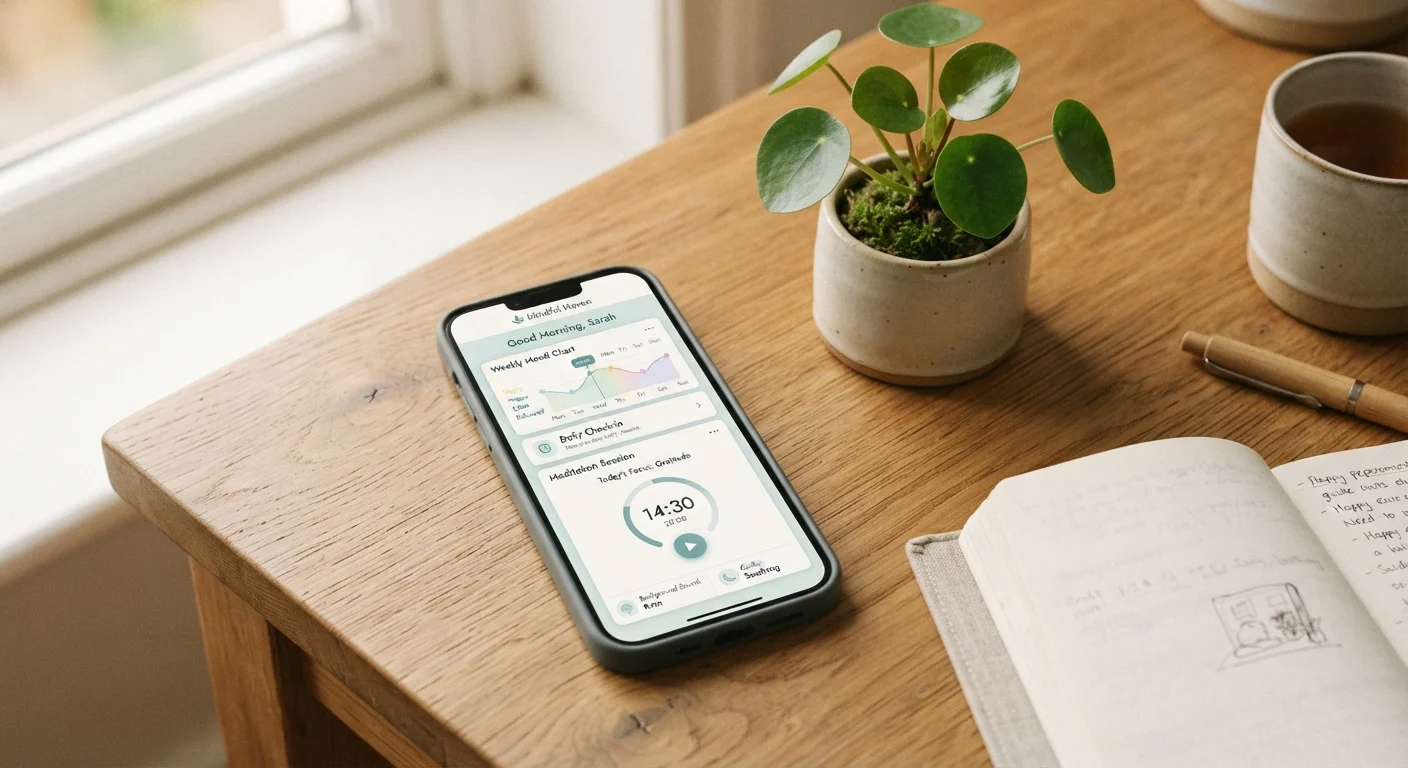
Mental health apps span a wide range of functions: mood journals that help users spot emotional patterns, guided meditation and breathing exercises, cognitive behavioral therapy (CBT)-based self-help modules, peer support communities, and platforms that connect users with licensed therapists via text or video. If you're new to thinking intentionally about your emotional health, it's worth understanding what these tools are designed to do before evaluating whether they're right for you.
Not all apps are built on the same evidence base. Some draw on well-researched frameworks - particularly mindfulness-based stress reduction and CBT - while others offer loosely structured content with limited clinical grounding. That gap in rigor matters when you're evaluating whether an app is likely to help.
A Note on Terminology
The term 'mental health app' covers very different products - from clinician-connected therapy platforms to simple mood diaries. The evidence, privacy considerations, and appropriate use cases differ meaningfully between these categories. It helps to be specific about what type of tool you're evaluating. For a grounding in common mental health terminology, a reference guide can help clarify what these concepts actually mean.
The Real Advantages
The strongest case for mental health apps is accessibility. Traditional therapy remains out of reach for many people due to cost, geography, or scheduling constraints. Apps remove several of those barriers at once.
Accessible anytime, anywhere - no appointment needed
Users can engage with tools during a commute, a lunch break, or at 2 a.m. - removing the scheduling barrier that prevents many people from seeking any support at all.
Low or no cost compared to traditional therapy
Many apps offer free tiers with substantial functionality, making some form of structured mental wellness support available to people who couldn't otherwise afford regular professional sessions.
Reduces stigma through private, self-directed use
Engaging with mental wellness tools privately on a personal device can feel less intimidating for people who are hesitant about seeking help - lowering the barrier to getting started.
Builds consistent habits through daily micro-interactions
Short, repeatable exercises - like a two-minute breathing check-in or a brief mood log - can accumulate meaningful benefit over weeks, supporting the kind of consistency that underpins long-term well-being.
Can bridge gaps between therapy appointments
For people already working with a therapist, apps can reinforce coping strategies, track progress, and provide structured support between sessions.
For people looking to weave mental wellness habits into an already packed day, even a five-minute guided breathing exercise or a brief mood check-in can build meaningful consistency over time. Research published in peer-reviewed journals has found that app-based mindfulness interventions can produce modest but measurable reductions in self-reported stress and anxiety in non-clinical populations.
The Limitations You Should Know
The enthusiasm around mental health apps sometimes outpaces the evidence. Several limitations deserve honest attention before anyone relies heavily on these tools.
Not a substitute for professional clinical care
Apps cannot diagnose conditions, provide individualized treatment, or respond dynamically to a user's evolving needs the way a trained clinician can. For serious or persistent symptoms, they are insufficient as a primary resource.
Evidence base varies significantly across apps
A 2019 review in the journal World Psychiatry found that while some app-based interventions show promise, the majority of available mental health apps lack rigorous clinical validation. Marketing claims often exceed what research supports.
Privacy and data security risks are real
Mental health apps collect sensitive personal data, and practices vary widely. Some apps have shared user data with third parties in ways users did not anticipate - making careful review of privacy policies essential before use.
Risk of engagement replacing action
There is a documented concern that users may feel productive using an app while avoiding more meaningful steps - such as seeking professional help or addressing the root causes of distress.
Inconsistent quality and high dropout rates
Studies on digital mental health tools consistently find high abandonment rates, often within the first few weeks. Without accountability structures, many users disengage before experiencing meaningful benefit.
Perhaps most importantly, apps are not equipped to handle clinical mental health conditions. If you're experiencing persistent depressive episodes, significant anxiety that disrupts daily functioning, trauma responses, or any symptoms that feel unmanageable, an app is not an appropriate primary intervention. The distinction between professional therapy and self-help approaches is significant - and worth understanding clearly.
10,000+
Mental health apps available in major app stores
A 2021 analysis estimated over 10,000 mental health apps exist across platforms, making quality assessment a significant challenge for consumers.
~80%
App users who stop engaging within two weeks
Research on digital health tool engagement consistently finds that the large majority of users disengage from mental health apps within a short period of initial use.
How Apps Fit Into a Broader Wellness Strategy
The most balanced view of mental health apps treats them as one layer in a wider approach - not the whole strategy. Used alongside adequate sleep (sleep and mental health are closely linked), physical activity, social connection, and professional support when needed, an app can serve as a useful daily touchpoint.
Some people find that app-based mood tracking helps them notice patterns they'd otherwise miss - for example, recognizing that stress spikes mid-week or that sleep disruption reliably affects their mood the following day. Others use guided meditation features to complement what they've learned in therapy. For a different but complementary approach, intentional journaling offers another low-tech method of processing emotions that some find more effective than digital tools.
When evaluating any app, look for transparency about the therapeutic approach it uses, clear privacy policies, and ideally some published research supporting its specific methods. An app that openly states it uses CBT-based techniques and publishes its data-handling practices is a more trustworthy starting point than one making vague wellness claims.
This article is for general informational purposes only and does not constitute medical or psychological advice. If you are experiencing mental health symptoms, please consult a qualified healthcare professional.