

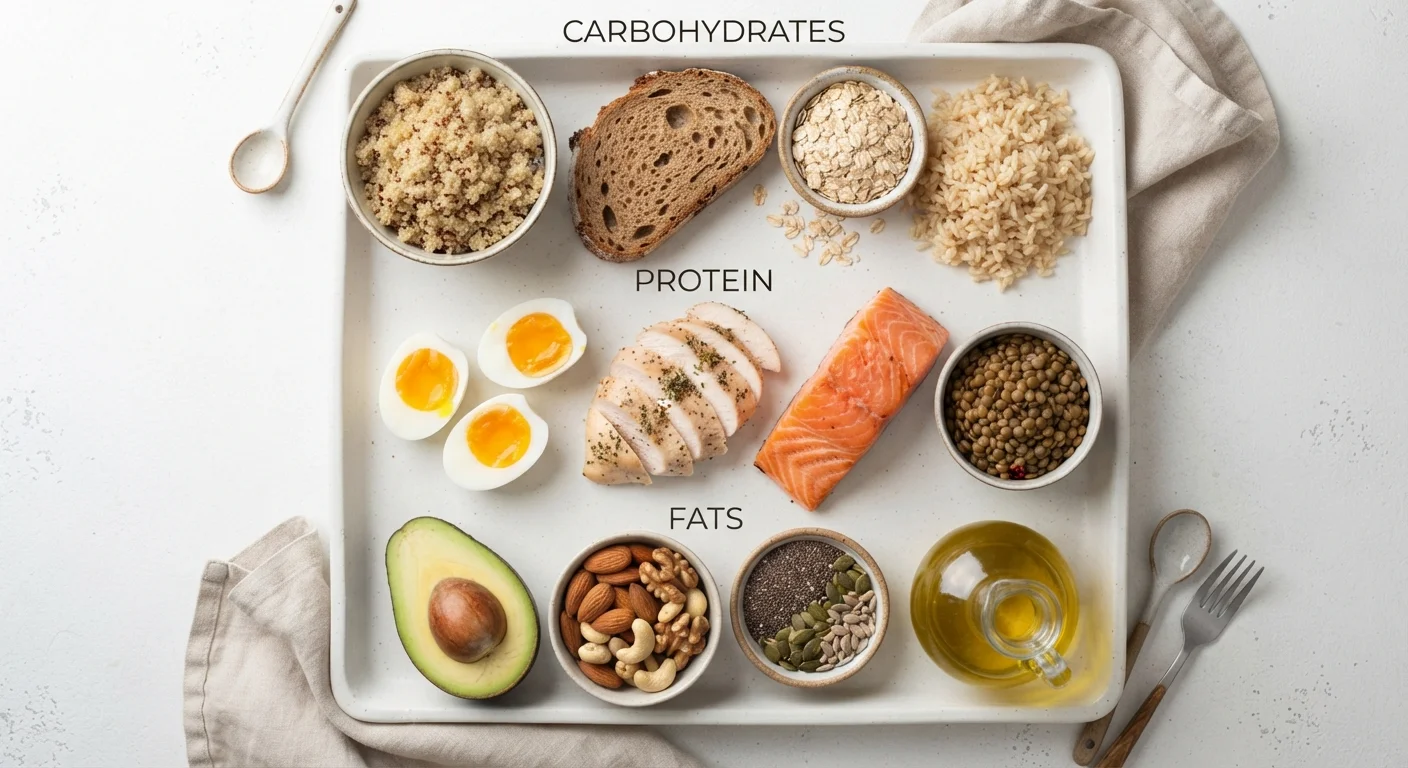
Key Takeaways
- All three macronutrients - carbs, proteins, and fats - are essential and serve distinct functions in the body.
- Carbohydrates are your body's preferred and fastest source of energy.
- Protein supports muscle repair, immune function, and the production of hormones and enzymes.
- Dietary fats are critical for brain health, hormone production, and absorbing fat-soluble vitamins.
- No single macronutrient is inherently "bad" - quality and overall diet balance matter most.
- Consult a registered dietitian or healthcare provider for personalized nutrition guidance.
Macronutrients
Macronutrients are the three main categories of nutrients your body needs in relatively large amounts every day: carbohydrates, proteins, and fats. Each one provides energy - measured in calories - and serves specific functions that keep your body working. Unlike vitamins and minerals, which are needed in smaller quantities, macronutrients form the structural foundation of your diet.
Carbohydrates and proteins each provide 4 calories per gram, while fats provide 9 calories per gram - reflecting their different roles in energy storage and delivery.
What Macronutrients Are - and Why They Matter
Food does a lot more than satisfy hunger. Every bite you take contains compounds your body breaks down and uses to move, think, heal, and grow. Macronutrients - carbohydrates, proteins, and fats - are the core of that equation. They're called "macro" because your body requires them in gram-level quantities each day, as opposed to the trace amounts of vitamins and minerals it needs.
Understanding what each macronutrient does helps you see your diet less as a list of rules and more as a toolkit. For a broader foundation, see the nutrition fundamentals overview, which covers macronutrients alongside micronutrients, hydration, and food groups in one accessible guide.
45-65%
Recommended share of daily calories from carbohydrates
According to the Dietary Guidelines for Americans, published by the U.S. Department of Agriculture and HHS.
10-35%
Recommended share of daily calories from protein
Per the Acceptable Macronutrient Distribution Range established by the National Academies of Sciences, Engineering, and Medicine.
20-35%
Recommended share of daily calories from fat
Per the same National Academies framework, with an emphasis on unsaturated fat sources as part of a balanced diet.
Carbohydrates: Your Body's Primary Fuel Source
Carbohydrates are the body's fastest and most readily available source of energy. When you eat carbs - whether from bread, fruit, beans, or vegetables - your digestive system breaks them down into glucose. That glucose enters the bloodstream and fuels your cells, particularly your brain and muscles during physical activity.
Not all carbohydrates behave the same way. Simple carbohydrates (like those in sugar and refined grains) digest quickly and produce a rapid rise in blood sugar. Complex carbohydrates (found in whole grains, legumes, and most vegetables) digest more slowly, providing steadier energy and delivering fiber, which supports digestive health.
Fiber - technically a carbohydrate - deserves special mention. It isn't digested for energy, but it plays a significant role in gut health, cholesterol regulation, and blood sugar management, according to research published by the National Institutes of Health.
Choosing Carbohydrates Wisely
When looking at carbohydrate sources, prioritize whole foods - fruits, vegetables, legumes, and whole grains - that come packaged with fiber, vitamins, and minerals. These additions slow digestion and deliver broader nutritional value than refined or heavily processed alternatives.
Protein: The Body's Builder and Regulator
Protein is made up of smaller units called amino acids, and your body uses them as building blocks for virtually every structure and process it manages - muscle tissue, skin, hair, antibodies, enzymes, and hormones all depend on adequate protein intake.
When you eat protein-rich foods like eggs, meat, fish, dairy, legumes, or tofu, your body breaks the protein down into amino acids and reassembles them to meet its needs. Of the 20 amino acids your body uses, nine are considered essential - meaning your body can't produce them and must get them from food.
Protein also plays a role in satiety. Research suggests it tends to keep you feeling fuller longer compared to the same number of calories from carbohydrates or fat, which may make it easier to maintain a consistent eating pattern.
Fats: More Essential Than Their Reputation Suggests
Dietary fat has spent decades unfairly labeled as the enemy of good health. In reality, fat is indispensable. It supports brain function (the brain is roughly 60% fat by dry weight), enables the production of hormones including estrogen and testosterone, cushions vital organs, and is required to absorb fat-soluble vitamins A, D, E, and K.
The type of fat matters. Unsaturated fats - found in olive oil, avocados, nuts, and fatty fish - are associated with cardiovascular benefits in observational research. Saturated and trans fats interact differently with cholesterol and cardiovascular risk. For a deeper look at how fat types differ, the guide to dietary fat types covers the distinctions clearly, and this plain-language fat breakdown explains where each type is found and how to think about them in your diet.
“There are no bad macronutrients - there are only poor dietary patterns. Each of the three plays a role your body genuinely cannot do without.”
— Walter Willett, Professor of Epidemiology and Nutrition, Harvard T.H. Chan School of Public Health
How the Three Macronutrients Work Together
Macronutrients don't operate in isolation - they interact constantly. Carbohydrates spare protein from being used as an energy source, leaving amino acids available for building and repair. Fat slows digestion, which moderates how quickly carbohydrates raise blood sugar. Protein and fat together can significantly increase a meal's satiety compared to carbohydrates alone.
This interplay is one reason why eliminating any single macronutrient rarely produces long-term benefits and can create gaps in nutritional coverage. For example, very low-fat diets can impair the absorption of fat-soluble vitamins. Very low-carb diets may restrict fiber intake if not carefully planned.
To understand how vitamins and minerals complement what macronutrients provide, see the guide to micronutrients.
This article is for general informational and educational purposes only and is not a substitute for professional medical or nutritional advice. Consult a qualified healthcare provider or registered dietitian for guidance specific to your health needs.