

Key Takeaways
- Most cats benefit from regular brushing, nail trims, and ear checks done at home.
- Short, calm sessions build tolerance - start young if possible, but adults can adapt too.
- Use species-appropriate tools; human grooming products can harm cats.
- Matted fur, dental scaling, and anal gland issues require a professional.
- Signs of pain, resistance, or skin abnormalities during grooming warrant a vet visit.
What you will need
Why Home Grooming Matters - and What It Involves
Cats are meticulous self-groomers, but that self-sufficiency has limits. Regular handling by you supplements what your cat does on its own, keeps the coat and nails in good condition, and - importantly - gives you a chance to notice changes in skin, coat texture, ear discharge, or nail health before they become veterinary concerns.
Home grooming typically covers four tasks: coat brushing, nail trimming, ear inspection and light cleaning, and spot cleaning of the coat when needed. Dental care is a fifth area; daily tooth brushing with a cat-appropriate toothbrush and enzymatic toothpaste is recommended by most veterinary dental guidelines, though tartar scaling requires professional equipment. This guide focuses on the four core physical grooming tasks.
Make Grooming Part of a Routine
Cats are creatures of habit. Scheduling short grooming sessions at the same time each day - ideally when your cat is already calm or slightly drowsy - helps them anticipate and accept handling. Pairing grooming with a small treat afterward reinforces a positive association over time. For more on structuring your cat's day, see building a routine that suits your cat's natural rhythms.
Before you start, gather your tools and review the prerequisites below. A calm setup prevents most grooming problems before they begin.
What you will need
Slicker brush or rubber grooming mitt
Removes loose fur and debris from the coat during regular brushing sessions.
Stainless steel comb
Works through tangles in medium- and long-haired coats and checks for mats near the skin.
Cat-specific nail clippers (scissor or guillotine style)
Trims the sharp tips of nails safely without crushing the nail.
Styptic powder
Stops minor bleeding quickly if a nail is accidentally trimmed too short.
Cotton balls and veterinarian-approved ear cleaner
Gently wipes visible debris from the outer ear canal during ear checks.
Cat-safe waterless shampoo or grooming wipes
Freshens the coat between full baths for cats that tolerate spot cleaning.
Step-by-Step: The Core Grooming Tasks
Work through these steps in whatever order suits your cat on a given day. Some cats tolerate nail trims better after a brushing session; others prefer the reverse. Flexibility helps.
Never Use Human Products on Cats
Human shampoos, nail polish removers, ear-cleaning solutions, and many essential oils are toxic to cats. Cats groom themselves extensively, meaning any residue on their coat or skin is likely to be ingested. Always use products specifically formulated and labeled safe for feline use, and confirm with your veterinarian if you are unsure.
Brush the coat
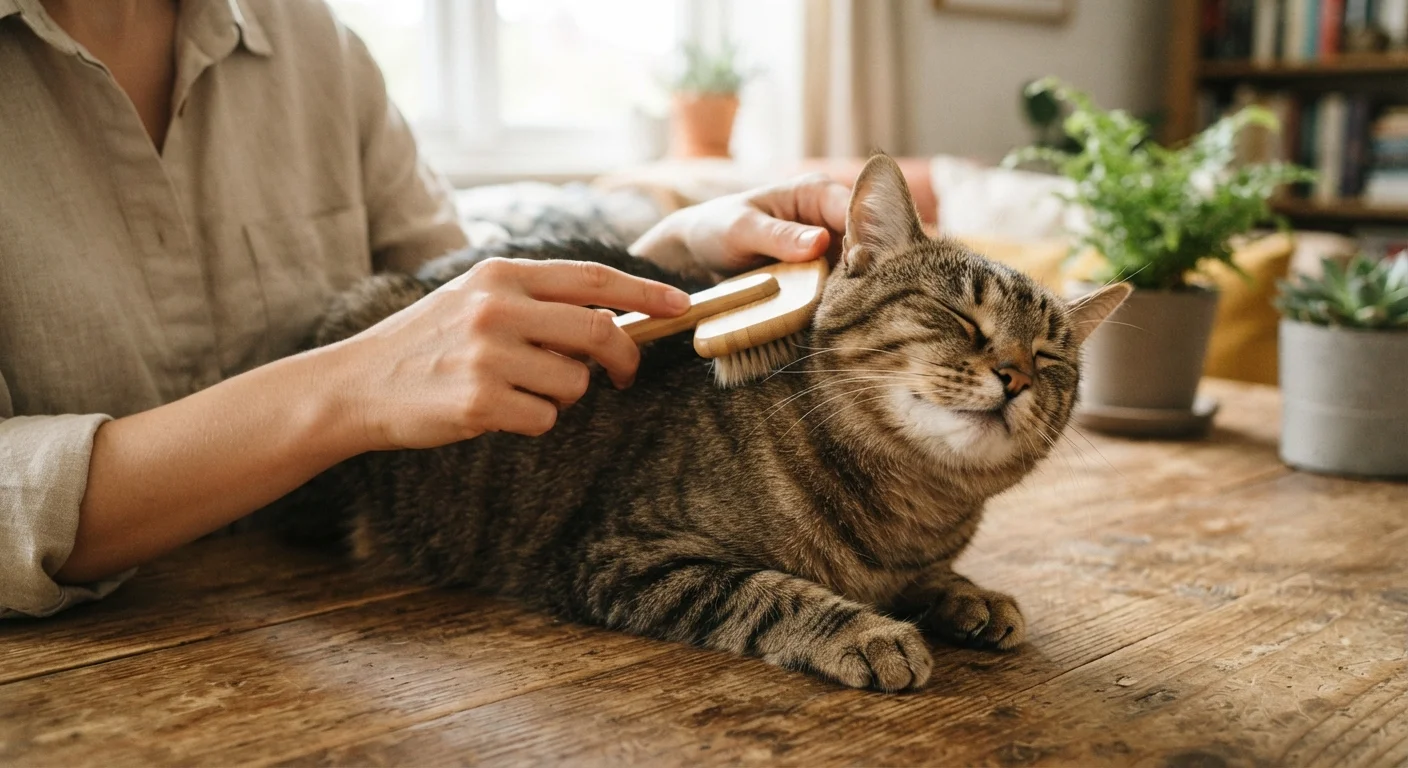
Brush in the direction of hair growth using a slicker brush or rubber mitt. Work from head to tail, section by section. For medium- or long-haired cats, follow with a steel comb to check for tangles close to the skin. Frequency depends on coat length: short-haired cats generally need brushing once or twice a week; long-haired breeds may need daily attention to prevent mats from forming.
Trim the nails
Hold your cat securely in your lap or on a stable surface. Gently press one paw pad between your thumb and forefinger to extend the nail. Identify the pink quick - the blood vessel running through the nail - and clip only the clear, curved tip beyond it, leaving a 2mm margin. Clip one nail at a time and release pressure between cuts. Aim to trim all nails in one session, but stopping partway through is fine if your cat becomes agitated.
Check and clean the ears
Fold the ear flap back gently and inspect the visible part of the ear canal under good light. Healthy ears appear pale pink with minimal wax and no odor. If you see light brown wax, apply a few drops of veterinarian-approved ear cleaner to a cotton ball and wipe the visible surfaces - never insert anything into the canal itself. Repeat on the other ear with a fresh cotton ball.
Spot-clean the coat when needed
Most cats self-groom effectively and rarely need a full bath. For soiling around the hindquarters or face, use a soft cloth dampened with warm water or a cat-safe grooming wipe. If a full bath becomes necessary - for instance after contact with a substance that cannot be safely self-groomed - use a shampoo labeled specifically for cats, keep the experience brief, and dry your cat thoroughly in a warm room away from drafts.
Stop If Your Cat Shows Distress
Growling, biting, flat ears, or a lashing tail are signs your cat has reached its limit. Pushing past these signals can erode trust and make future grooming sessions harder. End the session calmly, give your cat space, and try again another day with a shorter goal.
Knowing When to Call a Professional
Home grooming covers a lot, but some situations require a professional groomer or veterinarian. Knowing the boundary protects both you and your cat.
- Matted fur: Tight mats pull on the skin and should be removed by a professional groomer with the right tools. Cutting mats with scissors at home risks cutting the skin, which lies closer to the surface than it appears.
- Dental scaling: Tartar buildup requires ultrasonic scaling under anesthesia - a veterinary procedure. At-home brushing slows accumulation but cannot reverse existing calculus.
- Anal gland expression: Some cats need periodic gland expression; this is best performed by a veterinarian or trained groomer, not at home.
- Severe coat overgrowth or lion cuts: Full-body clips or sanitary trims on long-haired cats require professional skill to avoid nicks and overheating.
- Skin lesions, lumps, or persistent coat changes: These are medical concerns for a veterinarian, not grooming issues.
If grooming reveals something unexpected - unusual discharge, a lump, or a wound - contact your vet rather than attempting to address it yourself. A well-maintained cat is also one that fits comfortably into a broader daily routine; see setting up a safe home environment for complementary guidance on keeping your home cat-friendly.
For a broader picture of your cat's care needs - from diet to behavior - understanding what cats need at each life stage is a useful companion read.
This article provides general pet care information and is not a substitute for professional veterinary advice. If you have concerns about your cat's health or grooming needs, consult a licensed veterinarian.