

Key Takeaways
- Positive reinforcement is not bribery - it's a scientifically supported method for building lasting behavior.
- Treats are one tool among many; praise, play, and real-life rewards are equally valid reinforcers.
- Timing and consistency matter far more than the type of reward used.
- Positive reinforcement does not mean permissiveness - clear boundaries are still essential.
- This approach works for dogs of all ages, breeds, and temperaments when applied correctly.
Why Positive Reinforcement Gets Misunderstood
Positive reinforcement training has become increasingly mainstream, yet some of the most common ideas owners hold about it are inaccurate - and those misconceptions can undermine real results. Whether you're a first-time dog owner or someone who's trained dogs before, sorting fact from fiction makes a meaningful difference in outcomes. If you're just getting started, our guide for new dog owners covers the broader picture of what to expect.
The myths below aren't trivial - they lead owners to abandon effective methods prematurely, apply them incorrectly, or dismiss them entirely in favor of approaches that carry greater risk of harm. Here's what the evidence actually shows.
Myth
Positive reinforcement is just bribery - you're paying your dog to behave.
Fact
Reinforcement builds a learned behavior over time; bribery is showing the reward before the behavior to get compliance. They are fundamentally different.
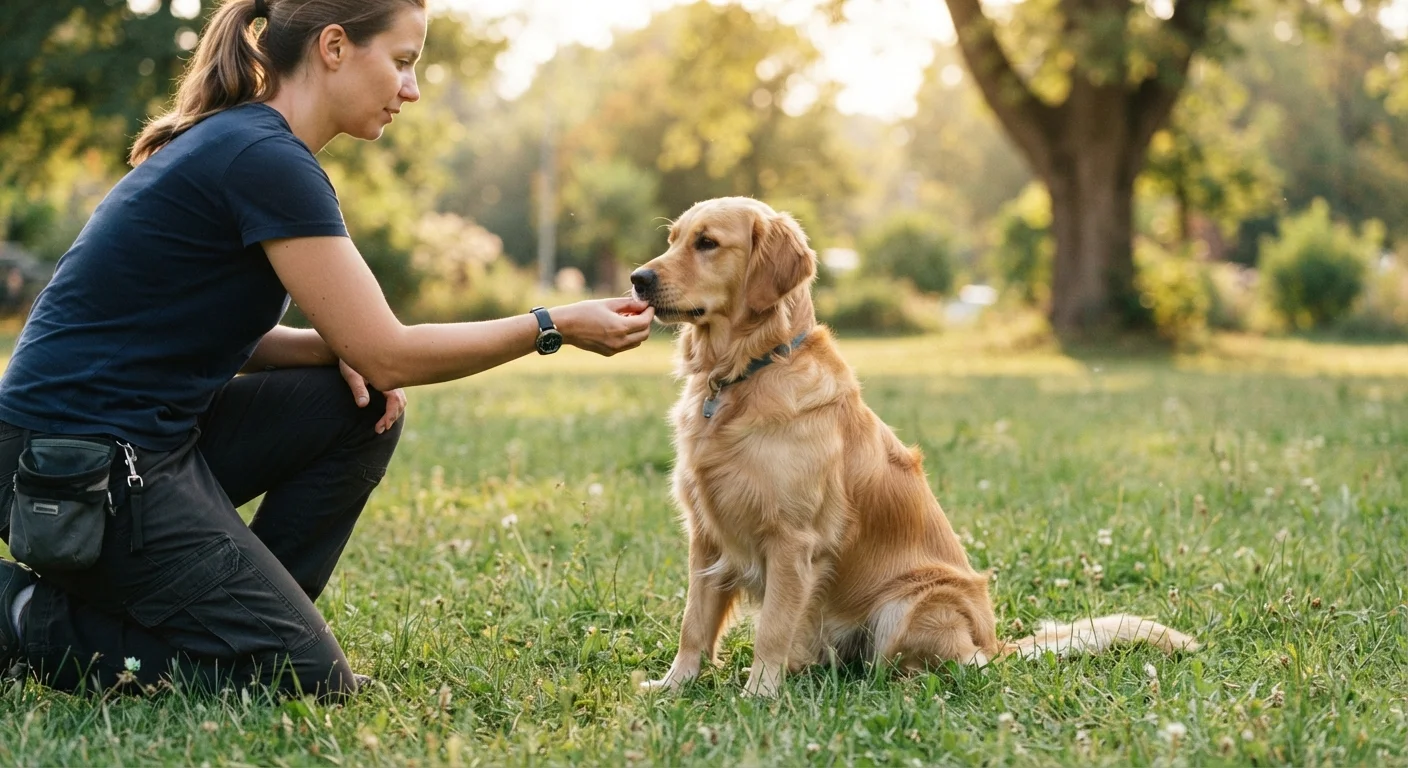
Bribery means dangling a treat in front of a dog to coax it into doing something right now. Reinforcement means rewarding a behavior after it happens, which gradually makes that behavior more likely in the future. The goal of positive reinforcement training is to make good behavior intrinsically rewarding - eventually, many dogs perform cued behaviors reliably even when no treat is visible, because the habit is genuinely established.
Myth
You'll always need to carry treats - your dog will only listen when food is present.
Fact
Proper reinforcement schedules wean dogs off constant food rewards, shifting to intermittent reinforcement that actually strengthens behavior.
In early training, frequent rewards help the dog understand what earns reinforcement. Over time, trainers move to variable or intermittent schedules - rewarding every few correct responses rather than every single one. Research in behavioral science shows that intermittent reinforcement produces more durable, persistent behavior than continuous rewards. Praise, play, and access to things the dog enjoys (a sniff, a run, a greeting) are all valid reinforcers that reduce food dependency.
Myth
Positive reinforcement only works for simple commands like 'sit' and 'stay.'
Fact
Reward-based methods are used to train highly complex behaviors in dogs, service animals, and many other species.
Service dogs are trained using reward-based methods to perform nuanced, life-saving tasks - guiding people with visual impairments, detecting medical events, retrieving specific objects. Competitive obedience and agility dogs also rely heavily on positive reinforcement. The method scales to any level of behavioral complexity when applied with skill and patience.
Myth
If you don't correct bad behavior, the dog thinks it's acceptable.
Fact
Positive reinforcement programs address unwanted behavior through redirection, management, and reinforcing incompatible behaviors - not ignoring everything.
Effective reward-based training actively manages the environment to prevent rehearsal of unwanted behaviors while teaching the dog what to do instead. For example, a dog that jumps on guests can be taught to sit for greetings - and that alternative behavior is reinforced heavily. This approach changes behavior at the root rather than suppressing it temporarily through discomfort or fear.
Myth
Older dogs can't be trained with positive reinforcement - they're too set in their ways.
Fact
Dogs of all ages can learn new behaviors through reward-based methods; older dogs may simply need more patience and shorter sessions.
The saying 'you can't teach an old dog new tricks' is a persistent cultural myth rather than a biological reality. Learning capacity is retained throughout a dog's life, though senior dogs may tire more quickly or have sensory changes that require adjustments in training technique. Consistent, reward-based sessions tailored to an older dog's energy level and health status are entirely effective.
What Good Positive Reinforcement Actually Looks Like
Understanding the myths is only half the equation. Applying reward-based training effectively requires attention to a few core principles that are easy to overlook.
Positive Reinforcement Has Strong Scientific Support
Major veterinary and animal behavior organizations - including the American Veterinary Society of Animal Behavior - endorse reward-based training methods as the most humane and effective approach. Aversive techniques, by contrast, have been associated with increased fear, aggression, and stress in dogs. When in doubt, consult a certified professional trainer or veterinary behaviorist.
Timing is everything. A reward must follow the desired behavior almost immediately to create a clear association. Delay that window by more than a few seconds and the dog may connect the reward to whatever it was doing at that moment - not the behavior you intended to reinforce.
Consistency beats intensity. Short, frequent training sessions outperform long, infrequent ones. Dogs learn through repetition and pattern recognition, not through marathon sessions that exhaust their attention.
What counts as a reward varies by dog. Food is a convenient and reliable reinforcer for most dogs, but some are more motivated by play, physical affection, or the chance to sniff freely. Identifying what genuinely motivates your individual dog - rather than assuming all dogs are treat-driven - is a key step in effective training.
Don't Confuse Permissiveness With Positive Training
Positive reinforcement is not the same as letting your dog do whatever it wants. Ignoring unwanted behavior when redirection or management is needed can allow problems to escalate. Structure, predictability, and clear communication are core parts of any reward-based program.
Misapplied training methods, whether reward-based or otherwise, can slow progress or create confusion. If you're struggling, working with a certified professional trainer (look for credentials from organizations like the Certification Council for Professional Dog Trainers) is a sound investment in your dog's long-term behavior and well-being.
73%
Dogs showing reduced aggression with reward-based training
A study published in the journal Applied Animal Behaviour Science found that dogs trained with aversive methods showed significantly higher rates of aggression compared to those trained with reward-based approaches.
~3-5 seconds
Window for effective reward timing
Behavioral science indicates that rewards delivered within a few seconds of the desired behavior are most effective at creating a clear association in the dog's mind.