

Key Takeaways
- Cage size should allow full wing extension and comfortable movement - bigger is always better.
- Birds are social animals that need daily interaction and mental stimulation to stay healthy.
- A varied, species-appropriate diet well beyond seeds is essential for long-term wellbeing.
- Household hazards like non-stick cookware fumes and drafts pose serious risks to birds.
- Regular veterinary care from an avian-experienced vet is critical, as birds hide illness well.
The Right Cage Setup: Space, Perches, and Placement
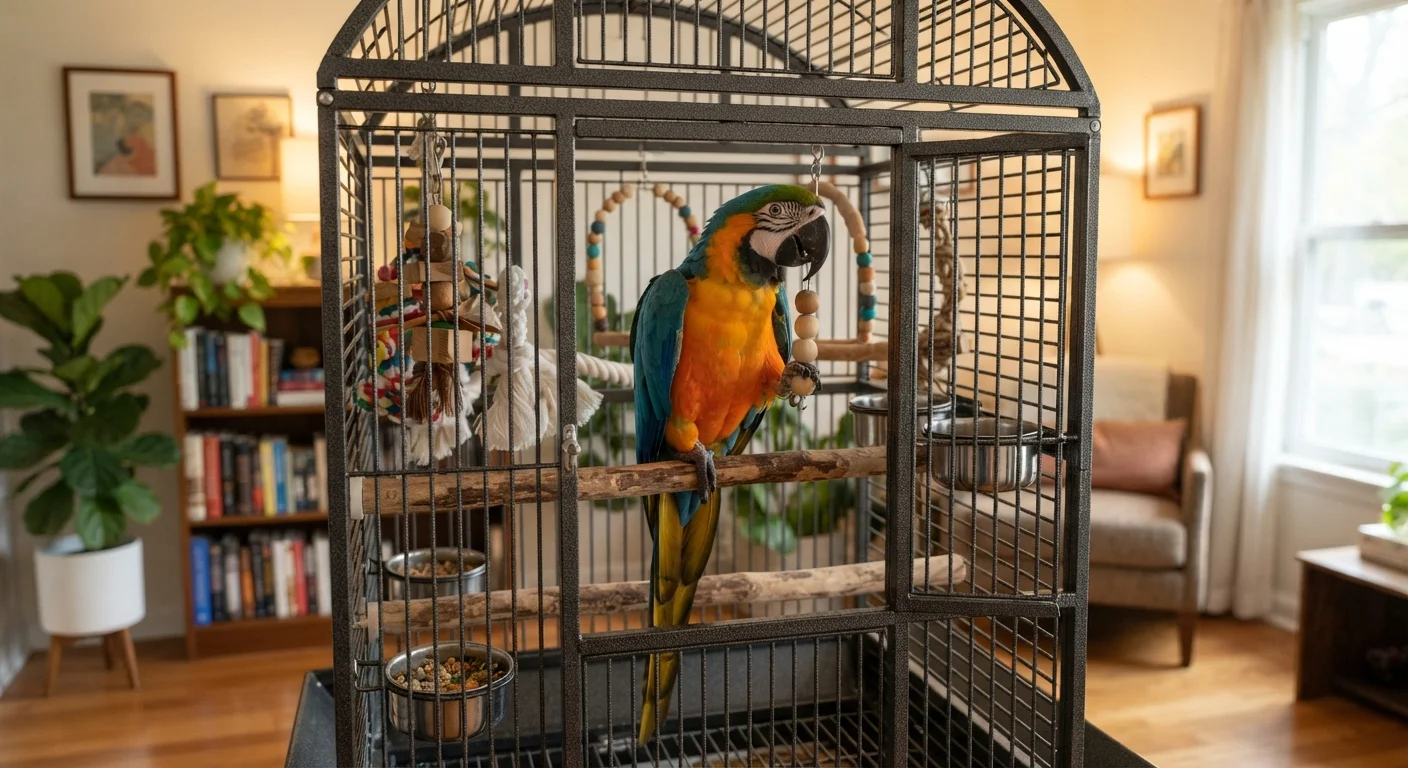
A bird's cage is its home base, and size matters enormously. At minimum, your bird should be able to fully extend both wings without touching the sides or top. For most companion birds - from budgies to cockatiels to larger parrots - wider is generally more valuable than taller, since birds move horizontally across perches more than they climb vertically.
Perch variety is often overlooked. Offer perches of different diameters and textures (natural wood branches work well) to exercise foot muscles and reduce the risk of pressure sores. Avoid placing all perches at the same height, and never position food or water dishes directly beneath a perch where droppings can contaminate them.
Cage placement matters as much as cage size. Birds thrive when positioned at human eye level in a room with natural light, away from cold drafts, air conditioning vents, and the kitchen - where cooking fumes, particularly from overheated non-stick PTFE-coated cookware, can be rapidly fatal to birds. A busy family room where the bird can observe household activity is often ideal.
Choose Cage Bar Spacing Carefully
Bar spacing that is too wide can allow a bird to get its head stuck, while spacing that is too narrow may limit climbing and interaction. As a general rule, bar spacing for small birds like budgies should be no more than half an inch, while larger parrots may need up to one inch. Check species-specific guidance from an avian vet or reputable bird care organization before purchasing.
Nutrition: Why Seeds Alone Fall Short
An all-seed diet is one of the most common and preventable causes of nutritional deficiency in pet birds. Seeds are high in fat and low in essential vitamins and amino acids. Most avian veterinarians recommend that seeds or seed mixes make up no more than a small portion of the overall diet - used more as a treat than a staple.
The foundation of a healthy bird diet should include a quality pelleted food formulated for your bird's species, supplemented with a wide variety of fresh vegetables, leafy greens, and occasional fruit. Cooked legumes and grains can also be excellent additions for larger parrots. Foods to avoid include avocado, onion, garlic, chocolate, and anything containing caffeine or alcohol - all of which are toxic to birds.
~40%
Pet birds fed primarily seed diets
Surveys of companion bird owners consistently find that seed-based diets remain common despite veterinary recommendations for more varied nutrition.
10-80+ years
Lifespan range across common pet bird species
Budgerigars may live 5-10 years, while larger parrots such as macaws can live several decades - making diet and habitat quality a lifelong commitment.
Transitioning a seed-addicted bird to pellets takes patience. Gradually mixing pellets in with familiar foods and offering new vegetables repeatedly (even if initially rejected) is the standard recommended approach. Consult an avian veterinarian for guidance tailored to your specific species.
Social Needs and Mental Stimulation
Birds - especially parrots, cockatiels, and conures - are highly social animals. In the wild, they live in flocks and spend hours foraging, vocalizing, and interacting. In a home setting, that social need doesn't disappear. A bird left alone for most of the day with nothing to do can develop serious behavioral problems, including feather-destructive behavior, excessive screaming, and aggression.
Daily out-of-cage time in a bird-safe room (windows closed, ceiling fans off, other pets secured) is important for physical exercise and psychological wellbeing. Interaction doesn't have to mean intensive training - simply talking to your bird, letting it sit near you, or working on simple enrichment activities counts.
Foraging toys - puzzles that require the bird to work to access food - are among the most effective enrichment tools available. Rotate toys regularly to maintain novelty. Birds can become bored with the same setup surprisingly quickly.
Learning to read your bird's behavioral signals is equally important. Our guide to bird body language explains how feather position, vocalizations, and posture reveal whether your bird is content, stressed, or unwell.
Health, Safety, and When to See a Vet
Birds are prey animals by nature, which means they instinctively conceal signs of illness - sometimes until they are critically sick. This makes routine veterinary care from an avian-experienced veterinarian essential, not optional. Annual wellness exams help establish baseline health data and catch problems early.
Common household hazards beyond cookware fumes include scented candles, aerosol sprays, heavily fragranced cleaning products, and cigarette smoke - all of which can irritate or damage a bird's highly efficient respiratory system. Keep these well away from your bird's living space.
Know the warning signs that require prompt attention. Changes in droppings, sudden lethargy, fluffed feathers outside of sleep, labored breathing, or loss of appetite are all reasons to contact a vet without delay. Our article on signs your small pet needs a vet covers these indicators in detail.
This article is for general informational purposes only and is not a substitute for professional veterinary advice. Always consult a qualified avian veterinarian regarding your bird's specific health and care needs.