

Key Takeaways
- Dealer financing routes your loan through the dealership, which may add a markup to the interest rate.
- Bank or credit union financing lets you shop rates independently before setting foot in a dealership.
- Pre-approval from a direct lender gives you a clear spending ceiling and negotiating leverage.
- Dealer financing can occasionally offer manufacturer-subsidized rates unavailable elsewhere.
- Your credit profile, loan term, and total vehicle cost all affect which route costs less overall.
Our Verdict
Neither dealer financing nor bank financing is universally superior - the better choice depends on your credit score, the availability of promotional rates, and how much time you're willing to invest in rate shopping. For most buyers, entering the dealership with a pre-approved offer from a bank or credit union creates a stronger negotiating position and a clearer financial picture.
| Best for | Recommended |
|---|---|
| Buyers who qualify for manufacturer promotional rates | Dealer Financing |
| Buyers who want full rate transparency and negotiating leverage | Bank or Credit Union Financing |
| Buyers with limited time or fewer lender options | Dealer Financing |
| Buyers focused on minimizing total interest paid | Bank or Credit Union Financing |
How Each Financing Route Is Structured
When you finance a vehicle, you're borrowing money and repaying it with interest over a set term. The structural difference between dealer financing and direct lending is who arranges that loan - and what happens in between.
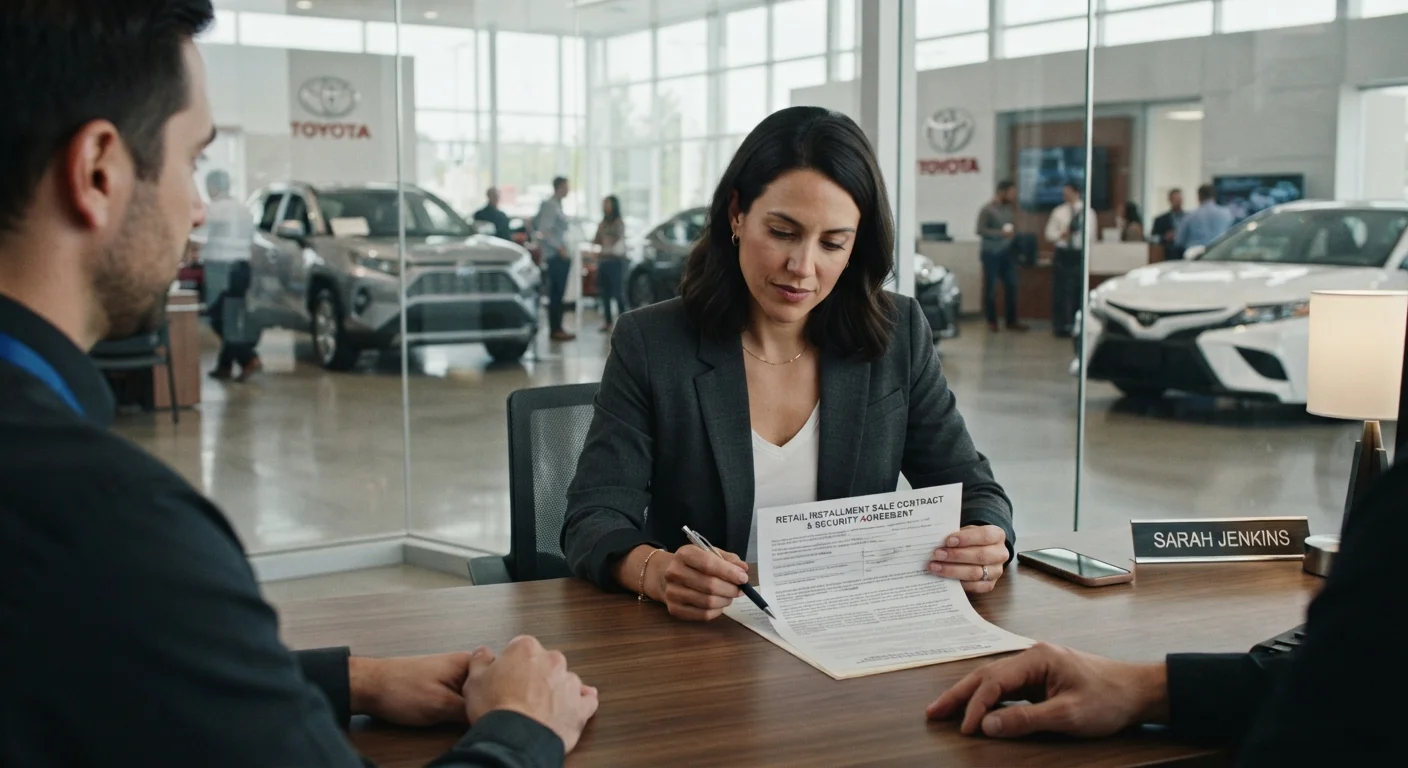
With dealer financing, the dealership acts as an intermediary. It submits your credit application to one or more lenders in its network, then presents you with loan terms. Dealers are typically permitted to mark up the interest rate above what the lender actually requires - a practice sometimes called a "dealer reserve" or "finance reserve." That markup is generally kept by the dealership as additional revenue.
With bank or credit union financing, you approach a lender directly - before or after choosing a vehicle. The lender evaluates your creditworthiness and quotes you a rate with no intermediary. Credit unions, in particular, are member-owned nonprofit institutions that often quote competitive rates to qualified members. Before visiting a showroom, it's worth familiarizing yourself with key loan and purchase terms so the numbers dealers present are easier to interpret.
The Case for Dealer Financing
Dealer financing isn't without genuine advantages. The most significant is access to manufacturer-subsidized rates - sometimes advertised as low as 0% APR on select models for qualified buyers. These promotions are funded by the automaker's financing arm and are typically not available through independent banks.
Convenience is another real factor. Completing financing at the dealership consolidates the purchase into a single appointment, which appeals to buyers who want a streamlined process. Dealers also work with a broad lender network, which can sometimes benefit buyers with thin or imperfect credit histories who might struggle to secure pre-approval elsewhere.
Watch for Rate Markups in Dealer Offers
The interest rate a dealer presents you may be higher than what the lender actually approved. Dealers are generally permitted to add a margin above the lender's "buy rate" as compensation. Always compare the dealer's quoted APR against a pre-approved offer from a bank or credit union to know whether you're getting a competitive deal.
The tradeoff is transparency. Because dealers can mark up rates, it can be difficult to know whether the quoted APR reflects your true creditworthiness or includes a margin. Always ask for the "buy rate" - the rate the lender actually approved - if you want to benchmark what you're being offered.
The Case for Bank or Credit Union Financing
Arranging financing through a bank or credit union before you shop gives you a fixed, independently quoted rate - and that number becomes a baseline for everything the dealer offers. If the dealer can beat your pre-approved rate, great. If not, you already have a confirmed loan in hand.
Pre-approval also clarifies your true budget ceiling. Rather than anchoring a negotiation around monthly payments - a common dealership tactic that can obscure total cost - you enter knowing the full loan amount you're approved for. This shifts the conversation toward vehicle price, which is where negotiating power matters most.
| Dealer Financing | Bank / Credit Union Financing | |
|---|---|---|
| Rate transparency | Rate may include dealer markup | Rate quoted directly by lender |
| Promotional rates | Access to manufacturer-subsidized APR | Not available through direct lenders |
| Convenience | One-stop at the dealership | Requires separate application step |
| Negotiating position | Dealer controls loan presentation | Pre-approval sets a firm baseline |
| Credit flexibility | Broad lender network for varied credit | Approval depends on individual lender criteria |
| Rate shopping | Dealer shops multiple lenders for you | Buyer compares lenders independently |
It's worth comparing a few lenders before committing. Rates can vary meaningfully between institutions based on their risk models, your credit tier, and the loan term. This kind of rate shopping, done within a short window (typically 14-45 days depending on the scoring model), generally counts as a single credit inquiry for scoring purposes.
What to Consider Before You Decide
A few variables should shape your approach:
- Your credit score: Strong credit opens the most direct-lender options at competitive rates. If your score is lower, dealer networks may surface options unavailable to you directly.
- Promotional rate eligibility: If the automaker is offering a subsidized rate on the model you want, run the numbers against your best direct-lender offer before assuming one is better.
- Loan term and total cost: A lower monthly payment stretched over a longer term often means more interest paid overall. Comparing financing and leasing math can help put the total cost in context.
- Down payment: A larger down payment reduces the financed amount, which reduces both interest exposure and the risk of being "underwater" (owing more than the car is worth).
If you're also navigating what a dealership transaction involves compared to buying privately, see how private seller and dealership transactions differ. For broader guidance on managing debt strategically, the Saving & Debt hub offers relevant context.
This article is for general informational purposes only and does not constitute personalized financial or legal advice. Consult a qualified financial professional before making decisions based on your individual circumstances.