

Key Takeaways
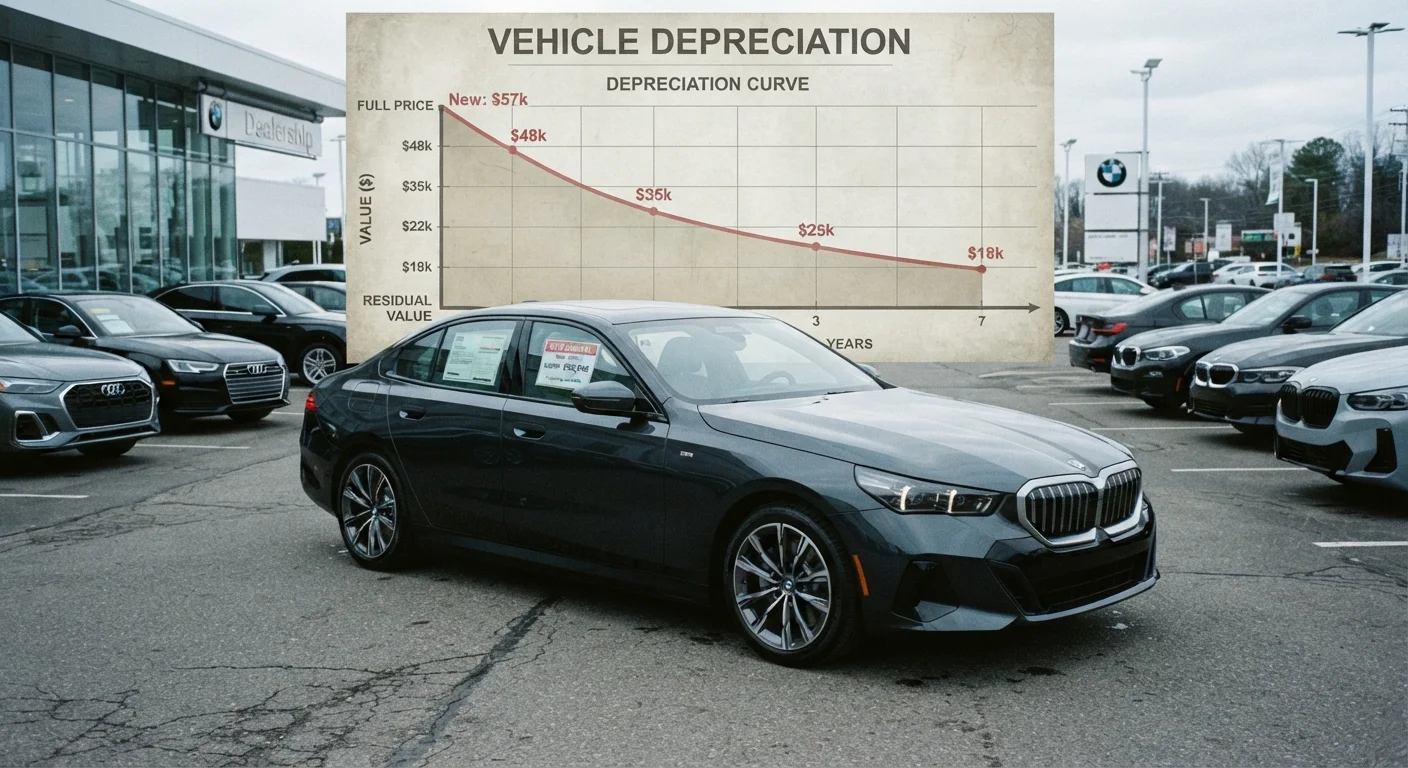
- New vehicles typically lose 15-25% of their value in the first year alone.
- Depreciation is often a larger annual cost than fuel, insurance, or maintenance.
- Ownership duration, vehicle segment, and mileage all significantly influence depreciation rates.
- Understanding depreciation before purchase can meaningfully affect long-term financial outcomes.
- Certified pre-owned vehicles let buyers sidestep the steepest part of the depreciation curve.
What Depreciation Actually Means for Your Wallet
Depreciation is the difference between what you paid for a vehicle and what it's worth when you sell or trade it in. It's not a fee that appears on a bill - it's a silent, continuous loss that accumulates every month you own the car. Industry data consistently shows that a new vehicle can lose roughly 15-25% of its value within the first 12 months, and somewhere between 50-60% over five years, depending on the segment and model.
For context: if you purchase a vehicle for $40,000 and it's worth $22,000 after five years, you've absorbed $18,000 in depreciation - often more than you paid in fuel, insurance, and maintenance combined. Yet most buyers entering a dealership focus almost entirely on the monthly payment, not on this underlying wealth erosion. See our full breakdown of true vehicle ownership costs for a more complete picture of what a car actually costs annually.
~20%
Average first-year value loss on a new vehicle
Automotive valuation industry sources consistently estimate that new vehicles lose roughly 15-25% of their value within the first year of ownership.
50-60%
Typical 5-year depreciation for new cars
Over a five-year period, the average new vehicle retains roughly 40-50 cents on every dollar paid at purchase, according to widely cited residual value analysis.
Common Mistakes Buyers Make Around Depreciation
Depreciation-related errors rarely stem from ignorance alone - they're baked into how vehicles are marketed and how buyers naturally think about large purchases. The following mistakes are among the most costly and the most preventable.
Focusing exclusively on the monthly payment rather than total cost of ownership.
Why it happens: Monthly payments are concrete and manageable-sounding; depreciation is abstract and invisible on any statement.
Buying brand-new when a slightly used vehicle serves the same need.
Why it happens: New car incentives, warranty appeal, and marketing make new vehicles feel like the obvious choice, even when the financial case is weak.
Trading in or selling a vehicle too early - especially in the first two to three years.
Why it happens: Lifestyle changes, new model envy, or dissatisfaction prompt early exits, which crystallize the sharpest part of the depreciation loss.
Ignoring how vehicle segment and category affect depreciation rates.
Why it happens: Buyers compare vehicles by price point without realizing that certain categories - like large sedans or some luxury models - historically depreciate faster than others.
Assuming that because a vehicle is reliable, it holds its value well.
Why it happens: Reliability and resale value are related but not the same thing. Market demand, competition, and segment trends also drive depreciation independent of build quality.
If you're weighing whether to lease or finance, depreciation math plays a central role in that decision too. Leasing vs. financing explores how each structure handles depreciation differently and what that means for your total cost over time.
How to Make Depreciation Work in Your Favor
The most straightforward strategy to reduce depreciation exposure is to purchase a vehicle that is two to four years old. At that point, the original buyer has absorbed the steepest part of the curve, while the car still has significant useful life ahead. Certified pre-owned (CPO) programs through manufacturers can offer added warranty protection on these vehicles, though buyers should compare CPO terms carefully rather than assuming all programs are equivalent.
Holding a vehicle for a longer period also softens depreciation's annual impact. When the total loss is spread over eight or ten years rather than three or four, the per-year cost drops substantially. Keeping a car long-term vs. replacing it often examines the full financial picture of each approach.
High Mileage Accelerates Depreciation Faster Than Many Expect
Every 10,000 miles above average annual usage - typically considered around 12,000-15,000 miles per year in the US - can measurably reduce resale value. If your driving habits put you well above average, factor that accelerated depreciation into your ownership cost calculations before purchase, not after.
Finally, keeping mileage in check and maintaining the vehicle's condition - both mechanical and cosmetic - helps preserve resale value. Skipping routine maintenance accelerates value loss in two ways: it reduces reliability and it signals poor ownership history to future buyers. It's also worth examining common car-buying myths that can lead buyers to underestimate the total financial impact of their purchase decisions.