

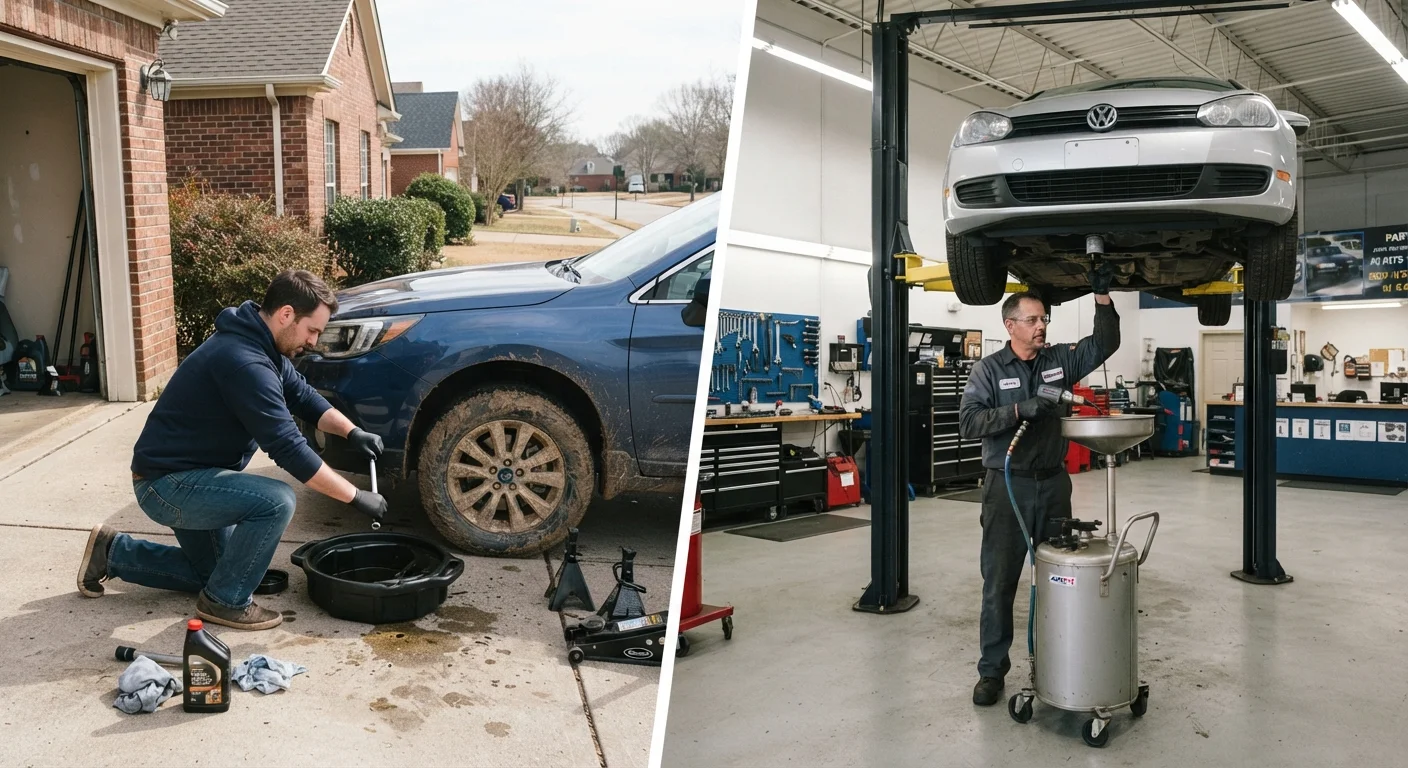
Key Takeaways
- Simple tasks like oil changes, air filter swaps, and wiper replacements are well within reach for most drivers.
- Jobs involving brake hydraulics, suspension, or electrical systems carry real safety risks and are best left to professionals.
- DIY saves money on labor but requires the right tools, workspace, and disposal plans for fluids and parts.
- A shop's diagnostic equipment can catch problems that aren't visible to the naked eye.
- Your vehicle's warranty terms may restrict which maintenance you can perform yourself without voiding coverage.
Our Verdict
DIY maintenance makes strong sense for routine, low-risk tasks where instructions are clear and the consequences of a mistake are manageable. Professional service becomes the smarter choice when safety systems, specialized tools, or diagnostic accuracy are involved. Most drivers benefit from doing both - handling the straightforward jobs themselves and trusting a certified technician with anything that goes underneath the car or touches the brakes.
| Best for | Recommended |
|---|---|
| Drivers comfortable with basic tools and routine upkeep | DIY Maintenance |
| Safety-critical repairs and complex diagnostics | Professional Shop |
| High-mileage vehicles requiring thorough inspection | Professional Shop |
| Budget-conscious owners managing predictable, simple tasks | DIY Maintenance |
What the DIY Route Actually Involves
Doing your own car maintenance means more than watching a tutorial and grabbing a wrench. It requires appropriate tools, a level and stable work surface, and a clear understanding of your specific vehicle's requirements - which vary by make, model, and model year. Your owner's manual is the starting point, not a forum post.
Tasks genuinely suited to home mechanics include engine air filter replacements, cabin air filter swaps, wiper blade changes, battery terminal cleaning, tire pressure checks, and - with the right equipment - oil and filter changes. These jobs have low consequence for minor errors, involve widely available parts, and follow repeatable steps that manufacturer guides describe clearly.
One often-overlooked consideration is fluid and parts disposal. Used motor oil, coolant, and brake fluid are regulated waste in most states and cannot go into household trash or storm drains. Auto parts retailers commonly accept used fluids at no charge, but you need a plan before you start. See our guide on tasks better left to a mechanic for a clear picture of where the DIY line should stop.
Start With Your Owner's Manual
Before attempting any DIY maintenance, locate your vehicle's owner's manual - either in the glove box or as a downloadable PDF from the manufacturer's website. It specifies the correct oil viscosity, filter type, fluid capacities, and service intervals for your exact vehicle. Following generic advice instead of model-specific guidance is one of the most common sources of DIY errors.
When a Professional Shop Is the Right Call
Certain systems on your vehicle exist specifically to keep you and other road users safe - and errors in those systems don't always announce themselves before they become dangerous. Brake caliper replacement, brake line work, wheel bearing service, steering component repair, and suspension work all fall into this category. These tasks require a vehicle lift for safe access, torque specifications that must be met precisely, and in many cases, post-repair calibration or alignment checks.
Modern vehicles also rely heavily on electronic control systems. A check-engine light, transmission hesitation, or ABS warning can have dozens of possible causes. Professional shops use diagnostic scan tools that communicate directly with a vehicle's onboard computer, reading live data and fault codes that a basic code reader at home cannot fully interpret. Guessing at an electronic fault and replacing parts without confirmed diagnosis wastes money and may leave the real problem unresolved.
If you're maintaining a high-mileage vehicle, professional inspections become even more valuable. A technician performing an oil change can visually inspect undercarriage components, identify early signs of corrosion, and flag developing issues before they escalate. Our article on keeping a high-mileage car on the road covers why that kind of systematic attention matters as a vehicle ages.
Don't Guess on Brake System Work
Brake components are safety-critical by definition - a mistake here can affect your ability to stop the vehicle. Even experienced home mechanics can encounter complications such as seized caliper slide pins, corroded brake lines, or improperly bedded brake pads that reduce stopping performance. If you have any doubt about a brake repair, take the vehicle to a qualified technician before driving it.
Comparing the Two Approaches Side by Side
The decision between DIY and professional service rarely has a single right answer - it depends on the specific task, your skill level, and the tools you have available. The table below outlines how the two approaches compare across the factors that matter most to everyday drivers.
| DIY Maintenance | Professional Shop | |
|---|---|---|
| Labor cost | None (your time) | Hourly rate applies |
| Parts cost | Retail price, no markup | Shop markup typically applies |
| Diagnostic capability | Limited to basic code readers | Full scan tool access, live data |
| Safety-critical repairs | High risk without proper tools | Appropriate equipment and training |
| Warranty documentation | Owner must keep own records | Shop provides dated service records |
| Fluid/waste disposal | Owner's responsibility | Handled by shop |
| Best suited for | Routine, low-risk tasks | Complex, safety-critical, or diagnostic work |
Cost savings are real with DIY, but only when a job goes correctly the first time. A misinstalled component - even something as routine as an oil drain plug overtightened or cross-threaded - can create a repair bill that far exceeds what a shop would have charged. Factor in that risk honestly.
Warranty, Insurance, and Documentation Considerations
Under the Magnuson-Moss Warranty Act, vehicle manufacturers generally cannot void a warranty solely because an owner performed their own maintenance, provided the work was done correctly and with appropriate parts. However, if a DIY repair is later linked to a covered component's failure, the burden falls on the owner to demonstrate that their work was not the cause. Keeping detailed records - receipts for parts, dates, mileage, and descriptions of what was done - is essential if a warranty dispute ever arises.
Some extended warranty or service contract agreements have stricter terms, potentially requiring service at authorized facilities. Read those documents carefully before deciding to handle any covered maintenance yourself. Similarly, if your vehicle is part of a certified pre-owned program, verify what that program's maintenance requirements are.
For a broader look at how maintenance decisions connect to long-term ownership costs, our piece on the financial reality of keeping a car long-term puts the numbers in context. And if you want to build better daily habits, start with a pre-drive vehicle check - a simple routine that costs nothing and catches problems early.