

Key Takeaways
- Craft beer styles are defined by yeast type, fermentation temperature, malt bill, and hop character.
- IPAs, stouts, lagers, wheat beers, and sours each follow distinct brewing processes that shape their flavor.
- ABV, IBU (bitterness), and color can help you predict what a beer will taste like before you try it.
- Understanding style categories makes it easier to navigate a tap list or bottle shop with confidence.
Why Beer Style Matters
Walk into any craft beer bar and the tap list can feel like a foreign language - DDH, NEIPA, Imperial Stout, Gose. But once you understand the logic behind beer styles, that wall of jargon becomes a practical map. Each style name encodes information about how a beer was brewed, what it will taste like, and roughly how strong it will be.
At the foundation, nearly every beer belongs to one of two families: ales (fermented with yeast that works at warmer temperatures, typically 60-75°F) or lagers (fermented cold, usually 35-50°F). That single variable - yeast behavior - shapes aroma, flavor clarity, and how long the beer takes to produce. Everything else builds from there. If you're comfortable decoding a wine label, the same habit of looking for key terms pays off equally well with beer.
A Note on Style Guidelines
Organizations like the Beer Judge Certification Program (BJCP) publish detailed style guidelines used in homebrew competitions and as reference points across the industry. These are useful frameworks, not strict rules - craft brewers regularly blend or reinvent styles. Treat style names as useful starting points rather than rigid guarantees of exactly what you'll taste.
The Major Craft Beer Styles Explained
IPA (India Pale Ale)
The IPA is the flagship of the American craft beer movement. It's an ale brewed with a heavy hand of hops, which contribute bitterness, aroma, and flavor ranging from piney and resinous to tropical and citrusy. West Coast IPAs lean dry and bitter with clear, golden liquid. New England or hazy IPAs are less filtered, producing a cloudy appearance and a softer, juicy character with lower perceived bitterness. Double IPAs (DIPAs) amplify both hops and alcohol, typically landing above 8% ABV.
IBU values for IPAs commonly range from 40 to 80+, though the style of hopping matters as much as the number - late additions and dry-hopping (adding hops after fermentation) boost aroma without always adding sharp bitterness.
Hop timing and technique matter more than IBU numbers alone when predicting an IPA's bite.
Stout and Porter
Both stouts and porters use roasted malts that give the beer its dark brown to black color and characteristic flavors of coffee, dark chocolate, and sometimes a hint of molasses. The distinction between them has blurred over time, but porters are generally lighter-bodied with more roasted grain character, while stouts tend to be fuller and creamier.
Dry Irish stouts (like the style made famous in Dublin) are surprisingly light in calories despite their dark appearance. Imperial stouts go the opposite direction - rich, viscous, and often 10-14% ABV, sometimes aged in bourbon or wine barrels to add vanilla, oak, or fruit notes. Nitro versions, served with nitrogen gas, produce a cascading pour and a velvety mouthfeel.
Dark color in a stout comes from roasted malt, not strength - a dry stout can be lighter than a pale ale.
Lager
Lagers are cold-fermented and then cold-conditioned (lagered) for weeks or months, which produces a clean, crisp flavor with very little fruity ester character. The yeast essentially gets out of the way, letting malt and hops speak clearly. Pilsners - the most common lager style - are pale, highly carbonated, and range from the soft, malt-forward Bohemian (Czech) style to the drier, hoppier German variety.
Craft brewers have reclaimed the lager with care, producing well-made examples that reward attention. A properly made lager has nowhere to hide flaws, which is why it's considered technically demanding to brew well.
Lagers demand technical precision; their clean flavor profile leaves no room to mask brewing flaws.
Wheat Beer
Wheat beers use a significant proportion of wheat (alongside barley) in their grain bill, which contributes a hazy appearance, a lighter mouthfeel, and often a slightly bready or doughy character. German Hefeweizens are unfiltered and notable for banana and clove aromas produced by their distinctive yeast strain. Belgian witbiers are spiced with coriander and dried orange peel, giving them a bright, refreshing quality. American wheat beers tend to be less yeast-forward and more hop-accented.
Most wheat beers are relatively low in bitterness and alcohol (4-5.5% ABV), making them approachable entry points for new craft beer drinkers.
The banana and clove aromas in a Hefeweizen come from yeast, not added flavoring.
Sour and Wild Ales
Sour beers get their tartness from bacteria - primarily Lactobacillus and Pediococcus - or from wild yeast like Brettanomyces. Some sours are intentionally inoculated; others are traditionally open-fermented, allowing ambient microorganisms to do the work. Berliner Weisse is light and gently tart. Gose (pronounced go-zuh) adds salt and coriander for a briny, refreshing effect. Lambic and gueuze are Belgian wild ales with complex, funky, sometimes barnyard-like profiles built over years of fermentation.
Fruit additions are common in sours because the acidity balances sweetness well. ABV tends to be moderate (3-7%), and bitterness is typically low.
Sourness in beer is a product of bacterial fermentation, a deliberate process, not a brewing accident.
Belgian Ales
Belgian ales are their own world, defined less by hop or malt character and more by yeast-driven complexity. Belgian strains produce spicy phenols and fruity esters that give styles like saison, dubbel, tripel, and quad their distinctive personalities. Saisons are dry, effervescent, and peppery - originally brewed for farmworkers. Tripels are golden but deceptively strong (8-10% ABV) with a dry, spicy finish. Quads are dark, rich, and warming, often with dried fruit notes.
The defining feature of Belgian brewing is restraint in hopping and the latitude given to yeast to shape the final flavor - making yeast selection the brewer's most important decision.
In Belgian ales, the yeast strain is the star - it creates the spice, fruit, and complexity, not the hops.
Start with Style, Then Explore
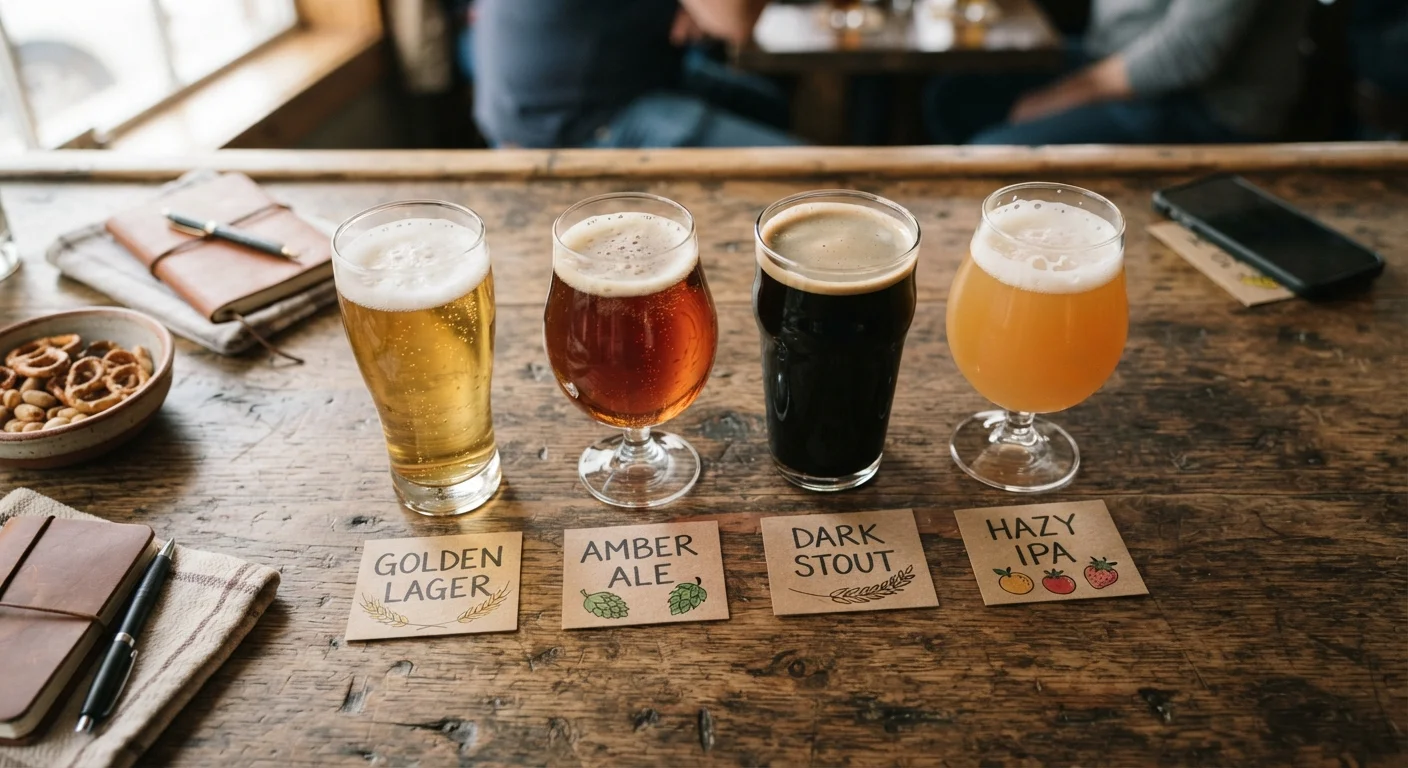
If you're new to craft beer, pick one style and try two or three examples side by side. The differences between breweries within a style teach you more than jumping between styles. A flight of three IPAs reveals more about what hops and yeast actually do than any description can.
Using This Knowledge at the Bar
A good tap list or bottle shop label will tell you the style, the ABV, and often the IBU (International Bitterness Units - a scale measuring hop bitterness). Taken together, those three data points give you a reliable preview. A West Coast IPA at 7% ABV and 65 IBU will be noticeably different from a hazy IPA at the same ABV but 40 IBU - drier and sharper versus soft and juicy. For a plain-English breakdown of what ABV numbers actually mean for how strong a drink is, see our guide to alcohol by volume and proof.
Don't hesitate to ask a bartender or shop staff for a small sample before committing. Craft breweries encourage exploration, and knowing the vocabulary makes that conversation easier. Style is a starting point, not a straitjacket - but it's a reliable one.