

Key Takeaways
- Caffeine is the primary active ingredient, typically ranging from 80 mg to over 300 mg per can.
- Taurine and B vitamins are common additions, though evidence for their added benefit in healthy people is limited.
- Sugar content can be significant; many standard cans contain 25-40 grams of added sugar.
- Mixing energy drinks with alcohol is associated with increased health risks and is strongly discouraged.
- Children, pregnant individuals, and those with heart conditions should avoid energy drinks.
Energy Drink
An energy drink is a packaged beverage formulated to increase alertness and reduce fatigue, typically using caffeine as the primary active ingredient. Most also contain additional compounds - such as taurine, B vitamins, and sugar - intended to support that stimulant effect. They differ from sports drinks, which focus on hydration and electrolyte replacement rather than stimulation.
Regulatory classification varies: the FDA categorizes most energy drinks as conventional beverages or dietary supplements depending on how they are labeled, which affects required disclosure thresholds for caffeine content.
What's Actually in an Energy Drink?
Energy drinks are not a single formula - manufacturers vary their recipes considerably - but most share a recognizable set of core ingredients. Understanding what each one does (and doesn't do) is the most useful starting point for any consumer.
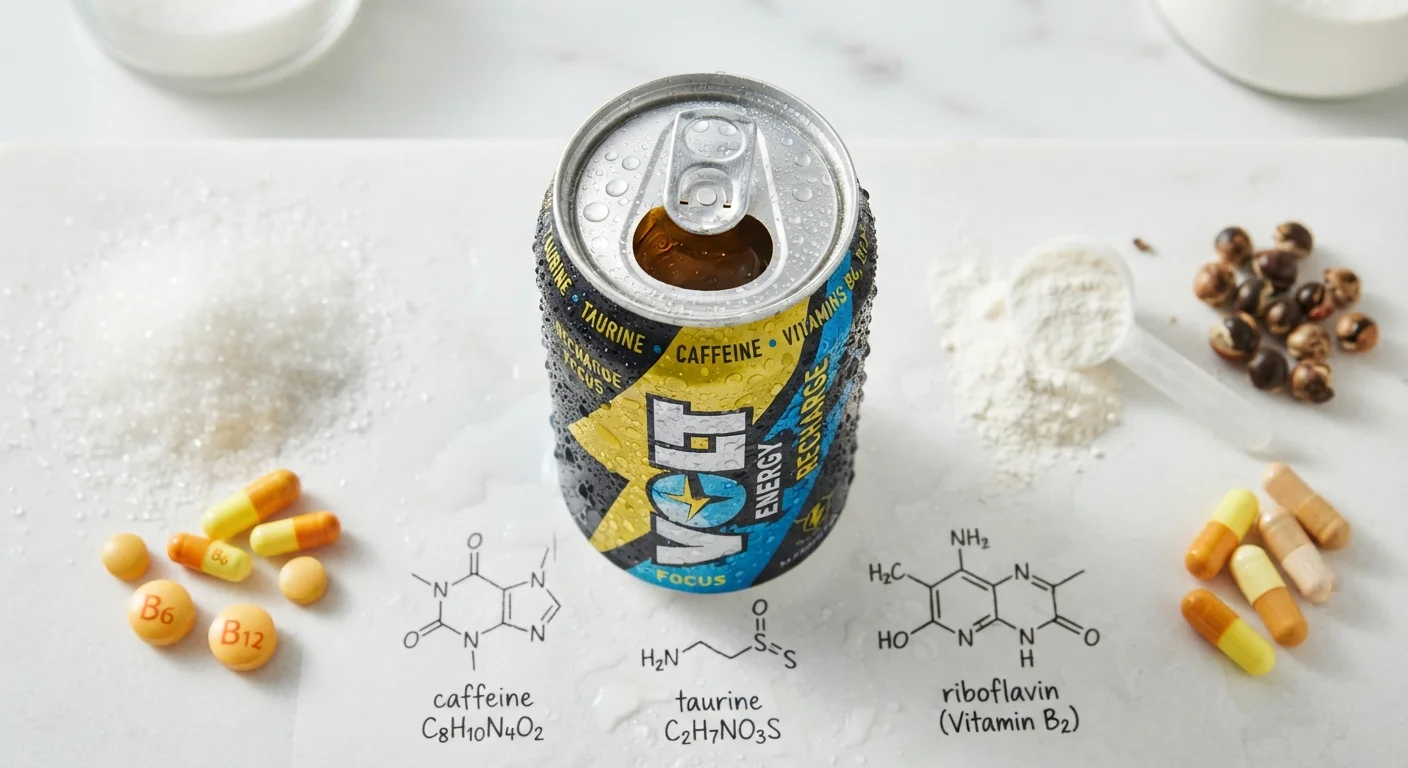
Caffeine is the ingredient doing the heaviest lifting. It works by blocking adenosine receptors in the brain, the chemical pathway that promotes sleepiness. The FDA considers 400 mg per day a generally safe upper limit for healthy adults, though individual tolerance varies significantly. Many energy drink cans contain one to four servings' worth of caffeine depending on size, so checking the label carefully matters. For a detailed comparison, see our look at what's in a cup of coffee, which puts caffeine in broader context.
Sugar provides a rapid source of glucose, contributing to the short-term alertness users often feel. A standard 16-ounce can may contain 25 to 54 grams of added sugar - comparable to a can of soda. Sugar-free variants substitute artificial sweeteners such as sucralose or acesulfame potassium. Our guide on sugar in drinks explains how to identify and compare these on any label.
Taurine, added at roughly 1,000 mg per can in many formulas, is an amino acid found naturally in animal proteins. It plays roles in cardiovascular function and muscle metabolism, but research has not demonstrated that supplemental taurine meaningfully amplifies caffeine's effects in healthy people.
B vitamins - typically B3 (niacin), B6, and B12 - appear in large quantities. Because B vitamins help metabolize carbohydrates into cellular energy, they are often marketed as energizing. In reality, supplementing above your body's needs does not accelerate this process; any excess is excreted.
80-300+ mg
Caffeine per energy drink can
The range varies widely by brand and can size; the FDA's guidance suggests healthy adults limit total daily caffeine to around 400 mg.
25-54 g
Added sugar in a standard 16 oz can
Many mainstream energy drinks contain sugar levels comparable to carbonated sodas of the same size.
~1,000 mg
Taurine per typical serving
This is the amount commonly found in mainstream formulas, well above dietary intake from food but generally considered safe at this level in healthy adults.
How These Ingredients Interact in the Body
The stimulant effect most people notice after an energy drink is primarily caffeine at work. Within 30 to 60 minutes of consumption, caffeine reaches peak concentration in the bloodstream, elevating alertness and sometimes heart rate. The sugar load - when present - produces a rapid glycemic rise followed by an insulin response, which can contribute to the energy "crash" users describe after a few hours.
The combination of high caffeine and high sugar is worth noting. Each affects the cardiovascular system: caffeine raises blood pressure temporarily, and a large sugar load prompts metabolic changes. For the vast majority of healthy adults consuming moderate amounts occasionally, this is not an acute concern. However, for people with hypertension, arrhythmias, or metabolic conditions, the picture is different - and a healthcare provider's guidance is appropriate.
Labeling Gaps to Know About
Unlike prescription drugs, energy drinks sold as beverages are not required by the FDA to disclose their total caffeine content from all sources (including guarana or green tea extract, which naturally contain caffeine). This means the stated caffeine figure - when listed at all - may undercount actual caffeine levels. Reading the full ingredient list carefully, as outlined in our ingredient label guide, helps you spot these additional sources.
One area of genuine concern backed by research is mixing energy drinks with alcohol. The caffeine can mask the sedative effects of alcohol, making it harder for a person to accurately assess their own intoxication level. This combination has been linked to higher rates of excessive drinking and related harms.
If you are curious about how ingredient labeling works across all packaged drinks, our article on reading an ingredient list walks through how to interpret what manufacturers are required to disclose.
Who Should Be Especially Cautious
Energy drinks are not appropriate for everyone. Several groups face elevated risks:
- Children and teenagers: The American Academy of Pediatrics advises that children and adolescents should not consume energy drinks. Developing bodies are more vulnerable to caffeine's effects on sleep architecture, heart rate, and anxiety.
- Pregnant individuals: Caffeine crosses the placenta, and high intake has been associated with adverse pregnancy outcomes. Guidelines generally recommend keeping total caffeine intake low during pregnancy - consult a healthcare provider for specific guidance.
- People with cardiovascular conditions: High caffeine intake can trigger palpitations or exacerbate existing arrhythmias. Anyone with a diagnosed heart condition should speak with their physician before consuming these beverages.
- People sensitive to caffeine: Genetics affect caffeine metabolism. Some individuals experience anxiety, insomnia, or rapid heartbeat at doses others tolerate easily.
Check the Serving Size First
A single energy drink can may contain two servings according to the nutrition facts panel, meaning all the caffeine and sugar figures should be doubled for the full can. Always check the "servings per container" line before comparing products or estimating your intake.
This article is for general informational purposes only and is not medical advice. If you have questions about how energy drinks may interact with your health conditions or medications, consult a qualified healthcare professional.