

Key Takeaways
- SCOBY stands for Symbiotic Culture of Bacteria and Yeast - it drives the entire fermentation.
- Yeast converts sugar to alcohol; bacteria then convert much of that alcohol into acids.
- The longer kombucha ferments, the more sour and less sweet it becomes.
- Commercially sold kombucha typically contains 0.5% ABV or less, keeping it classified as non-alcoholic.
- Carbon dioxide produced during fermentation creates kombucha's natural effervescence.
- Flavor, acidity, and alcohol levels all shift depending on time, temperature, and tea type.
Kombucha Fermentation
Kombucha fermentation is the process by which a living culture - a SCOBY - consumes sugar in sweetened tea and converts it into acids, carbon dioxide, and small amounts of alcohol. This transformation is what gives kombucha its characteristic sourness, effervescence, and complex flavor. The process typically takes one to four weeks depending on temperature and the desired taste.
The SCOBY hosts both acetic acid bacteria and various yeast strains that work in tandem: yeast performs alcoholic fermentation first, then bacteria convert the resulting ethanol into organic acids such as acetic and gluconic acid.
What Is a SCOBY and Why Does It Matter?
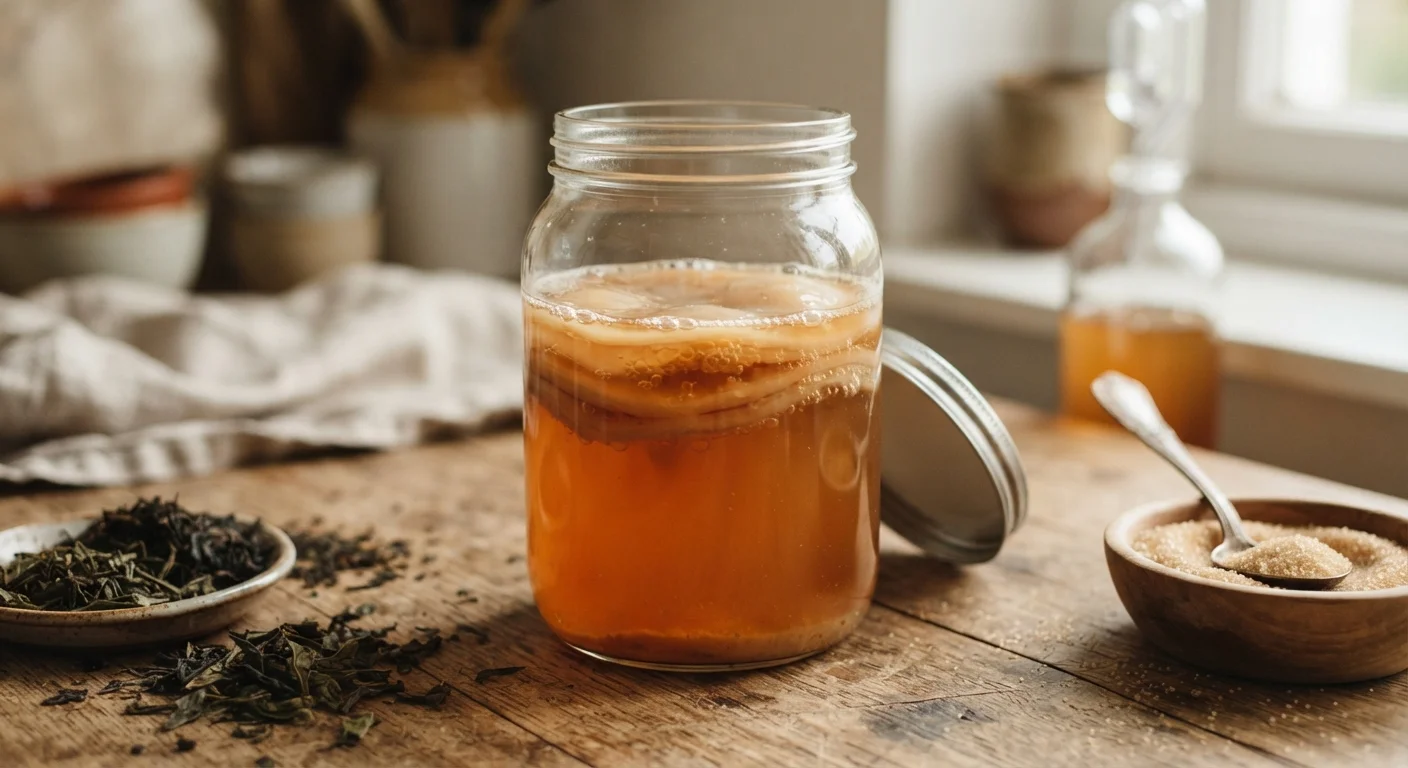
Every batch of kombucha starts with a SCOBY - a Symbiotic Culture of Bacteria and Yeast. Visually, it resembles a pale, rubbery disc. Functionally, it is a living ecosystem: colonies of yeast and acetic acid bacteria bound together in a cellulose matrix they produce themselves.
The yeast and bacteria in a SCOBY do not compete - they cooperate. Yeast breaks down sugar first, producing ethanol and carbon dioxide. The bacteria then use that ethanol as a fuel source, converting it into organic acids. Neither organism could produce kombucha alone; the partnership is what makes fermentation work.
A healthy SCOBY also acidifies the liquid, which acts as a natural preservative. This is why traditionally brewed kombucha is shelf-stable and resistant to harmful microbial contamination - the low pH environment simply isn't hospitable to most pathogens.
The SCOBY Grows With Each Batch
Each fermentation cycle produces a new layer of SCOBY on top of the original. Over time, brewers peel off and share these 'daughter' SCOBYs or compost the extras. The original SCOBY can remain active and healthy for years with proper care, making kombucha one of the more sustainable fermented beverages to produce at home.
How Sugar Becomes Acid and Fizz
The fermentation process unfolds in two overlapping stages. In the first stage, yeast cells consume sucrose (table sugar) and break it down into glucose and fructose, then ferment those simple sugars into ethanol and carbon dioxide. This is the same basic biochemical pathway used in brewing beer or wine.
In the second stage, acetic acid bacteria - particularly Acetobacter and Gluconobacter species - oxidize the ethanol into acetic acid, which gives kombucha its signature vinegar-like tang. These bacteria simultaneously metabolize glucose into gluconic acid, adding another layer of mild, rounded acidity.
The carbon dioxide produced by yeast is mostly responsible for kombucha's natural fizz. In open-vessel fermentation, much of the CO₂ escapes into the air. Brewers who want a more carbonated product often perform a second fermentation in sealed bottles, trapping the gas and dissolving it back into the liquid - the same principle behind naturally sparkling beverages. If you're curious how that compares to other carbonated drinks, see how carbonation works differently in sparkling water, club soda, and tonic.
0.5%
Maximum ABV for non-alcoholic kombucha (US)
The US Alcohol and Tobacco Tax and Trade Bureau sets this threshold; commercial kombucha must stay at or below 0.5% ABV to avoid alcohol beverage regulations.
7-14 days
Typical first fermentation window
Most home and commercial brewers ferment for one to two weeks at room temperature, adjusting to taste and desired acidity level.
3-4
Approximate pH of finished kombucha
The acidic pH results from organic acid accumulation during fermentation and is part of what makes kombucha shelf-stable and distinctively tart.
What Fermentation Means for Flavor and Alcohol
Time and temperature are the two biggest variables a brewer controls. A shorter fermentation - say, seven days at around 75°F - yields a milder, sweeter drink with more residual sugar and less acidity. Extending fermentation to fourteen days or more pushes the flavor profile toward sharper tartness, since more sugar has been consumed and more acid has accumulated.
Temperature matters because both yeast and bacteria are microorganisms with optimal activity ranges. Warmer conditions accelerate fermentation; cooler conditions slow it. This is why commercial producers carefully manage their fermentation environments to achieve consistent, batch-to-batch results.
On the alcohol question: fermentation inherently produces some ethanol, but bacteria continuously convert much of it into acid throughout the process. In commercially produced kombucha sold in US grocery stores, the final alcohol content is regulated at or below 0.5% ABV - the legal threshold for a non-alcoholic beverage. Home-brewed batches or improperly stored commercial bottles can drift above this level, which is worth knowing if alcohol consumption is a concern for health or personal reasons. As always, individuals with specific health conditions should consult a qualified healthcare professional before making dietary changes.
Taste Your Kombucha as It Ferments
Rather than relying solely on a fixed number of days, use a clean straw to sample your kombucha every few days starting around day seven. When the balance of sweetness and tartness matches your preference, it's ready. This simple habit eliminates guesswork and helps you learn how your specific environment affects fermentation speed.