

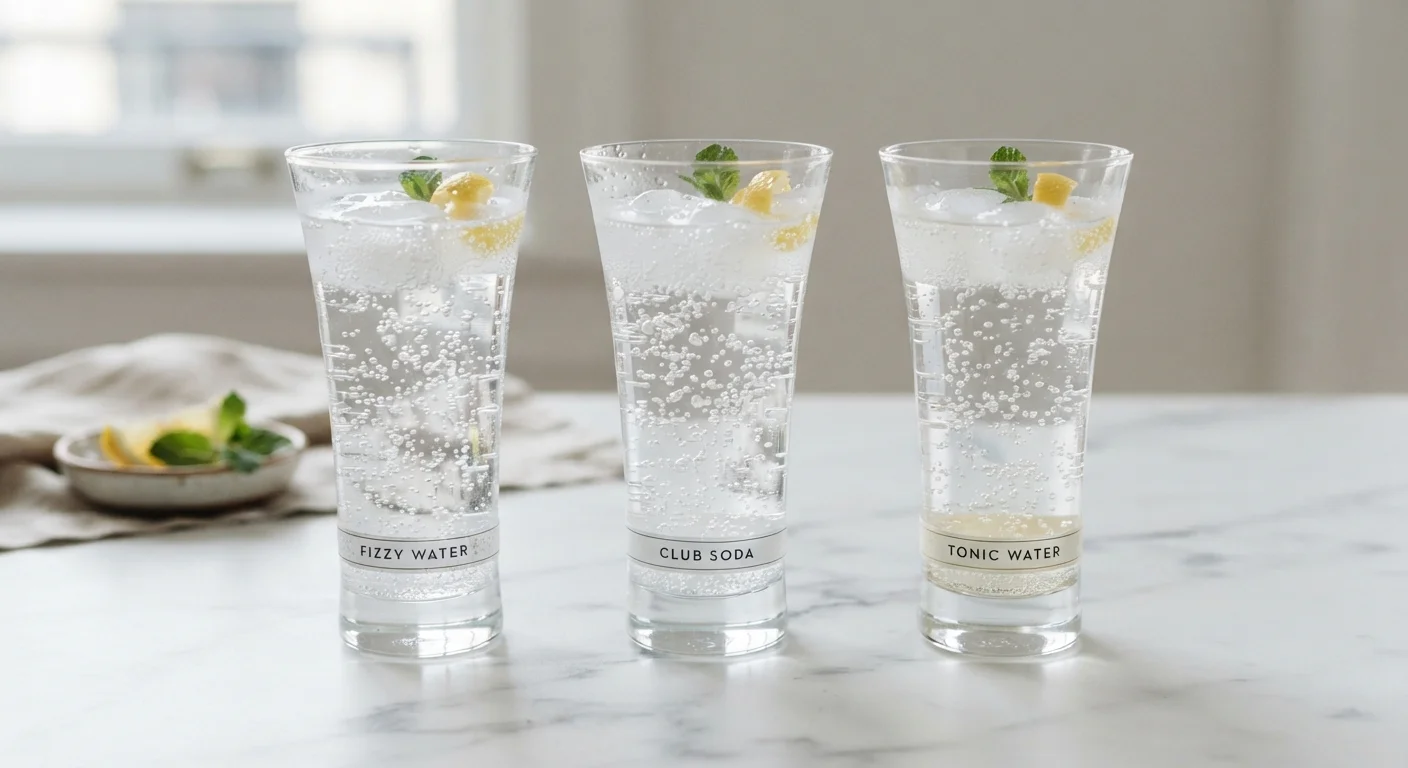
Key Takeaways
- Sparkling water is simply water with carbon dioxide - no added minerals or sweeteners.
- Club soda contains added minerals like sodium bicarbonate, giving it a slightly salty, crisp taste.
- Tonic water contains quinine and sugar, making it the only one of the three with calories and a bitter flavor.
- Only tonic water has a significant caloric content - typically around 80-90 calories per 8-ounce serving.
- All three are interchangeable in some recipes but produce noticeably different results in cocktails and cooking.
Our Verdict
Sparkling water, club soda, and tonic water look alike but are fundamentally different products. Sparkling water is the most neutral and calorie-free, club soda adds subtle mineral crispness, and tonic water brings bitterness and sugar to the glass. Choosing among them depends entirely on flavor goals and dietary preferences.
| Best for | Recommended |
|---|---|
| Those seeking a plain, calorie-free fizzy drink | Sparkling Water |
| Mixing cocktails that need a neutral but minerally lift | Club Soda |
| Classic gin-and-tonic cocktails or drinks with a bitter edge | Tonic Water |
| Anyone monitoring sugar and calorie intake | Sparkling Water or Club Soda |
The One Thing They Share - and Where the Similarity Ends
Sparkling water, club soda, and tonic water are all clear, carbonated, and widely available - so it's easy to assume they're basically the same thing. They're not. The carbonation is where the common ground ends. Each drink has a distinct ingredient profile that shapes its flavor, caloric content, and best uses.
Understanding what's actually in each one makes it easier to pick the right drink for your glass - or your recipe. For a similar exercise in label literacy, see our piece on what juice labels actually mean.
| Sparkling Water | Club Soda | Tonic Water | |
|---|---|---|---|
| Base ingredient | Water + CO₂ | Water + CO₂ + minerals | Water + CO₂ + quinine + sugar |
| Calories (per 8 oz) | 0 | 0 | ~80-90 |
| Sugar content | None | None | Yes - added sugar |
| Sodium content | Minimal or none | Low (~50-75 mg) | Low |
| Flavor profile | Neutral, mildly tart | Crisp, slightly salty | Bitter, sweet |
| Best use | Plain drinking, mixing | Cocktails, light mixing | Gin & tonic, cocktails |
Sparkling Water: The Purest of the Three
Sparkling water - also called carbonated water or seltzer - is water that has been infused with carbon dioxide gas under pressure. That's the complete ingredient list. When you open the bottle, the CO₂ releases slowly, creating the familiar fizz.
Natural sparkling mineral water, like water sourced from springs, may contain trace minerals that occur naturally in the source, but the carbonation itself introduces no flavor compounds. Commercially produced seltzer is typically filtered water with CO₂ added - equally neutral.
The result is a drink with zero calories, zero sodium (in most cases), and a clean, crisp taste with a mild acidity from carbonic acid. That slight tartness is why sparkling water tastes subtly different from still water even without any added ingredients.
Check the Label Before You Pour
Some sparkling waters are sold with natural flavors added, which can introduce trace calories or additives. If you want truly plain carbonated water, look for products listing only "carbonated water" or "water, carbon dioxide" on the ingredient panel. Flavored seltzers may taste neutral but aren't always identical to unflavored versions nutritionally.
Club Soda: Minerals by Design
Club soda starts the same way as sparkling water - carbonated water - but manufacturers intentionally add minerals before bottling. Common additions include sodium bicarbonate (baking soda), sodium chloride, and potassium sulfate. The specific blend varies by producer, but the goal is consistent: create a slightly alkaline, minerally flavor profile.
Those added minerals give club soda a faintly salty, clean taste that many people describe as crisper than plain sparkling water. The sodium content is low - typically around 50-75 mg per 8-ounce serving - but it's enough to notice, especially if you're drinking it plain.
Club soda is calorie-free and sugar-free. In mixed drinks, its subtle mineral character complements spirits without overwhelming them, which is why it's a common choice for highballs and simple cocktails.
Tonic Water: The Odd One Out
Tonic water looks like the others but belongs in a different category entirely. It contains carbonated water, but also quinine - a compound originally derived from cinchona tree bark - and sugar, usually in the form of high-fructose corn syrup or cane sugar. To understand more about how added sugars appear across beverages, our guide on sugar in drinks breaks it down clearly.
Quinine is what gives tonic its characteristic bitter taste. It was historically used in tropical regions as a preventive measure against malaria, diluted in water with sugar and lime to make it palatable. The quinine levels in modern commercial tonic water are far lower than medicinal doses - the FDA limits quinine in tonic water to 83 parts per million.
The sugar added to offset the bitterness means tonic water carries real calories - generally around 80-90 calories per 8-ounce serving. That makes tonic the only one of the three that functions more like a soft drink than a plain sparkling beverage. Diet versions use artificial sweeteners to reduce calories while keeping the bitter quinine flavor.
83 ppm
Max quinine allowed in US tonic water
The FDA limits quinine concentration in commercial tonic water to 83 parts per million - a fraction of historical medicinal doses.
~80-90 kcal
Calories in 8 oz of tonic water
Standard tonic water contains added sugar, giving it a caloric content comparable to some soft drinks - unlike club soda or sparkling water.
Which One to Reach For - and When
If you want a calorie-free, flavor-neutral fizzy drink to sip on its own or mix with juice, sparkling water or club soda are your best options. Club soda's added minerals make it slightly more complex on the palate, which some people prefer and others find distracting. For cocktails like a gin and tonic or a vodka tonic, only tonic water delivers the signature bitterness that defines those drinks - substituting club soda will produce a noticeably different result.
In cooking and baking, club soda's carbonation is used to add lightness to batters. Sparkling water performs similarly. Tonic water's sugar and bitterness make it less versatile in savory applications.
If you're curious how fermentation produces carbonation through an entirely different mechanism, our piece on how kombucha gets its fizz explains the process in plain terms.