

Key Takeaways
- Serving size on the label may not match what you actually eat - always check before calculating nutrients.
- % Daily Value shows how a nutrient fits into a 2,000-calorie-per-day reference diet, not your personal needs.
- 5% DV or less is considered low for a nutrient; 20% DV or more is considered high.
- Added sugars are now listed separately from total sugars, making it easier to spot sweetened products.
- Calories from fat were removed from the updated label - the type of fat matters more than total fat calories.
- The label is a comparison tool, not a prescription - context and overall diet pattern matter most.
Nutrition Facts Label
The Nutrition Facts label is the standardized panel required by the FDA on most packaged foods and beverages sold in the United States. It tells you how many calories a product contains and how much of key nutrients - like fat, sodium, carbohydrates, and protein - are in a given serving. The label is designed to help consumers compare products and make more informed decisions about what they eat.
The current label format was updated by the FDA in 2016 and required on most products by 2020; it reflects updated scientific understanding of nutrition and diet-related chronic disease.
Start With Serving Size - Everything Flows From Here
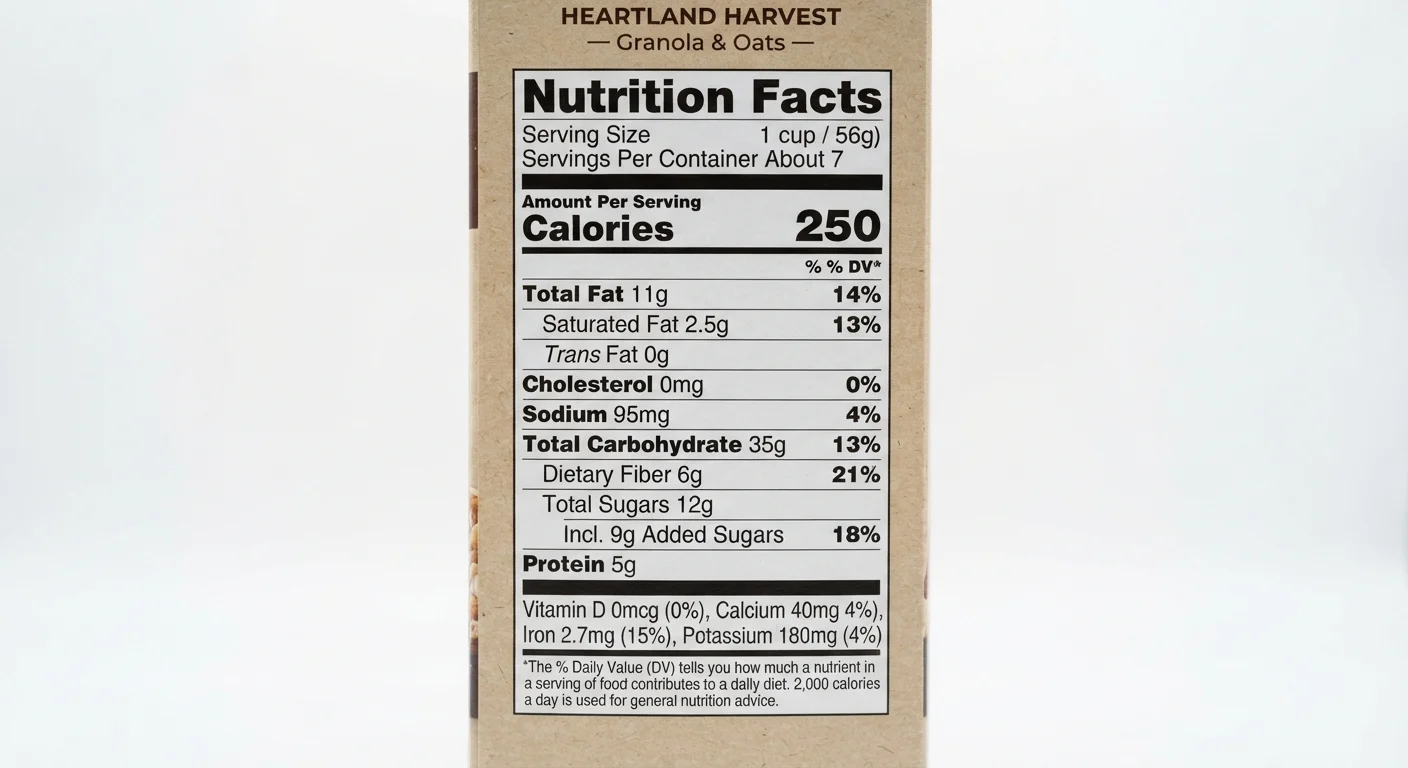
The very first thing to read on any Nutrition Facts panel is the serving size. It appears at the top and is displayed in a familiar household measure - cups, pieces, tablespoons - alongside the metric weight in grams. Every single number below it on the label is calculated for that serving only.
The updated FDA label format requires serving sizes to reflect amounts people realistically consume, not aspirational portions. That means a bag of chips that used to list 11 chips as a serving might now list a larger, more realistic amount. This change makes the calorie and nutrient counts more honest.
Directly below the serving size, the label tells you how many servings are in the entire package. If a container has 2.5 servings and you eat the whole thing, multiply every number on the label by 2.5. Skipping this step is the most common reason people underestimate what they're consuming.
Check Servings Per Container First
Before reading any other number on the label, confirm how many servings are in the package. It's easy to assume a small bottle or snack bag is a single serving when it contains two or more. Once you know the serving count, you can decide whether to scale the nutrient numbers up based on how much you actually plan to eat.
Calories: A Measure of Energy, Not Quality
Calories tell you how much energy a serving provides. The updated label displays the calorie count in a larger, bolder font than previous versions - a deliberate design choice to make it easy to spot.
What calories don't tell you is anything about nutritional quality. A 200-calorie serving of nuts and a 200-calorie serving of a sugary snack cake deliver very different nutritional profiles. For a fuller picture of how foods compare in terms of what they offer per calorie, the concept of nutrient density is a useful lens.
70%+
US adults who report using the Nutrition Facts label
According to FDA consumer research, a majority of US adults say they use the Nutrition Facts label at least occasionally when deciding to buy a food product.
3,400 mg
Average daily sodium intake for US adults
The CDC reports the average American consumes about 3,400 mg of sodium per day - well above the 2,300 mg Daily Value shown on food labels.
17 tsp
Average daily added sugar consumed by US adults
USDA dietary data indicate US adults consume roughly 17 teaspoons of added sugars daily on average, compared to the guideline recommendation of no more than about 12 teaspoons for a 2,000-calorie diet.
Understanding % Daily Value
The right-hand column of the Nutrition Facts panel lists % Daily Value (% DV) for most nutrients. This percentage tells you how much of a nutrient one serving contributes to a total daily intake based on a 2,000-calorie reference diet. It's a standardized benchmark, not a personal prescription.
The FDA provides a quick rule of thumb: 5% DV or less is low for a nutrient, and 20% DV or more is high. Use this to quickly scan whether a food is a meaningful source of fiber or calcium, or whether it's particularly high in sodium or saturated fat.
Note that not every nutrient has a % DV. Trans fat and total sugars don't carry one because no recommended daily reference amount has been established for them. Added sugars do carry a % DV - it's set at 10% of total daily calories, in line with current dietary guidance.
The 2,000-Calorie Reference Is a Benchmark, Not a Target
The % Daily Values on every Nutrition Facts label are calculated using a 2,000-calorie-per-day reference diet. This figure was chosen because it approximates the needs of many adults, but actual calorie needs vary widely by age, sex, body size, and physical activity. Use % DV as a relative guide for comparing foods - not as a precise measure of your personal nutritional requirements. A registered dietitian can help you understand your individual needs.
The Nutrient Breakdown: What to Watch
Below the calorie count, the label lists key nutrients in two groups: those most Americans consume in excess (and should limit) and those many fall short on (and should seek out).
Nutrients to limit: Total fat, saturated fat, trans fat, cholesterol, sodium, and added sugars. High intake of saturated fat and sodium is associated with cardiovascular risk in population research. Added sugars contribute calories without nutritional benefit and are now broken out separately from total sugars - an important update from the previous label format.
Nutrients to get enough of: Dietary fiber, vitamin D, calcium, iron, and potassium are listed because population data show Americans often fall short. The label dropped vitamins A and C (deficiency is now rare in the US) and added vitamin D and potassium to reflect current public health priorities.
The label also lists total carbohydrates, broken into dietary fiber and total sugars (with added sugars as a sub-line), plus protein. Protein does not currently have a % DV on standard labels for adults.
For a deeper look at what's behind the ingredient list - including how to spot added sugars by their many names - see our guide on reading an ingredient list.
Using the Label as a Comparison Tool
The Nutrition Facts panel becomes most powerful when you use it to compare similar products side by side. Because the format is standardized by the FDA, you can hold two cereals, two yogurts, or two soups next to each other and make a direct, apples-to-apples comparison - provided the serving sizes are the same or you adjust for any difference.
Look at sodium levels in canned goods. Compare added sugars in flavored beverages. Check fiber content across bread options. These comparisons take seconds once you know where to look and what the numbers mean.
It's also worth remembering that the label reflects one serving of one food in isolation. Your overall dietary pattern - the combination of everything you eat across a day - matters more than any single number on a single package. Nutrition science itself has real complexity and ongoing debate; for a grounded look at why nutrition headlines can seem contradictory, see where nutrition science gets genuinely complicated.
This article is for general informational and educational purposes only. It is not a substitute for advice from a registered dietitian or qualified healthcare professional. Individual nutritional needs vary based on health status, age, and other factors.