

Key Takeaways
- Nutrient density measures nutritional value per calorie, not just total calorie count.
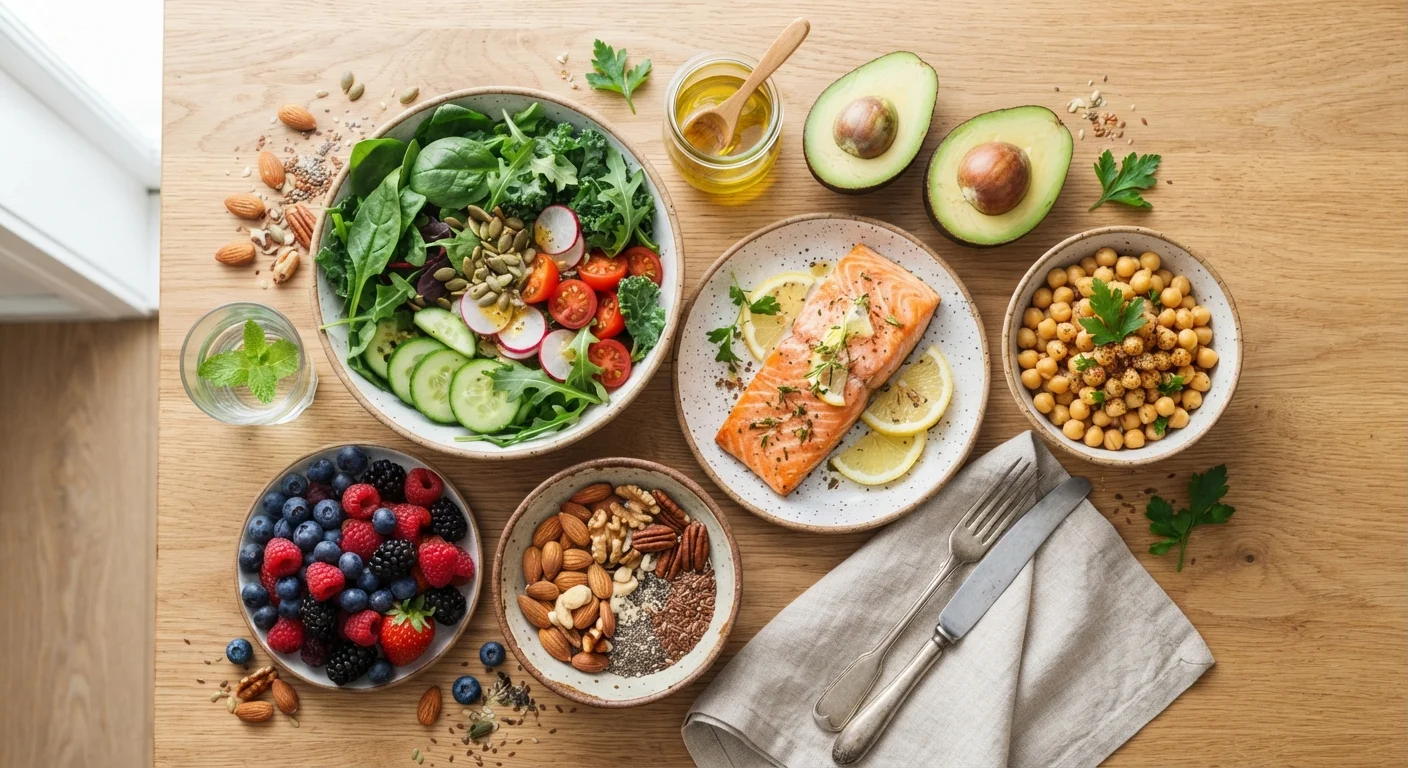
- Whole foods like vegetables, legumes, and fish are generally considered high in nutrient density.
- Highly processed foods can be calorie-dense but low in vitamins, minerals, and fiber.
- Understanding nutrient density is a practical tool for improving diet quality without rigid calorie counting.
- Consult a registered dietitian for personalized guidance on food choices and nutritional needs.
Nutrient Density
Nutrient density refers to how much nutritional value - vitamins, minerals, fiber, protein, and other beneficial compounds - a food provides relative to the number of calories it contains. A nutrient-dense food delivers a lot of nutrition for relatively few calories. The concept helps explain why two foods with identical calorie counts can have very different effects on your overall diet quality.
Researchers and dietitians sometimes use formal scoring systems, such as the Nutrient Rich Foods (NRF) index, to quantify nutrient density across food categories - though no single universal standard exists.
Why Nutrient Density Matters More Than Calories Alone
Most people are familiar with calories - the unit used to measure how much energy a food provides. But calories tell only part of the story. Two foods can have the same calorie count and deliver dramatically different amounts of vitamins, minerals, fiber, and protein. This is where nutrient density becomes a useful concept.
Think of it as a ratio: how much nutritional benefit does a food offer relative to the energy it contributes? A food that scores high on this ratio - delivering substantial nutrition for relatively few calories - is described as nutrient-dense. One that provides mostly energy with little else is sometimes called "empty calorie" food.
This framing is useful because it shifts attention from pure energy arithmetic to the broader question of food quality. As explored in our guide to calorie balance, the simple energy equation has real limits as a complete picture of nutrition.
~57%
Calories from ultra-processed foods in typical US diet
Research published in BMJ Open estimated that ultra-processed foods account for more than half of daily caloric intake among US adults, foods that tend to rank low in nutrient density.
90%+
Americans falling short on vegetable intake
The Dietary Guidelines for Americans report that more than 90% of Americans do not meet recommended vegetable intake - a key source of nutrient-dense foods.
10+
Essential nutrients tracked on standard nutrition labels
The FDA's Nutrition Facts label now requires disclosure of over ten nutrients, including vitamin D, potassium, calcium, and iron - all markers relevant to assessing a food's nutrient density.
What Makes a Food Nutrient-Dense?
A nutrient-dense food is one that contains meaningful amounts of essential nutrients - such as vitamins A, C, D, and B vitamins, minerals like potassium, calcium, and iron, dietary fiber, and high-quality protein - without excessive added sugars, refined starches, or saturated fat padding out the calorie count.
Leafy greens like spinach and kale are often cited as textbook examples: they contain very few calories per serving yet supply vitamin K, folate, iron, and antioxidant compounds. Legumes like lentils and chickpeas pack protein, fiber, and several B vitamins into each serving. Fatty fish such as salmon provide omega-3 fatty acids alongside protein and vitamin D.
On the other end of the spectrum, many heavily processed foods - sweetened beverages, refined snack foods, and fast-food items - deliver significant calories through added sugars and refined fats while contributing little in the way of micronutrients or fiber. This matters because, as the evidence on dietary fiber shows, many Americans already fall short on key nutrients.
How to Use Nutrient Density as a Practical Guide
You don't need to memorize nutrition scores or carry a reference chart to apply this concept. A few general principles can help:
- Fill most of your plate with whole, minimally processed foods. Vegetables, fruits, whole grains, legumes, lean proteins, and nuts naturally tend toward higher nutrient density.
- Read nutrition labels with this lens. A food that is high in calories but low in vitamins, minerals, fiber, and protein relative to its serving size may be worth moderating. Our breakdown of the Nutrition Facts label can help you decode what you're looking at.
- Think about patterns, not individual foods. Nutrient density is most meaningful at the level of your overall diet over days and weeks - not a single meal or snack.
It's also worth noting that some foods are nutrient-dense in one dimension but not others. Whole milk, for example, provides calcium and protein but also saturated fat. Context and overall dietary balance matter. For a broader foundation, see our nutrition fundamentals overview.
A Simple Habit: The Plate Method
One practical way to apply nutrient density thinking at meals is to fill half your plate with vegetables and fruit, one quarter with whole grains or starchy vegetables, and one quarter with a lean protein source. This approach - endorsed by many public health organizations - naturally tilts meals toward higher-nutrient options without requiring detailed tracking.
Nutrient Density vs. Supplements: Getting Nutrients From Food First
One question that naturally follows from thinking about nutrient density is whether supplements can fill nutritional gaps just as effectively as food. In some cases - particularly for specific deficiencies or special populations - supplements play an important clinical role. But for most people, whole foods offer advantages that isolated supplements cannot fully replicate.
Foods contain thousands of naturally occurring compounds - including phytonutrients and fiber - that interact in ways not yet fully understood by science. A vitamin C supplement delivers ascorbic acid; an orange delivers vitamin C alongside flavonoids, fiber, potassium, and water. These components may work together in ways that benefit health beyond what any single supplement provides. Our article on nutrition from food versus supplements explores this comparison in more depth.
“Nutrient density is about getting the most nutritional bang for your caloric buck. The goal is to choose foods that deliver a broad spectrum of essential nutrients without excess calories, added sugars, or unhealthy fats.”
— Walter Willett, Professor of Epidemiology and Nutrition, Harvard T.H. Chan School of Public Health
This article is for general informational and educational purposes only and is not a substitute for professional medical or dietary advice. Consult a qualified healthcare provider or registered dietitian for guidance tailored to your individual health needs.