

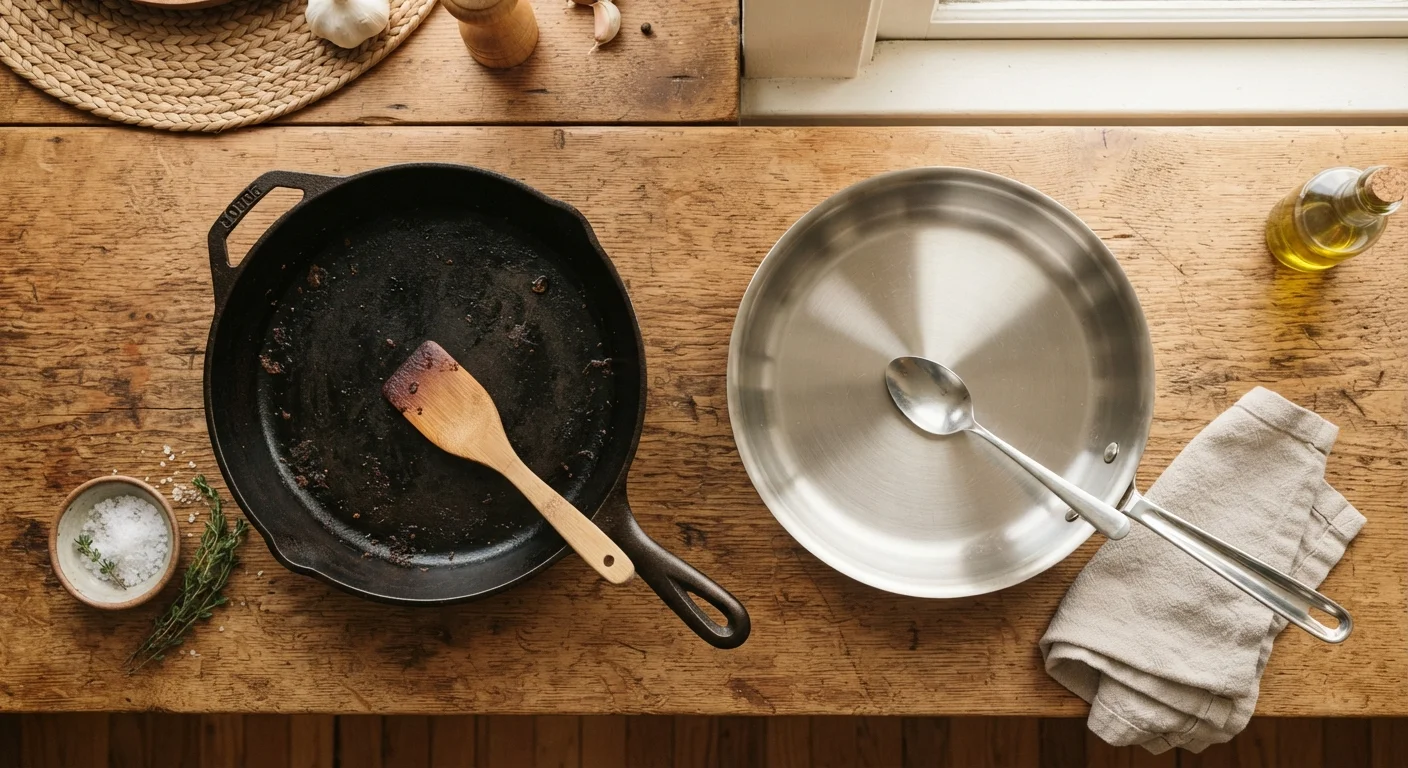
Key Takeaways
- Cast iron retains heat exceptionally well but heats unevenly and takes longer to reach temperature.
- Stainless steel responds quickly to temperature changes, making it better for delicate, technique-driven cooking.
- Cast iron requires regular seasoning; stainless steel is dishwasher-safe and lower maintenance.
- Acidic foods like tomatoes can damage cast iron's seasoning and pick up a metallic flavor.
- Both pans can last decades with proper care - neither is objectively better for every kitchen task.
Option A
Cast Iron
The slow-and-steady heat powerhouse.
Best for: Ideal for searing, frying, baking, and any cooking that benefits from steady, even heat retained over time.
Option B
Stainless Steel
The responsive, versatile everyday workhorse.
Best for: Best for deglazing, sautéing, and building pan sauces where quick heat control and easy cleanup matter most.
If you love searing steaks or baking cornbread
Cast Iron
Cast iron's exceptional heat retention creates the intense, sustained surface heat needed for a deep crust on meat and evenly baked goods.
If you frequently make pan sauces or sauté vegetables
Stainless Steel
Stainless steel heats and cools quickly, giving you the control needed to build fond and deglaze without overcooking delicate ingredients.
If you want one pan that goes from stovetop to oven
Cast Iron
Cast iron handles extreme oven temperatures and open-flame cooking without any degradation, making it supremely versatile for long braises or high-heat roasting.
If easy maintenance and cleanup are priorities
Stainless Steel
Stainless steel is dishwasher-safe, unaffected by acidic foods, and doesn't require the regular re-seasoning that cast iron demands.
If you cook acidic dishes like tomato sauces or wine-braised meats
Stainless Steel
Acid breaks down cast iron's seasoning and can impart a metallic off-flavor; stainless steel handles acidic ingredients without any reaction.
How Heat Behaves Differently in Each Pan
The most important difference between cast iron and stainless steel isn't weight or price - it's how each material handles heat. Understanding this is the foundation of knowing which pan to reach for. If you want to go deeper on the science, our guide to cooking heat basics covers the principles in full.
Cast iron is a poor conductor of heat, meaning it heats slowly and unevenly - hot spots are common if you don't preheat long enough. But once it's up to temperature, it holds that heat with remarkable consistency. That thermal mass is what gives you a powerful sear on a steak or an evenly browned bottom crust on skillet cornbread.
Stainless steel conducts heat more readily and responds faster to adjustments at the burner. Turn the flame down and the pan cools quickly. This responsiveness makes it better suited for tasks where precision matters - sautéing shallots, reducing a sauce, or finishing a delicate fish fillet.
| Criterion | Cast Iron | Stainless Steel |
|---|---|---|
| Heat retention | Excellent - holds heat long | Moderate - loses heat faster |
| Heat responsiveness | Slow to adjust | Responds quickly to changes |
| Weight | Heavy (8-12 lbs typical) | Lighter and easier to handle |
| Maintenance | Requires regular seasoning | Minimal - often dishwasher-safe |
| Acidic food compatibility | Poor - strips seasoning | Excellent - no reaction |
| Oven-safe temperature | Virtually unlimited | Typically up to 500°F (handle dependent) |
| Non-stick performance | Improves with seasoning over time | Requires proper technique |
Maintenance, Seasoning, and Longevity
Both pans can last a lifetime, but they ask different things of their owners.
Cast iron must be seasoned - a process of baking thin layers of oil onto the surface to create a natural, increasingly non-stick finish. Soap should be used sparingly, the pan should be dried thoroughly after washing, and it should never be soaked in water. Acidic ingredients like tomatoes or citrus can strip seasoning if left in contact too long. Done right, a cast iron pan improves with every use.
Stainless steel requires no seasoning whatsoever. Most stainless pans are dishwasher-safe, and they're unaffected by acidic foods. The trade-off is sticking: proteins will adhere to stainless if the pan isn't properly preheated or enough fat isn't used. The fix is technique - preheat the pan until water droplets skitter across the surface (the Leidenfrost effect), then add oil. This is exactly the kind of kitchen science that, once understood, makes cooking far more predictable. See how fat plays a role in cooking for more context.
1,700°F+
Max heat tolerance of cast iron
Cast iron can withstand temperatures far beyond typical home cooking, making it suitable for campfires and commercial ovens alike.
3-5 min
Recommended cast iron preheat time
Food science educators generally recommend preheating cast iron for several minutes over medium heat to minimize hot spots before cooking.
Which Pan Is Right for Which Task?
Neither pan is universally superior. The real skill is matching the tool to the job.
Reach for cast iron when:
- Searing meat that needs a sustained, intense crust
- Frying chicken or other foods that benefit from stable oil temperature
- Baking - cast iron goes into a 500°F oven without issue
- Cooking over a campfire or grill grates
Reach for stainless steel when:
- Making pan sauces that rely on deglazing browned fond (the caramelized bits left after searing)
- Cooking acidic dishes like tomato sauce or wine-braised proteins
- Sautéing vegetables that need quick, controlled heat
- You need a pan you can toss in the dishwasher
One common myth worth dispelling: stainless steel is not ruined if food sticks to it. Stuck food typically releases on its own once the protein has properly set - a sign you simply need to wait a moment longer. Many kitchen rules home cooks follow are actually myths, and this is one of the most common.
A Note on Reactive vs. Non-Reactive Cookware
Cast iron is considered a reactive metal, meaning it can interact chemically with acidic or alkaline foods, affecting both flavor and the pan's seasoning. Stainless steel is non-reactive, which is why it's the standard choice in professional kitchens for sauces and braises involving wine, tomatoes, or vinegar. This distinction matters most for long-cooked acidic dishes, not quick sears.