

Key Takeaways
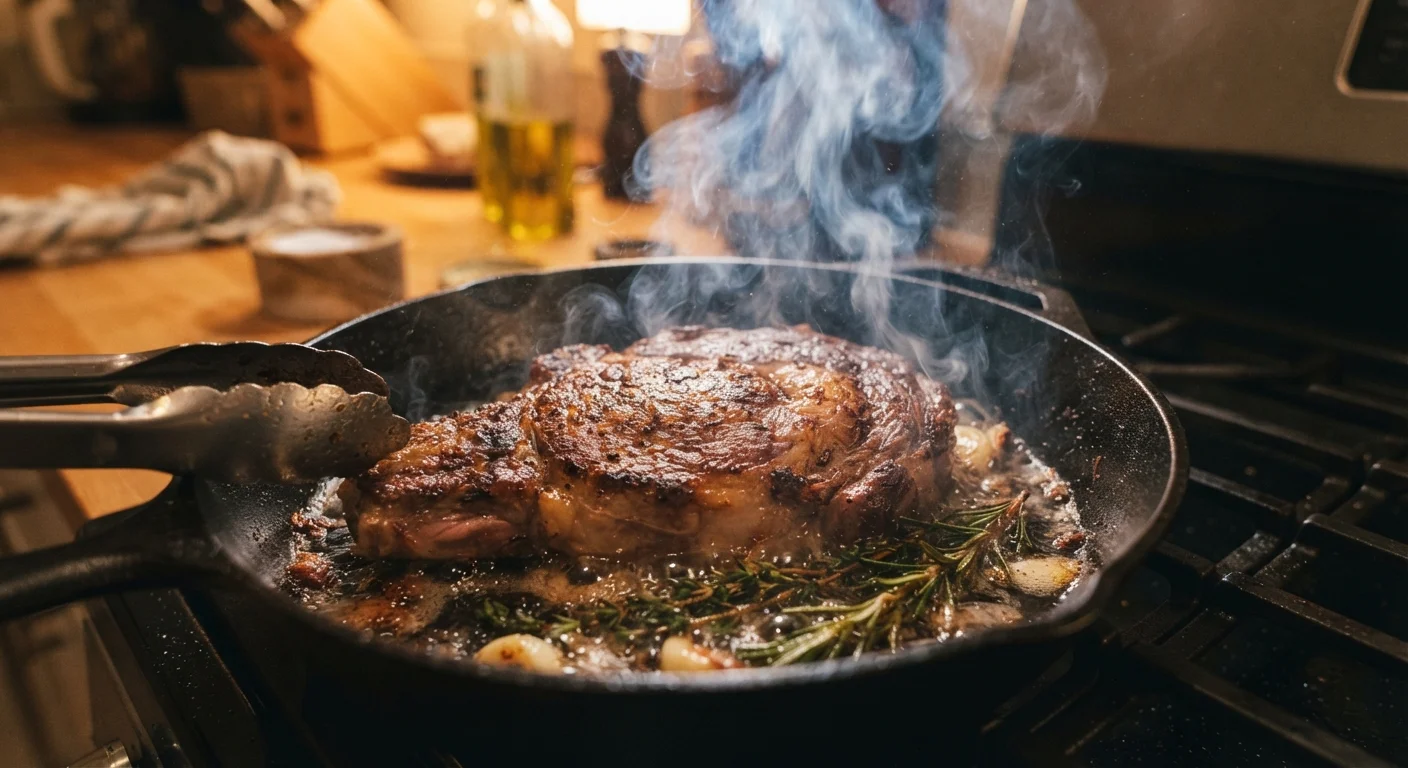
- The Maillard reaction - not 'sealing in juices' - is what creates a brown, flavorful crust.
- Surface temperature must reach at least 280-300°F (138-149°C) for browning to begin.
- Moisture on the surface is the most common reason searing fails at home.
- A dry surface, high heat, and sufficient fat are the three essentials for a proper sear.
- The Maillard reaction is responsible for flavor in dozens of everyday cooked foods beyond meat.
The Maillard Reaction
The Maillard reaction is a chemical process that occurs when amino acids (the building blocks of proteins) and certain sugars are exposed to heat. The result is the formation of hundreds of new flavor and aroma compounds - and that characteristic deep-brown crust. It's what gives seared meat, toasted bread, and roasted coffee their complex, satisfying taste.
Named after French chemist Louis-Camille Maillard, who first described the reaction in 1912, it is distinct from caramelization, which involves only sugars and occurs at different temperatures.
Why Your Pan Needs to Be Really, Truly Hot
One of the most common searing mistakes is adding food to a pan that isn't hot enough. The Maillard reaction doesn't begin until the surface of your food reaches roughly 280-300°F (138-149°C). At temperatures below that, proteins don't transform - they simply cook without developing color or depth of flavor.
To get there quickly and consistently, preheat your pan over medium-high to high heat for at least two to three minutes before adding any fat or food. Cast iron and stainless steel are particularly well-suited for searing because they retain heat well when cold food hits the surface. Add a thin layer of a high-smoke-point fat - such as refined avocado oil or clarified butter - just before adding the protein.
A properly heated pan will cause a drop of water to bead and skitter across the surface rather than sitting and sizzling quietly. That's a reliable visual cue you're in the right range.
Let the Crust Tell You When It's Ready
Resist the urge to lift or move the protein immediately after placing it in the pan. A properly searing piece of food will release naturally from the surface once the crust has fully formed. If it sticks when you try to flip it, it simply needs more time - pulling it away early tears the crust and undermines all the work you've done to build it.
The Single Biggest Enemy of a Good Sear: Moisture
Surface moisture is the number-one obstacle to browning at home. Water boils at 212°F - far below the Maillard threshold. As long as any moisture remains on the food's surface, the pan's energy goes into evaporating that water rather than driving the surface temperature higher. The result is gray, steamed protein instead of a brown crust.
The fix is straightforward: pat your protein dry with paper towels before it ever touches the pan. For thicker cuts or whole pieces of poultry, leaving them uncovered on a wire rack in the refrigerator for an hour or overnight draws additional moisture to the surface, where it evaporates before cooking even begins.
Crowding the pan has the same steaming effect. When multiple pieces of food are packed together, their released moisture accumulates and lowers the surface temperature of the pan. Work in batches if needed, and give each piece enough room to breathe.
280-300°F
Minimum surface temp for Maillard browning
Food science references consistently cite this temperature range as the lower threshold at which the Maillard reaction begins to produce noticeable browning and flavor compounds.
212°F
Boiling point of water - browning's enemy
Because water boils at this temperature - well below the Maillard threshold - any surface moisture must fully evaporate before the surface can brown.
Hundreds
Flavor compounds created by the reaction
Research in food chemistry has identified hundreds of distinct volatile compounds produced during the Maillard reaction, each contributing to the layered flavor of well-browned food.
What the Maillard Reaction Actually Produces
When amino acids and reducing sugars react under heat, they don't produce a single compound - they produce hundreds. These molecules, called melanoidins and various volatile aromatics, are responsible for the complex savory, nutty, and slightly bitter notes that define well-seared food. The specific flavor profile depends on the amino acid composition of the food, the temperature, and the duration of heat exposure.
This is why a seared chicken thigh tastes different from a seared steak, even if both have the same deep-brown color. The protein and sugar composition varies between them, and so does the resulting chemistry.
The Maillard reaction is also responsible for the crust on a baguette, the color of roasted coffee, the flavor of soy sauce, and the toasted notes in dark beer. Understanding it as a universal cooking principle - rather than a meat-specific technique - changes how you approach heat across your entire kitchen. As noted in our guide to salt, fat, acid, and heat, heat is one of the four core levers that transforms raw ingredients into deeply flavored food.
“The Maillard reaction is perhaps the most important flavor-generating reaction in all of cooking. It is responsible for the complex, savory flavors and aromas of browned foods across virtually every cuisine on Earth.”
— Harold McGee, Author of 'On Food and Cooking: The Science and Lore of the Kitchen'
Common Misconceptions That Undermine the Sear
The most widely repeated myth about searing is that it "seals in juices" - the idea that a browned crust forms a physical barrier that prevents moisture from escaping during cooking. This has been disproven repeatedly. Juiciness is primarily a function of internal temperature and resting time, not surface treatment. Our article on kitchen myths that hold cooks back covers this and other persistent misunderstandings in more detail.
A second misconception is that you should move the food frequently to build color faster. In practice, the opposite is true. Leaving the food undisturbed allows a stable contact zone to form between the protein and the hot pan surface. Frequent movement resets that zone and slows browning. Place the food down, resist the urge to check, and let the crust release naturally - it will lift cleanly from the pan when it's ready.