

| Prevalence of mental illness (US adults) | ~1 in 5 adults annually (SAMHSA National Survey on Drug Use and Health) |
| WHO classification of burnout | Occupational phenomenon, not a medical diagnosis (WHO ICD-11, 2019) |
| Minimum duration for major depression diagnosis | 2 weeks of persistent symptoms (DSM-5, American Psychiatric Association) |
| Terms most commonly misused | Anxiety, OCD, trauma, trigger, gaslighting (Mental health advocacy organizations) |
| Stigma reduction impact | Accurate language measurably reduces stigma (American Journal of Psychiatry, language studies) |
Why Language Around Mental Health Matters
Words like anxiety, depressed, trauma, and triggered have migrated from clinical settings into everyday conversation - often stripped of their clinical weight. This isn't purely a grammar problem. When mental health terms are used imprecisely, it can minimize serious conditions, confuse people seeking help, and reinforce stigma.
Saying "I'm so OCD about my desk" or "I literally have anxiety about this meeting" conflates temporary discomfort with conditions that significantly disrupt people's lives. Accurate language builds better understanding - both of our own experiences and of the people around us.
This reference guide clarifies what the most commonly heard mental health terms actually mean, how they're clinically used, and where everyday usage tends to go wrong. For a broader introduction to emotional well-being, see this grounded introduction to mental wellness.
This Is General Information, Not Medical Advice
The definitions in this article reflect clinical and public health usage for educational purposes only. They are not diagnostic criteria, and reading them does not constitute a mental health evaluation. If you are concerned about your own mental health or that of someone you know, please consult a qualified healthcare professional.
Commonly Misused Terms - Defined Clearly
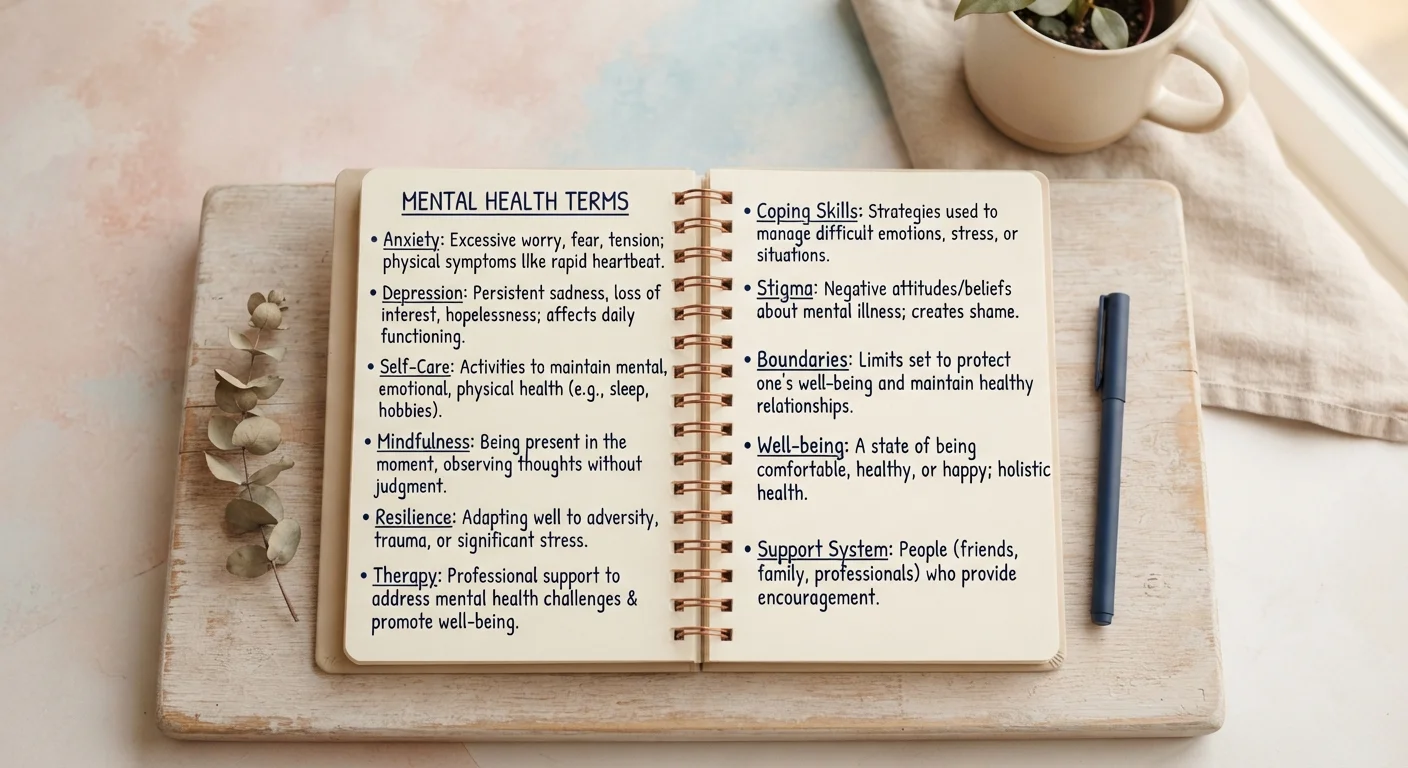
Below is a reference glossary of the mental health terms most frequently heard - and most frequently misapplied. Each definition reflects current clinical understanding from organizations such as the American Psychiatric Association (APA) and the World Health Organization (WHO).
Understanding the distinction between stress and clinical anxiety, for example, is practically meaningful: one typically resolves when circumstances change; the other often requires professional support. Similarly, resilience is often mischaracterized as "toughness" - it is actually about adaptive recovery, a capacity that research suggests can be strengthened with practice and support.
For a look at how technology intersects with these concepts in daily life, explore what mental health apps can and cannot realistically offer.
Key Facts and Context
| Prevalence of mental illness (US adults) | ~1 in 5 adults annually (SAMHSA National Survey on Drug Use and Health) |
| WHO classification of burnout | Occupational phenomenon, not a medical diagnosis (WHO ICD-11, 2019) |
| Minimum duration for major depression diagnosis | 2 weeks of persistent symptoms (DSM-5, American Psychiatric Association) |
| Terms most commonly misused | Anxiety, OCD, trauma, trigger, gaslighting (Mental health advocacy organizations) |
| Stigma reduction impact | Accurate language measurably reduces stigma (American Journal of Psychiatry, language studies) |
Mental health conditions are common, and the language we use to describe them shapes public perception in real ways. Research published in peer-reviewed journals has shown that stigmatizing or imprecise terminology can delay help-seeking. Conversely, accurate, matter-of-fact language tends to reduce shame and normalize the experience of struggling.
Understanding what emotional health actually means - and why it differs from simply feeling happy is one practical step toward using this vocabulary more intentionally. If you are navigating decisions about your own mental health, a licensed mental health professional is best placed to provide guidance tailored to your situation.
This article is for informational and educational purposes only and does not constitute medical advice, diagnosis, or treatment. Always consult a qualified healthcare professional for concerns about your mental health or that of someone you care for.