

Key Takeaways
- Protein quality is determined by its amino acid profile and how well the body can digest and use it.
- Complete proteins contain all nine essential amino acids; incomplete proteins are missing or low in one or more.
- Most animal-based foods are complete proteins; most plant foods are incomplete but can be combined strategically.
- Digestibility matters: animal proteins are generally absorbed more efficiently than plant proteins.
- People eating varied plant-based diets can meet all essential amino acid needs without animal products.
Our Verdict
Neither complete nor incomplete protein sources are inherently superior across all contexts. Animal proteins offer convenience and high bioavailability, while plant proteins come packaged with fiber, phytonutrients, and other health-supporting compounds. The practical goal for most people is dietary variety - not chasing a single 'perfect' protein source.
| Best for | Recommended |
|---|---|
| Those seeking the simplest route to meeting essential amino acid needs | Complete protein sources (animal-based or soy/quinoa) |
| Those following plant-based or vegetarian diets | Strategic pairing of complementary incomplete protein sources |
| Those prioritizing overall dietary pattern and long-term health | A varied mix of both source types |
What Makes a Protein 'Complete' or 'Incomplete'?
Protein is built from amino acids - small molecular units that the body uses to repair tissue, support immune function, produce enzymes, and perform hundreds of other tasks. Of the 20 amino acids involved in human biology, nine are classified as essential: the body cannot manufacture them, so they must come from food. These nine are histidine, isoleucine, leucine, lysine, methionine, phenylalanine, threonine, tryptophan, and valine.
A complete protein contains all nine essential amino acids in amounts sufficient to support the body's needs. An incomplete protein is low or deficient in one or more of them - sometimes called a limiting amino acid. This distinction shapes how nutritionists and researchers evaluate protein quality, though it's worth noting that the terms can oversimplify a genuinely nuanced picture. See where nutrition science gets complicated for important context on interpreting food research.
Complete vs. Incomplete: How Common Sources Compare
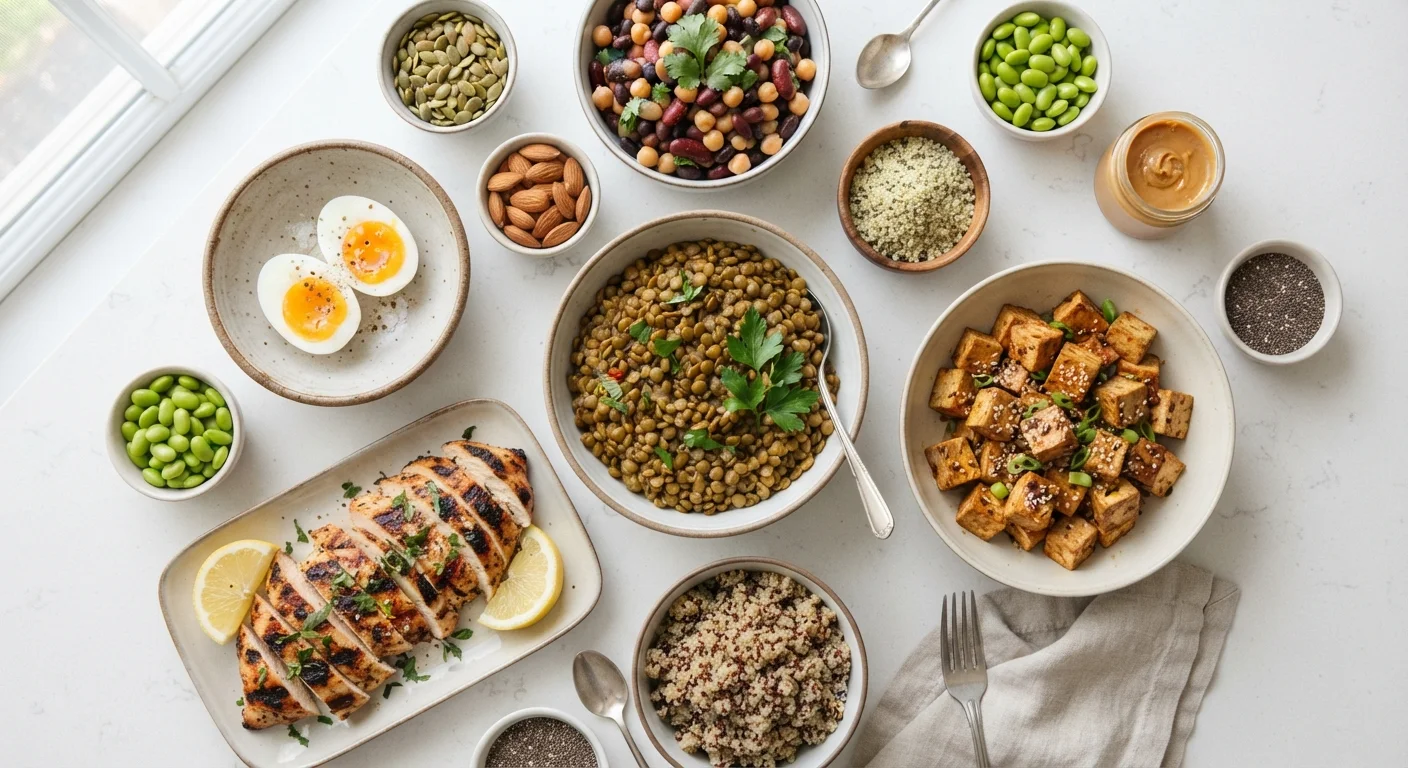
Animal-derived foods - meat, poultry, fish, eggs, and dairy - are the most widely available complete proteins. Among plant foods, soy and quinoa are well-established complete protein sources. Most legumes, grains, nuts, and seeds are technically incomplete, though they are often rich in specific amino acids that other plant foods lack.
| Food Source | Complete Protein? | Digestibility (DIAAS) | Notable Nutrients | |
|---|---|---|---|---|
| Eggs | Yes | Very high (~1.13) | Choline, B12, vitamin D | |
| Chicken breast | Yes | High (~1.08) | Niacin, selenium, phosphorus | |
| Soy (edamame/tofu) | Yes | Moderate-high (~0.91) | Isoflavones, iron, calcium | |
| Quinoa | Yes | Moderate (~0.84) | Magnesium, fiber, manganese | |
| Lentils | No (low methionine) | Moderate (~0.59) | Folate, iron, fiber | |
| Brown rice | No (low lysine) | Moderate (~0.59) | Magnesium, B vitamins, fiber | |
| Almonds | No (low lysine) | Moderate | Vitamin E, magnesium, healthy fats |
Digestibility is the other dimension of quality. Scientists use a metric called DIAAS to measure how well a protein is absorbed and used relative to human needs. Animal proteins typically score higher than most plant proteins, partly because plant cell walls and compounds like phytates can slow absorption. That said, cooking, soaking, and fermenting plant foods can meaningfully improve their digestibility.
For a deeper look at plant protein specifically, plant-based eating: strengths, gaps, and what to watch for provides a thorough, balanced overview.
Combining Incomplete Proteins: The Complementary Strategy
The traditional concept of complementary proteins - eating two incomplete sources together so their amino acid profiles fill each other's gaps - remains nutritionally sound, even if the rigid "must eat at the same meal" framing has largely been revised. Research suggests that amino acids consumed across the course of a day can collectively meet essential amino acid requirements, provided overall intake is adequate.
Classic complementary pairings include:
- Legumes + grains (e.g., rice and beans, lentil soup with bread) - legumes are rich in lysine but low in methionine; grains offer the reverse.
- Nuts or seeds + legumes (e.g., hummus with sesame tahini) - broadens the amino acid spread.
- Dairy + grains (e.g., yogurt with oats) - for lacto-vegetarians seeking to boost lysine from a complete source.
You Don't Need to Stress Every Meal
For most healthy adults eating a varied diet, hitting every essential amino acid at each meal is unnecessary. Research supports a day-level view of protein intake. Focus on eating a range of protein foods throughout the day - legumes, whole grains, nuts, seeds, and animal products if you consume them - rather than engineering perfect combinations at every sitting.
It's also worth separating fact from common myths here. Protein myths that nutritionists keep having to correct addresses the persistent misconception that plant protein is categorically inferior or unusable.
Practical Guidance for Meeting Your Protein Needs
Protein needs vary meaningfully by age, body size, activity level, and health status. Recommendations from organizations like the NIH and the Dietary Guidelines for Americans are expressed as general population benchmarks - not personal prescriptions. Anyone managing a chronic condition, pregnancy, or specific athletic goals should discuss protein targets with a registered dietitian or qualified healthcare professional.
Regardless of dietary pattern, a few principles hold broadly:
- Variety is your primary tool. Rotating protein sources - both within and across food groups - reduces the risk of consistently missing any single amino acid.
- Whole food sources carry added value. Beyond amino acids, protein foods deliver micronutrients, fiber (in plant sources), and other compounds. Nutrition from food vs. supplements examines when whole foods have a measurable advantage over isolated nutrients.
- Processing matters. Heavily processed protein products - regardless of animal or plant origin - may have altered amino acid profiles or added ingredients that reduce their overall nutritional value.
This article is for general informational and educational purposes only and is not a substitute for personalized medical or nutritional advice. Consult a qualified healthcare professional before making significant changes to your diet.