

Key Takeaways
- Indoor cats deprived of mental stimulation are prone to boredom, stress, and destructive behavior.
- Enrichment doesn't require expensive gear - many effective strategies use household items.
- Rotating toys and varying activities keeps novelty high and engagement sustained over time.
- Puzzle feeders and food-based enrichment tap into cats' natural hunting drive at mealtime.
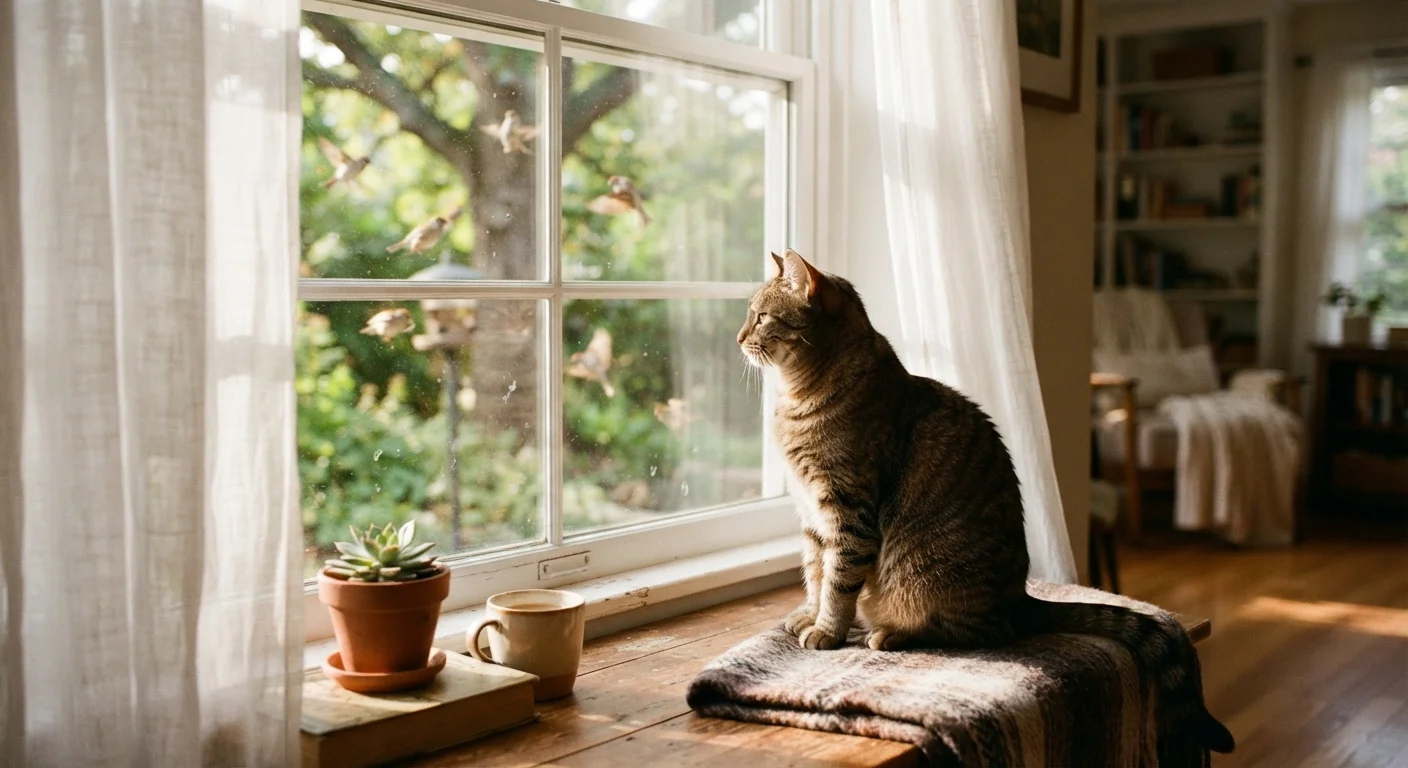
- Vertical space and window access address a cat's instinct to survey its territory safely.
Why Mental Enrichment Matters for Indoor Cats
Cats are predators by nature. Even the most pampered house cat carries behavioral programming shaped by millions of years of hunting, stalking, and problem-solving. When that drive has nowhere to go, boredom follows - and boredom in cats rarely stays quiet. It tends to show up as excessive vocalization, destructive scratching, overgrooming, or increased aggression.
According to veterinary behaviorists, environmental enrichment is one of the most effective ways to support feline psychological well-being. It doesn't mean buying an elaborate cat tree or subscribing to every pet gadget on the market. It means consistently giving your cat opportunities to think, explore, stalk, and play in ways that feel meaningful to them.
Pair mental enrichment with a predictable daily routine and you'll address both the behavioral and biological roots of your cat's needs. The strategies below cover a range of approaches - from passive environmental upgrades to active daily practices - so you can build a plan that works for your home and your cat's personality.
Match Enrichment to Your Cat's Personality
Not all cats respond to enrichment the same way. A bold, curious cat may dive straight into a puzzle feeder, while a shy or anxious cat may need simpler, less demanding options first. Observe what genuinely holds your cat's attention - sustained engagement, not forced participation, is the goal. Enrichment should feel like play, not a chore.
Enrichment Strategies to Try
Install a window perch or bird feeder outside
A window perch gives your cat a front-row seat to the outdoors - passing squirrels, wind-blown leaves, and neighborhood birds all function as live, ever-changing enrichment. Place a perch at a window that gets reliable activity, and consider hanging a bird feeder just outside. This kind of passive visual stimulation can occupy a cat for hours without any effort on your part.
Choose a perch rated for your cat's weight and securely mounted. Cats who feel unstable on a perch will stop using it.
A well-placed bird feeder outside a window is free, low-maintenance enrichment that lasts for hours.
Use puzzle feeders at mealtime
Feeding from a puzzle feeder - a device that requires the cat to manipulate levers, slide panels, or paw through openings to access food - mimics the cognitive effort of hunting prey. This converts an ordinary meal into a problem-solving exercise.
Start with a simple puzzle and increase difficulty gradually as your cat learns. Even a muffin tin with kibble hidden under tennis balls counts as a basic puzzle. Puzzle feeders also help slow rapid eaters, which can reduce digestive discomfort.
Puzzle feeders transform mealtime into a mentally stimulating hunt that satisfies cats' predatory instincts.
Rotate toys on a schedule
Cats habituate quickly to toys that stay out permanently - something that seemed exciting on Monday can be completely ignored by Wednesday. Keeping a small stock of toys and cycling through them every few days resets novelty and revives interest.
You don't need a large collection. Three or four rotating toys - a feather wand, a crinkle ball, a small plush mouse - can be enough if they're introduced with some variability. Store unused toys out of sight, then reintroduce them as if new.
Rotating toys every few days can make the same items feel brand new to a bored cat.
Schedule daily interactive play sessions
No toy, no matter how clever, replaces the engagement of a play session driven by a person. Wand toys and laser pointers (always followed by a tangible catch like a small treat or toy) allow you to mimic the unpredictable movement of prey, which triggers a cat's full predatory sequence: stalk, chase, pounce, catch.
Aim for two short sessions daily - morning and evening tend to align well with cats' crepuscular (most active at dawn and dusk) activity patterns. Even five to ten minutes per session makes a measurable difference in behavior over time.
Two short daily play sessions satisfy the predatory sequence and reduce stress-related behavior.
Add vertical space with cat trees or shelving
Cats are instinctively drawn to height. Elevated positions allow them to survey their territory, feel secure, and retreat from household activity on their own terms. A tall cat tree, a wall-mounted cat shelf, or even cleared bookshelf space gives your cat access to the vertical dimension of your home.
Multiple cats in a home especially benefit from vertical space - it increases the perceived territory without requiring more floor area. When cats can spread out vertically, resource competition and tension between them often decrease.
Vertical space expands a cat's perceived territory and helps reduce tension in multi-cat households.
Introduce scent enrichment
Cats experience the world substantially through smell. Introducing novel scents - a pinch of dried catnip, a piece of crinkled paper from a new cardboard box, or even a pine cone brought in from outside - activates exploratory behavior and curiosity without requiring any active participation from you.
Silver vine and valerian root are alternatives to catnip that affect cats who don't respond to catnip (an estimated 30-50% of cats lack the genetic sensitivity to it). Rotate scent items as you would toys to maintain interest.
Novel scents trigger exploratory behavior - a simple, low-cost form of enrichment often overlooked by owners.
Enrichment Looks Different for Every Cat
Senior cats, cats with mobility limitations, and cats recovering from illness may need gentler forms of enrichment - such as scent exploration or low-effort puzzle feeders - rather than physically demanding activities. Always tailor enrichment to your individual cat's age, health status, and comfort level. If you're unsure what's appropriate, your veterinarian is a good starting point.
Making Enrichment a Lasting Habit
The most effective enrichment plans are consistent, not elaborate. Even ten minutes of structured play each day - combined with a puzzle feeder at meals and reliable window access - can meaningfully improve a cat's quality of life. Start with one or two changes, observe how your cat responds, and build from there.
If your cat shows signs of chronic stress - such as hiding, compulsive grooming, or house soiling - enrichment is a great first step, but it shouldn't replace a veterinary evaluation. Behavioral issues can sometimes have underlying medical causes. And for a fuller picture of keeping your cat comfortable at home, the safe home environment checklist is a useful companion resource. You might also find the at-home grooming guide helpful for building other hands-on care habits into your routine.