

Key Takeaways
- Cats instinctively hide pain as a survival behavior inherited from wild ancestors.
- Behavioral changes - not vocalizations - are often the earliest and most reliable pain signals.
- Changes in grooming, appetite, posture, and social interaction all warrant attention.
- A cat that suddenly seems fine after hiding symptoms may still need veterinary evaluation.
- Early detection significantly improves treatment outcomes for most conditions.
Pain Masking in Cats
Pain masking is the instinctive tendency of cats to conceal signs of illness or injury. Because cats evolved as both predators and prey, showing weakness in the wild could attract danger - so they learned to suppress visible distress. This makes it genuinely difficult for even attentive owners to recognize when their cat is suffering.
Veterinary professionals use validated tools like the Feline Grimace Scale (FGS) to assess acute pain in cats based on subtle facial muscle changes, including ear position, orbital tightening, and whisker tension.
Why Cats Are Wired to Hide Discomfort
Understanding a cat's relationship with pain starts with evolutionary biology. Cats are solitary hunters - unlike pack animals, they had no group members to protect them when injured. Showing visible signs of weakness could signal vulnerability to predators or competing animals. Over thousands of generations, suppressing outward pain cues became a survival advantage baked into feline behavior.
This instinct doesn't disappear in a safe domestic home. Your cat's nervous system still operates on ancient programming. The result is that pain, illness, and injury often go unnoticed - not because owners aren't paying attention, but because cats are remarkably effective at masking them.
It's worth noting that this is a well-recognized challenge in veterinary medicine. As our guide to common cat myths explores, many widely held beliefs about cats - including the idea that a calm or purring cat must be feeling fine - are more complicated than they appear.
Purring Doesn't Always Mean Comfort
Many cat owners assume purring signals contentment - but cats also purr when stressed, fearful, or in pain. Some researchers believe purring may serve a self-regulatory function during distress. Don't let a purring cat reassure you that all is well if other signs suggest otherwise.
Behavioral Signs That Something May Be Wrong
Because cats rarely cry out in pain, behavioral shifts are your most valuable diagnostic tool. Watch for deviations from your cat's established baseline - what's normal for your cat matters more than any generalized average.
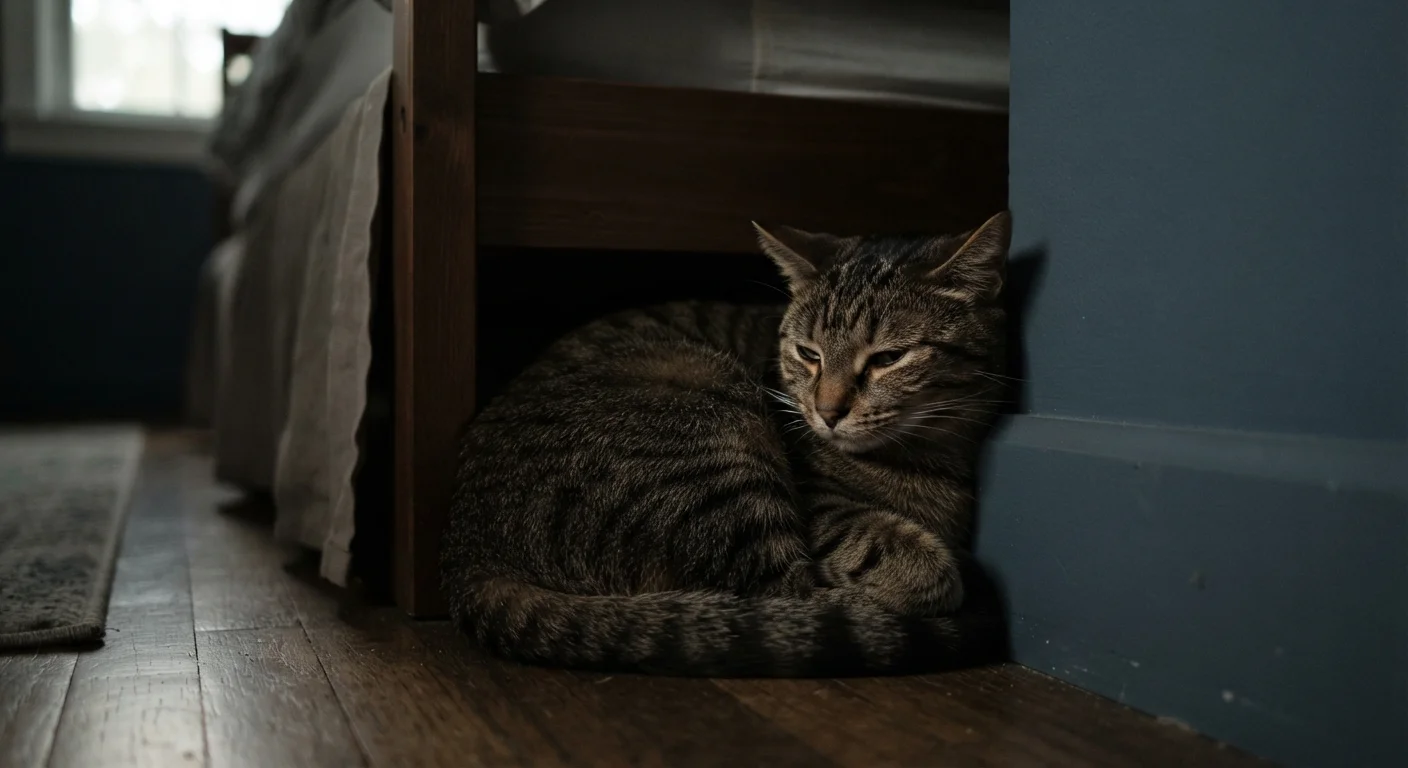
- Increased hiding: Seeking out dark, isolated spots more than usual is a classic sign of illness or pain. A cat that suddenly spends hours under the bed may be self-protecting.
- Changes in grooming: Over-grooming a specific area can indicate localized pain (such as skin irritation or internal discomfort). Under-grooming - a coat that looks unkempt - often signals that movement or self-care has become difficult.
- Reduced interaction: If a normally social cat stops seeking contact or becomes uncharacteristically irritable when touched, pain may be the cause.
- Altered litter box behavior: Straining, crying in the box, or eliminating outside it can indicate urinary, digestive, or musculoskeletal pain.
- Changes in vocalization: More yowling, growling when approached, or unusual silence in a normally communicative cat.
Keep a Simple Behavior Log
Tracking your cat's daily habits - sleep location, appetite, grooming, and social behavior - takes only minutes but creates an invaluable baseline. When you can tell a vet 'she stopped jumping on the bed three weeks ago,' that specificity helps significantly with diagnosis.
Unexplained behavioral changes can sometimes look similar to other issues - from boredom to anxiety. Our article on why cats knock things over illustrates how feline behavior often has layered roots that aren't always obvious at first glance.
Physical Cues and Posture Changes
Alongside behavioral signals, physical appearance can reveal discomfort a cat would otherwise conceal.
~90%
Cats with arthritis showing hidden symptoms
Veterinary estimates suggest the vast majority of cats with osteoarthritis display no obvious limping, making the condition widely underdiagnosed in domestic cats.
1 in 3
Cats affected by chronic pain conditions
Research published in veterinary literature indicates that chronic pain - particularly from musculoskeletal disease - is far more prevalent in cats than previously recognized.
- Hunched or rounded posture: A cat holding its body in a tight, curved position - especially around the abdomen - may be guarding against pain.
- Facial tension: Veterinary researchers developed the Feline Grimace Scale specifically to detect pain through subtle facial cues: ears flattened or rotated, eyes partially closed or squinted, whiskers pulled back, and a tense muzzle.
- Reluctance to jump or climb: A cat that once leaped effortlessly onto the counter but now hesitates or avoids heights may have joint pain, injury, or developing arthritis.
- Changes in weight or appetite: Eating less or more than usual, or unexplained weight loss, can accompany a range of painful conditions.
If you notice multiple physical signs together, or any single symptom that seems sudden or severe, a veterinary visit is warranted. For a broader look at how to reduce risks in your cat's environment, the guide to setting up a safe home for a cat is a useful companion resource.
This article provides general educational information about cat behavior and is not a substitute for professional veterinary advice. If you have concerns about your cat's health or pain levels, consult a licensed veterinarian.