

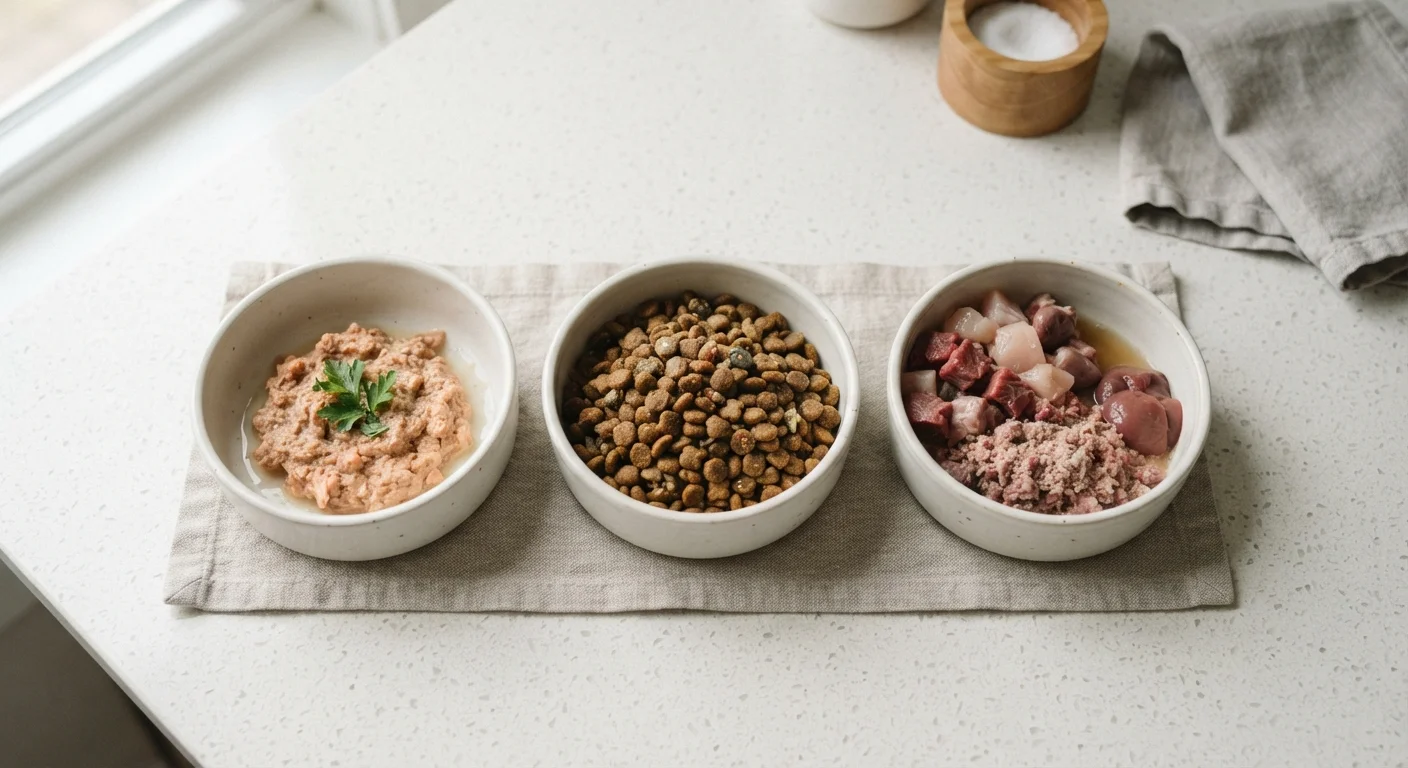
Key Takeaways
- Wet food provides significantly more moisture, which supports urinary and kidney health in cats.
- Dry kibble is convenient and shelf-stable, but cats on kibble-only diets may not drink enough water.
- Raw diets carry genuine food safety risks and require careful nutritional balancing to avoid deficiencies.
- No single format is universally superior - the right choice depends on your cat's health, age, and lifestyle.
- Consulting a veterinarian before making major diet changes is always the safest starting point.
Our Verdict
Wet food generally edges out the other formats for hydration and palatability, making it a strong choice for cats prone to urinary issues or those who are picky eaters. Dry kibble remains a practical, nutritionally sound option when used thoughtfully. Raw diets may appeal to owners seeking minimally processed feeding, but the safety and nutritional risks are real and should not be taken lightly without veterinary guidance.
| Best for | Recommended |
|---|---|
| Cats with urinary tract issues or low water intake | Wet food |
| Busy owners prioritizing convenience and cost | Dry kibble |
| Owners willing to invest significant time and expert oversight | Raw diet (with veterinary guidance) |
| Most healthy adult cats without specific health concerns | Combination of wet and dry food |
Why the Format of Cat Food Actually Matters
Cats are obligate carnivores, meaning they depend entirely on animal-based nutrients to survive. But beyond the ingredient list, how food is processed and delivered affects hydration, caloric density, dental health, and even digestibility. For a deeper look at how nutritional needs shift over a cat's life, see what cats need from their diet at every life stage.
Choosing between wet food, dry kibble, and raw feeding isn't just a matter of preference - each format has meaningful trade-offs backed by veterinary research. Understanding those differences helps owners make better, more confident decisions.
Wet Food: Hydration First
Canned or pouched wet food typically contains 70-80% moisture - a significant advantage for cats, who evolved in arid environments and have a naturally low thirst drive. Veterinary nutritionists widely recognize that adequate hydration supports kidney function and reduces the risk of lower urinary tract disease, both of which are common concerns in domestic cats.
Wet food is also generally more palatable, making it valuable for picky eaters, senior cats with reduced appetite, or cats recovering from illness. It tends to be lower in carbohydrates than dry food, which aligns well with a cat's naturally low requirement for dietary carbohydrates.
The downsides are practical: wet food costs more per calorie, spoils quickly once opened, and offers no dental abrasion benefit. Uneaten portions left at room temperature should be discarded after a few hours to prevent bacterial growth.
Try a Wet-Dry Combination
Many veterinarians recommend feeding a mix of wet and dry food to balance hydration benefits with the convenience of kibble. Even one wet meal per day can meaningfully increase your cat's overall moisture intake. This approach also adds dietary variety, which some cats find more appealing.
Dry Kibble: Convenience With Caveats
Dry food - often called kibble - is the most widely used cat food format in the US, primarily because it's convenient, shelf-stable, and cost-effective. Most commercial dry foods are formulated to be nutritionally complete, meaning they meet established standards set by the Association of American Feed Control Officials (AAFCO) for cats at specific life stages.
The chief concern with exclusive kibble feeding is hydration. Dry food contains only about 10% moisture, and cats fed solely on kibble may have chronically low water intake even if a water bowl is always available. Over time, this can contribute to kidney stress and urinary problems in susceptible individuals.
There's also ongoing discussion in veterinary circles about the relatively high carbohydrate content in many dry foods - a byproduct of the extrusion manufacturing process. While research hasn't established direct harm at typical dietary levels, some veterinarians prefer limiting carbohydrate intake for cats with diabetes or obesity.
| Wet Food | Dry Kibble | Raw Diet | |
|---|---|---|---|
| Moisture content | 70-80% | ~10% | Varies (60-70% fresh) |
| Hydration support | High | Low | Moderate to high |
| Convenience | Moderate (spoils quickly) | High (shelf-stable) | Low (prep and storage intensive) |
| Cost | Moderate to high | Low to moderate | High |
| Food safety risk | Low (if stored properly) | Very low | Higher (bacterial contamination) |
| Nutritional completeness | Yes, if AAFCO-approved | Yes, if AAFCO-approved | Risk of imbalance if home-prepared |
| Palatability | Generally high | Varies | Often high |
| Dental benefit | Minimal | Modest abrasion | Minimal |
Raw Diets: Appeal, Risks, and What the Evidence Shows
Raw feeding - which includes commercially prepared raw frozen or freeze-dried foods as well as home-prepared meals - has grown in popularity among owners seeking minimally processed options. Proponents argue that raw diets more closely mimic what cats would eat in the wild and may improve coat condition, digestion, and energy.
However, major veterinary organizations, including the American Veterinary Medical Association (AVMA) and the American Animal Hospital Association (AAHA), have raised concerns about raw diets. The principal risks are bacterial contamination (particularly Salmonella and Listeria), which poses health risks to both cats and the humans handling the food, and nutritional imbalance in home-prepared versions that aren't carefully formulated.
Raw Diets Require Expert Oversight
Home-prepared raw diets without proper formulation frequently result in calcium, phosphorus, or vitamin imbalances that can cause serious long-term health problems in cats. Bacterial pathogens in raw meat also pose risks to immunocompromised people in the household. If you're considering a raw diet, consult a veterinary nutritionist - not just general online guides - before starting.
If you're comparing approaches to raw and processed feeding across species, navigating kibble and raw diets for dogs covers parallel considerations for canine owners.
Making the Right Choice for Your Cat
Most veterinary nutritionists don't advocate for a single format as universally best. Instead, they encourage owners to consider their cat's individual health status, age, and any diagnosed conditions. A cat with chronic kidney disease may benefit from prioritizing moisture-rich wet food; an otherwise healthy, active adult may do well on a thoughtfully chosen dry or mixed diet.
Understanding labels is part of the picture too - see what cat food ingredients actually mean for a breakdown of terms like "complete and balanced," "by-product," and "meal."
Whichever format you choose, regular veterinary check-ups remain the most reliable way to confirm your cat is thriving on their current diet. Diet changes - especially to raw feeding - should always be discussed with a veterinarian first.
This article is for general informational purposes only and does not constitute veterinary medical advice. Always consult a licensed veterinarian before making significant changes to your cat's diet.