

Key Takeaways
- Dry kibble is convenient and shelf-stable, but quality varies widely by formulation.
- Raw diets carry real food-safety risks for both dogs and humans in the household.
- Wet food supports hydration but tends to cost more per calorie than dry food.
- Fresh-cooked meals can be nutritionally complete only when carefully balanced.
- Your dog's age, health status, and your household's budget all shape the right choice.
- A veterinary nutritionist is the most reliable resource for complex dietary decisions.
Our Verdict
No single feeding format is universally superior. Dry kibble remains practical and evidence-backed for most households, while wet food, raw, and fresh-cooked options each serve specific needs - provided they are nutritionally complete. The best diet is one your dog thrives on, that fits your lifestyle, and that your veterinarian approves.
| Best for | Recommended |
|---|---|
| Owners prioritizing convenience and cost | Dry Kibble |
| Dogs needing extra hydration or with dental sensitivities | Wet Food |
| Owners with time and knowledge to manage food safety rigorously | Raw Diet |
| Dogs with food sensitivities requiring ingredient control | Fresh-Cooked Meals (vet-formulated) |
Why Dog Food Format Actually Matters
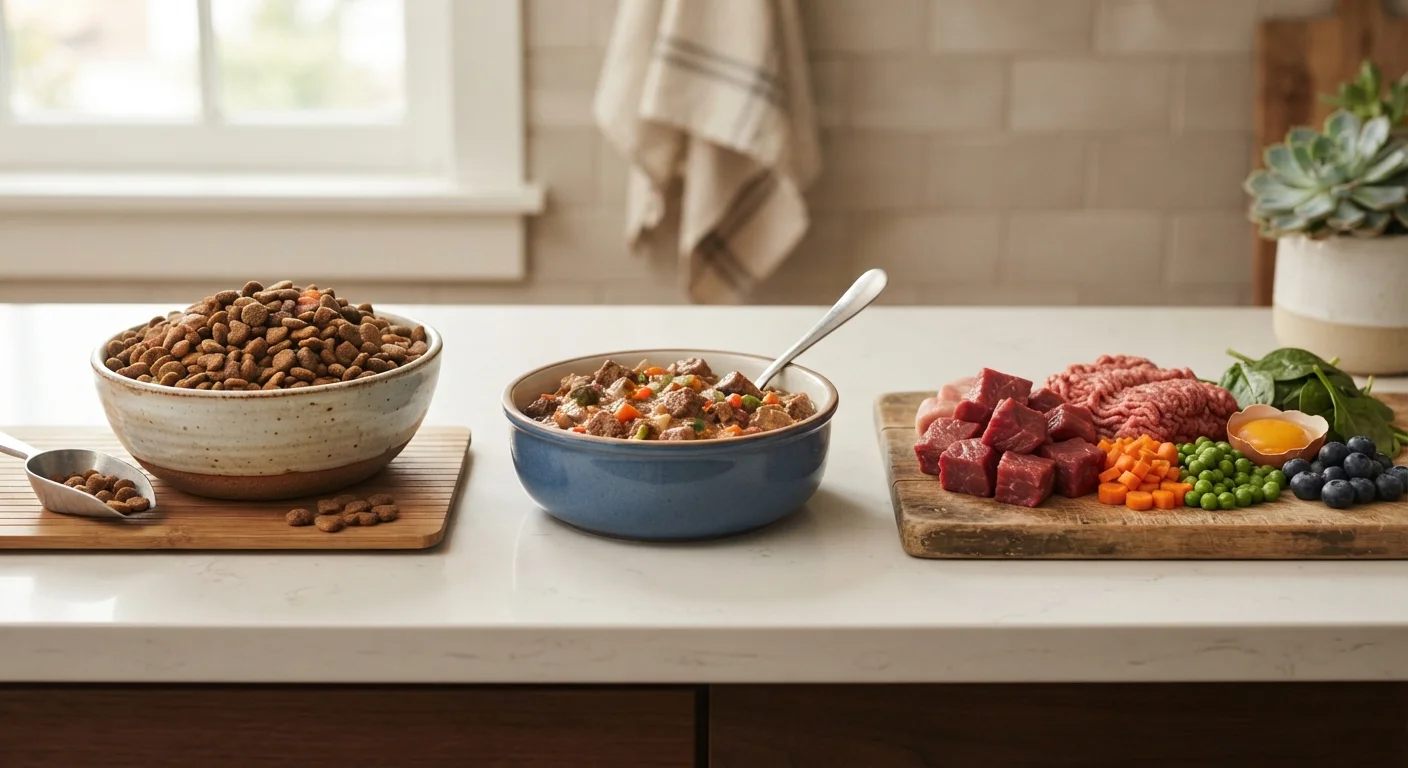
Walk into any pet store and the sheer variety of dog food formats can feel overwhelming. Dry kibble dominates the shelves, but wet food, raw, freeze-dried, and fresh-cooked options are all competing for attention - each with passionate advocates. The format of food your dog eats affects more than just taste preference; it influences nutrient density, moisture intake, digestibility, and even household food-safety practices.
If you're new to navigating these choices, our guide for first-time dog owners covers the broader context of dog care decisions. For now, let's break down the core formats so you can weigh them clearly.
| Dry Kibble | Wet Food | Raw Diet | Fresh-Cooked | |
|---|---|---|---|---|
| Moisture Content | ~10% | 70-80% | 60-75% | 60-70% |
| Relative Cost | Low | Moderate-High | High | High |
| Convenience | Very high | Moderate | Low | Low-Moderate |
| Shelf Life | Months (unopened) | Days (opened) | Days-Weeks (frozen) | Days (refrigerated) |
| Food Safety Risk | Low | Low | Higher (bacterial) | Low (if cooked properly) |
| Nutritional Completeness | Usually AAFCO-certified | Usually AAFCO-certified | Variable - verify carefully | Variable - requires expert balance |
| Palatability | Moderate | High | High | High |
Dry Kibble: The Practical Standard
Dry kibble is the most widely used dog food format in the US, and with good reason. It's shelf-stable, calorie-dense, and generally less expensive per serving than alternatives. Most commercial kibbles are formulated to meet the nutritional standards set by the Association of American Feed Control Officials (AAFCO), which establishes minimum requirements for protein, fat, vitamins, and minerals.
Kibble also has a mild dental benefit - the mechanical action of chewing can reduce surface plaque, though it's not a substitute for actual dental care. Learn more about why dog dental health is frequently overlooked.
The downside: kibble is low in moisture (around 10%), which means dogs relying solely on it need to drink adequate water. Some highly processed formulations also use fillers or artificial preservatives - making it worthwhile to read ingredient panels carefully. Our explainer on reading nutrition labels can help you decode what you're actually buying.
Look for the AAFCO Statement First
Before comparing ingredients or price, check that any commercial dog food carries an AAFCO nutritional adequacy statement on the label. Phrases like 'complete and balanced for all life stages' or 'adult maintenance' tell you the food meets minimum nutritional standards. A food without this statement may be intended as a supplement or treat, not a primary diet.
Wet Food and Raw Diets: Higher Moisture, Higher Stakes
Wet (canned) food contains 70-80% moisture, making it a helpful option for dogs prone to urinary issues or those who simply don't drink enough water. It's often more palatable, which can benefit picky eaters or seniors with diminished appetite. The trade-off is cost: wet food delivers fewer calories per dollar than kibble, and opened cans must be refrigerated and used within a day or two.
Raw diets - whether commercially prepared or home-assembled - typically consist of uncooked meat, bones, and organs, sometimes with fruits or vegetables. Proponents cite shinier coats, smaller stools, and improved energy. However, major veterinary organizations including the American Veterinary Medical Association (AVMA) have raised concerns about raw diets, particularly the risk of bacterial contamination (Salmonella, Listeria, E. coli) that can affect both dogs and the humans handling their food or coming into contact with their waste.
Raw Diets Carry Real Household Risks
The AVMA and the American Animal Hospital Association (AAHA) discourage raw protein diets due to the risk of pathogenic bacteria that can sicken both dogs and people - particularly children, elderly individuals, and immunocompromised household members. If you do feed raw, follow strict food-handling protocols: separate prep surfaces, thorough handwashing, and careful disposal of waste. Discuss the approach openly with your veterinarian.
If you're drawn to raw feeding, consult a board-certified veterinary nutritionist before starting. Homemade raw meals are especially difficult to balance correctly without professional guidance.
Fresh-Cooked Meals: Control With a Cost
Home-cooked dog food sits between raw and commercial options. Cooking eliminates the bacterial risks of raw meat while giving owners control over every ingredient - appealing for dogs with documented allergies or intolerances. However, studies have found that many home-cooked dog diets lack essential nutrients when prepared without a veterinary nutritionist's input. Simply feeding your dog chicken and rice long-term, for example, creates real deficiencies in calcium, vitamins, and trace minerals.
Commercially prepared fresh-cooked options (delivered refrigerated or frozen) aim to solve this problem with pre-balanced recipes, but they come at a premium price. If your dog's activity level and dietary needs are driving this decision, it's also worth reading about how breed-specific exercise needs interact with caloric requirements.
~70%
Dogs fed dry kibble exclusively
Surveys of US dog owners consistently show dry kibble as the dominant feeding choice, though mixed-format feeding is increasing.
90%+
Home-cooked dog diets found nutrient-deficient
A study published in the Journal of Nutritional Science found that the vast majority of home-prepared dog diets lacked at least one essential nutrient when not formulated by a specialist.
Whatever format you choose, the AAFCO statement on the label - or a vet's sign-off for homemade meals - is your baseline assurance that the diet is nutritionally complete for your dog's life stage.
This article is for general informational purposes only and does not constitute veterinary or medical advice. Consult a licensed veterinarian or board-certified veterinary nutritionist before making significant changes to your dog's diet.