

Key Takeaways
- Most dogs develop some form of dental disease by age three, according to veterinary estimates.
- Untreated oral disease can affect the heart, kidneys, and liver through bacterial spread.
- Daily brushing with dog-safe toothpaste is the most effective at-home preventive measure.
- Professional dental cleanings under anesthesia are often necessary for a thorough assessment.
- Bad breath is not normal - it is frequently a sign of underlying dental disease.
Why Dog Dental Health Gets Ignored
Dental care rarely makes it onto the average dog owner's weekly routine. Feeding, walking, grooming, and vaccinations tend to command more attention - yet oral disease is one of the most common health conditions vets see in dogs of all ages. The American Veterinary Dental College notes that most dogs show signs of periodontal disease by age three. Despite this, routine tooth brushing remains far from universal among owners.
Part of the problem is visibility. Dogs don't complain about tooth pain the way people do. Because dogs often mask discomfort, early dental disease goes unnoticed until it has progressed significantly. If you want to understand how dogs hide pain more broadly, signs of pain in dogs is worth reviewing alongside oral health awareness.
Bad Breath Is Not a Normal Dog Trait
Many owners assume strong-smelling breath is simply part of having a dog - but this is a misconception. While a dog's breath won't smell like mint, persistently foul or sour odor is frequently a sign of bacterial overgrowth in the mouth. If your dog's breath has changed noticeably or is consistently strong, mention it at your next vet visit rather than dismissing it.
What Dental Disease Actually Does to a Dog
Periodontal disease begins with plaque - a soft, bacterial film that forms on teeth daily. When plaque is not removed, it hardens into tartar (also called calculus), which can only be cleared by a veterinary professional. Left untreated, tartar leads to gingivitis, then deeper infection of the tissues and bone supporting the teeth.
The consequences extend beyond the mouth. Bacteria from infected gums can enter the bloodstream and, over time, may contribute to damage in the heart, kidneys, and liver. This systemic risk is why veterinary organizations consistently classify dental care as a core component of overall dog health - not a cosmetic concern.
~80%
Dogs with dental disease by age three
The American Veterinary Dental College estimates that most dogs show signs of periodontal disease by the time they reach age three.
4th most common
Condition diagnosed in dogs by vets
Dental and oral disease consistently ranks among the most frequently diagnosed conditions in dogs seen at veterinary practices across the US.
Best Practices for Keeping Your Dog's Teeth Healthy
Consistent, proactive habits make a significant difference in long-term oral health. The following approaches are grounded in veterinary guidance and are practical for most owners to implement.
Brush your dog's teeth daily using dog-specific toothpaste.
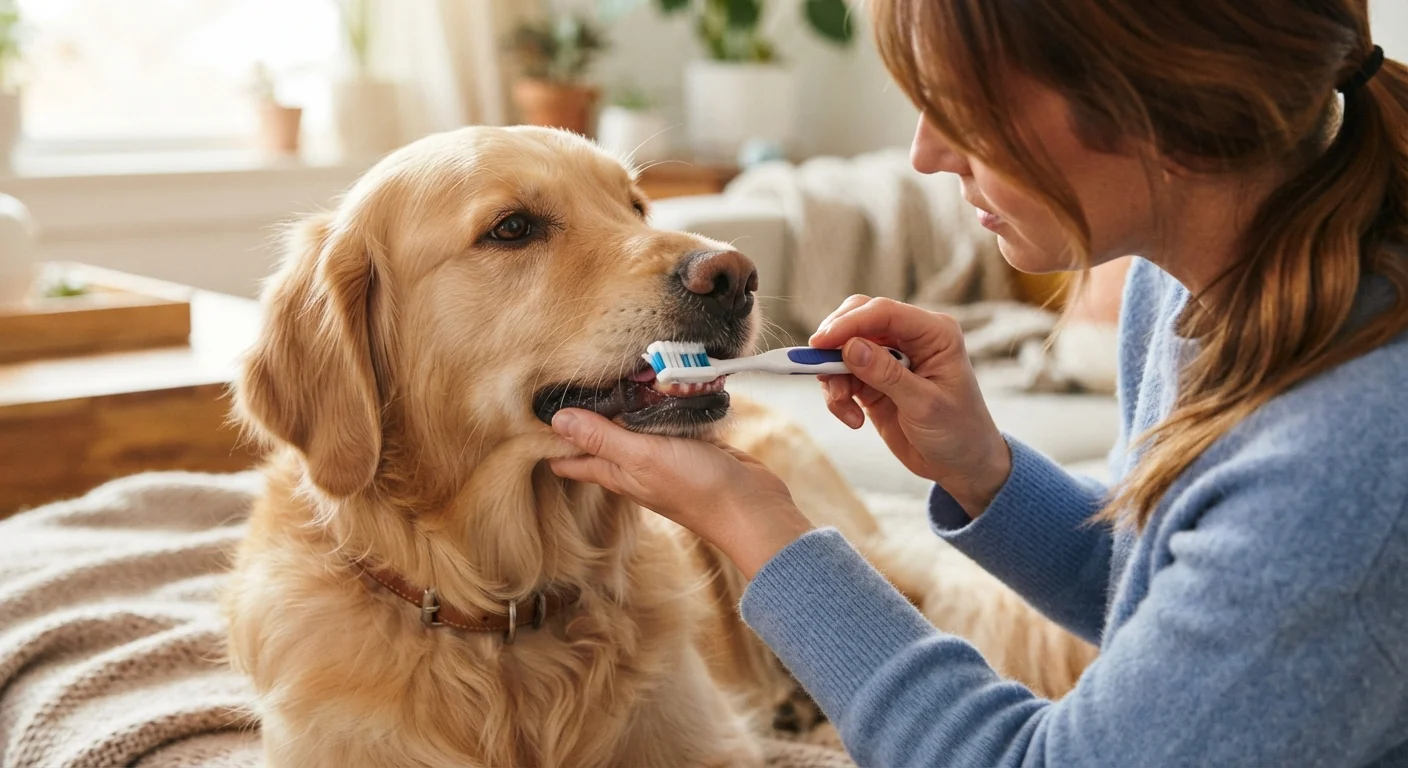
Daily brushing is the most effective way to disrupt plaque before it hardens into tartar. Human toothpaste contains ingredients - including xylitol and fluoride in certain formulations - that are unsafe for dogs, so only use products formulated for pets. Consistency matters more than technique perfection, especially when starting out.
Schedule a professional dental exam and cleaning with your vet annually.
Even with diligent home care, plaque accumulates in areas a toothbrush can't reach. Veterinary cleanings, performed under anesthesia, allow for a full examination including probing below the gumline, dental X-rays when needed, and safe removal of tartar. Annual cleanings catch problems early, when treatment is simpler and less costly.
Offer veterinary-approved dental chews or toys as a supplement to brushing.
Chewing creates mechanical abrasion that helps slow plaque buildup on tooth surfaces. The Veterinary Oral Health Council (VOHC) evaluates and recognizes products that meet evidence-based standards for reducing plaque or tartar. These products supplement - but do not replace - regular brushing.
Learn to recognize early warning signs of dental problems.
Early-stage dental disease is treatable and causes less discomfort than advanced disease. Catching it early depends on owners knowing what to look for. Waiting until a dog refuses food or shows obvious mouth sensitivity often means the problem has already progressed.
Introduce dental care habits during puppyhood when possible.
Dogs that are acclimated to mouth handling and tooth brushing as puppies are far more cooperative as adults. Starting early reduces stress for both dog and owner and establishes oral care as a normal part of life before resistance develops.
Start Today: Quick Actions Worth Taking Now
You don't need to overhaul your routine overnight. A few targeted actions can meaningfully improve your dog's dental health from this week onward.
As you build a dental care routine, keep in mind that diet plays a supporting role too. How and what your dog eats affects tartar buildup - something covered in detail in our guide to dog nutrition and food choices. Routine dental cleanings also add to your dog's overall care costs, so factoring oral care into your financial planning - or considering a pet health insurance assessment - is a reasonable step for many owners.