

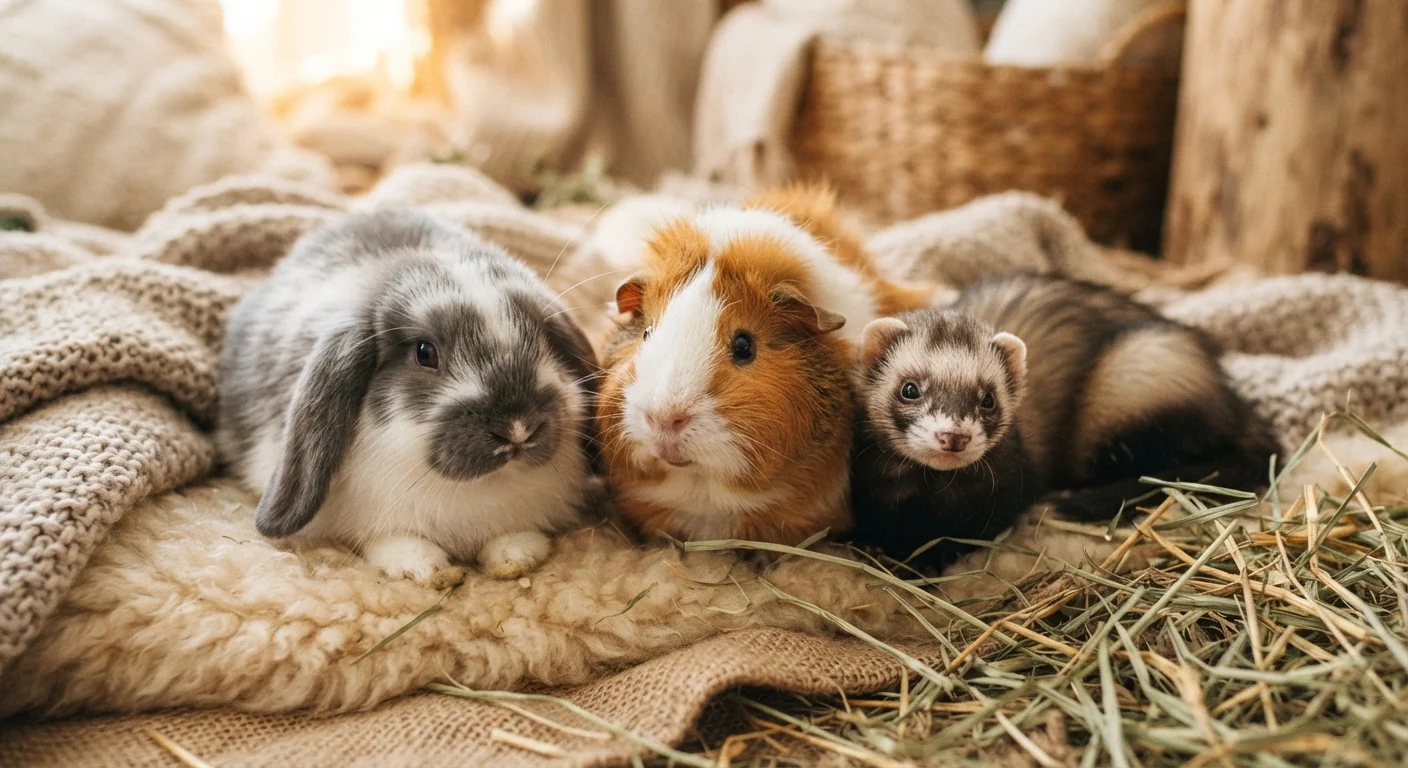
| Guinea pig lifespan | 4-8 years (General veterinary consensus) |
| Rabbit lifespan (domestic) | 8-12 years (General veterinary consensus) |
| Ferret lifespan | 5-9 years (General veterinary consensus) |
| Guinea pig social needs | Best kept in pairs or small groups |
| Primary rabbit diet component | Unlimited grass hay (e.g., timothy hay) |
| Ferret diet type | Obligate carnivore - high protein, high fat, low carb |
Diet: What Each Species Actually Needs
Feeding small mammals correctly is one of the most impactful things an owner can do for their pet's long-term health. Each of these three species has a fundamentally different digestive system, so a one-size-fits-all approach can cause serious harm.
| Guinea pig lifespan | 4-8 years (General veterinary consensus) |
| Rabbit lifespan (domestic) | 8-12 years (General veterinary consensus) |
| Ferret lifespan | 5-9 years (General veterinary consensus) |
| Guinea pig social needs | Best kept in pairs or small groups |
| Primary rabbit diet component | Unlimited grass hay (e.g., timothy hay) |
| Ferret diet type | Obligate carnivore - high protein, high fat, low carb |
Guinea Pigs
Guinea pigs are strict herbivores that cannot synthesize their own vitamin C - a trait they share with humans. Without adequate vitamin C in their diet, they can develop scurvy, causing lethargy, joint pain, and poor wound healing. Fresh leafy greens such as romaine lettuce, bell peppers, and parsley are excellent natural sources. A high-quality grass hay (timothy hay is widely recommended) should make up the majority of their diet, supported by a small amount of guinea pig-specific pellets. Avoid citrus fruits in large quantities, as the acidity can irritate their mouths.
Rabbits
Like guinea pigs, rabbits thrive on unlimited grass hay, which keeps their continuously growing teeth worn down and their digestive tract moving. Fresh leafy greens are a valuable supplement, but high-sugar fruits and starchy vegetables should be offered only as occasional treats. Pellets are appropriate in small, measured amounts for adults. Rabbits also practice cecotrophy - consuming special droppings called cecotropes directly from their hindquarters. This is normal and nutritionally essential; do not discourage it.
Ferrets
Ferrets are obligate carnivores with a short, fast digestive tract designed for meat. They require a diet high in animal protein and fat, and very low in carbohydrates and fiber. Commercial ferret foods or high-quality cat foods with named meat as the first ingredient are generally considered appropriate. Fruits, vegetables, and grains are not suitable for ferrets and can contribute to serious health problems over time, including insulinoma (a pancreatic tumor linked to high-sugar diets).
Housing, Handling, and Behavioral Needs
A species-appropriate living environment directly affects stress levels, physical health, and lifespan. Before purchasing or adopting any small mammal, it's worth understanding how much space and social interaction each one actually needs.
Cecotrophy
The practice of eating specialized soft droppings called cecotropes, which rabbits produce overnight. These are nutrient-dense and essential to the rabbit's health - this behavior is entirely normal and should not be discouraged.
Obligate carnivore
An animal that must derive its nutrition exclusively from animal-based foods. Ferrets are obligate carnivores, meaning plant-based foods cannot meet their nutritional requirements and may harm them.
Gut stasis
A condition in rabbits (and sometimes guinea pigs) in which the digestive tract slows or stops moving. It can become life-threatening quickly and requires immediate veterinary attention.
Insulinoma
A tumor of the insulin-producing cells in the pancreas, seen relatively commonly in ferrets. Diets high in sugar and carbohydrates are considered a contributing risk factor.
Vitamin C deficiency (Scurvy)
A condition caused by inadequate vitamin C intake. Guinea pigs cannot produce their own vitamin C and must receive it daily through fresh foods or supplements; deficiency leads to serious illness.
Space and Enclosure Requirements
Guinea pigs are social animals and should generally be kept in same-sex pairs or small groups. A common guideline from small-animal veterinarians is a minimum of 7-8 square feet of floor space per pair, though more is always better. Wire-bottom cages can injure their feet - solid-bottom enclosures with appropriate bedding (such as paper-based or fleece liners) are preferred.
Rabbits need far more room than the small hutches often marketed for them. Many rabbit welfare organizations recommend at minimum a large exercise pen or a free-roam setup that allows several hours of unrestricted movement daily. Rabbits can be litter-trained, which makes indoor housing a practical option for many owners.
Ferrets are highly active and curious, requiring a multi-level cage with hammocks, tunnels, and enrichment items. They also need several hours of supervised out-of-cage playtime each day. Ferret-proofing a room - blocking small gaps, removing toxic plants and rubber items they might chew - is essential before allowing free roam.
Handling and Socialization
Guinea pigs rarely bite but startle easily; support their whole body when lifting and keep sessions calm and brief at first. Rabbits should never be picked up by their ears and must have their hindquarters firmly supported - a rabbit that kicks while unsupported can fracture its own spine. Ferrets are playful and can be handledfrom a young age, though they may nip during play and benefit from consistent, gentle redirection. If you're comparing small mammals with different social profiles, our guide to hamsters vs. gerbils offers useful context on activity and socialization differences.
Health Warning Signs Every Owner Should Know
Small mammals are prey animals, which means they instinctively mask signs of illness until a problem is often already advanced. Attentive daily observation is one of the most important habits an owner can develop.
4-8 yrs
Average guinea pig lifespan with proper care
Veterinary consensus indicates diet and housing quality are key factors in reaching the upper end of this range.
12-24 hrs
Time after which a rabbit off food needs urgent vet care
Rabbit gut stasis can become life-threatening quickly; veterinary guidance consistently flags this window as critical.
Daily
Frequency ferrets need supervised out-of-cage time
Ferret welfare guidance recommends several hours of free-roam playtime each day to prevent boredom and physical decline.
Watch for these warning signs across all three species:
- Changes in eating or drinking: Any sudden drop in appetite or water intake warrants prompt attention. In rabbits, going off food for more than 12-24 hours can signal gut stasis, a potentially life-threatening condition.
- Abnormal droppings: Diarrhea, very small/misshapen droppings, or no droppings at all are red flags, particularly in rabbits and guinea pigs.
- Labored or noisy breathing: Any wheezing, clicking, or open-mouth breathing should be treated as urgent.
- Discharge from eyes, nose, or mouth: These can indicate respiratory infection or dental disease.
- Sudden behavior changes: Unusual aggression, hiding, or profound lethargy often signal pain or illness.
Find an Exotic-Savvy Vet Before You Need One
Guinea pigs, rabbits, and ferrets are considered 'exotic' pets in most veterinary practices, and not every clinic is equipped to treat them. Ask specifically whether the practice sees small mammals when calling ahead. The House Rabbit Society and the Association of Exotic Mammal Veterinarians (AEMV) maintain online directories that can help you locate a qualified provider in your area.
Guinea pigs, rabbits, and ferrets require veterinarians with exotic or small-mammal experience - not all general-practice vets see these species regularly. Identify an appropriate vet before you need one. For a broader checklist of urgent signs, see our article on when small pets need a vet.
This article provides general educational information about small mammal care and is not a substitute for advice from a qualified veterinarian familiar with your specific animal.