

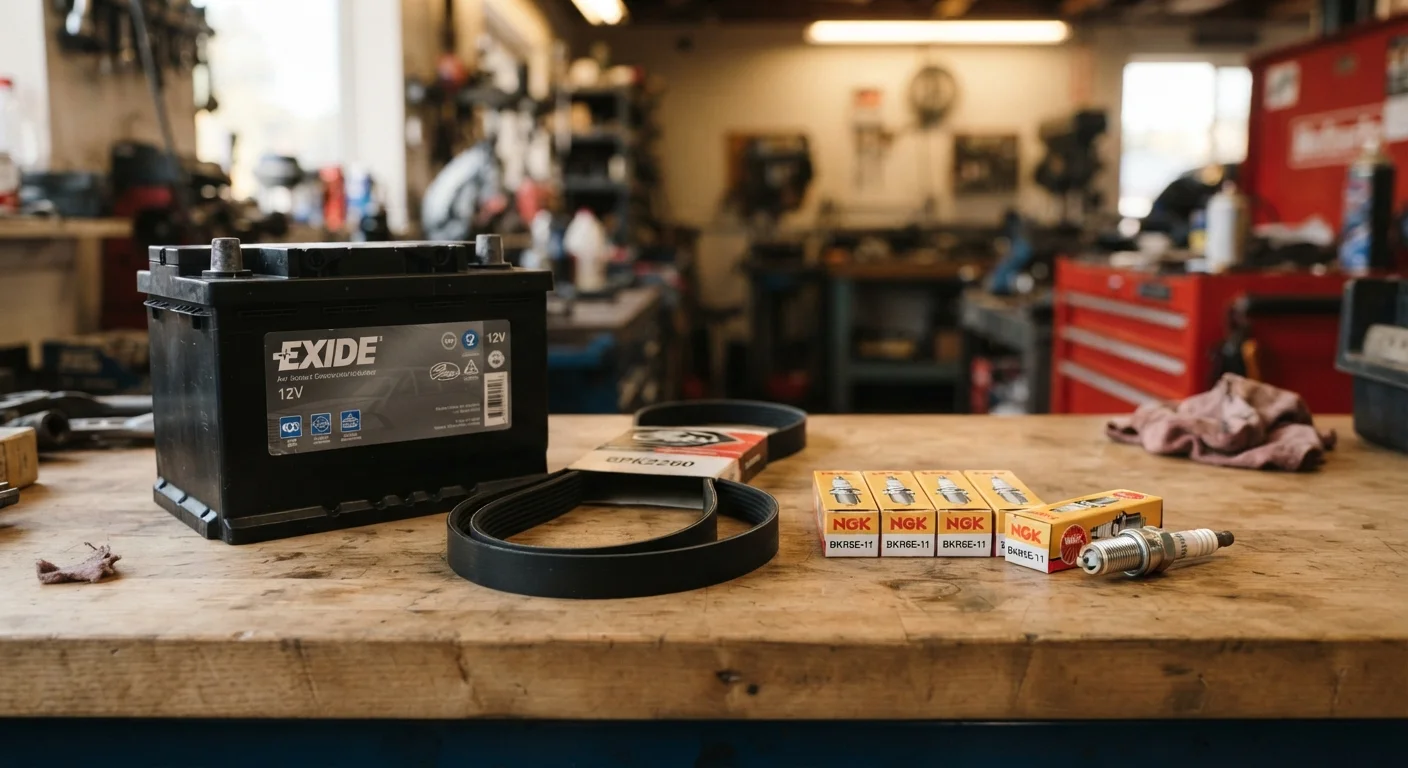
| Spark plug lifespan (iridium) | 60,000-100,000 miles (Manufacturer service guidelines) |
| Timing belt replacement window | 60,000-105,000 miles (Varies by engine make; check owner's manual) |
| Car battery average lifespan | 3-5 years (Industry average; shorter in hot climates) |
| Brake pad replacement range | 25,000-70,000 miles (Depends on driving conditions and pad type) |
| Tire age limit (manufacturer guidance) | 6-10 years (Regardless of remaining tread depth) |
Why Replacement Windows Matter
Every part in your vehicle was engineered with a finite service life. Ignoring those limits doesn't just risk a breakdown - it can trigger a cascade of damage to surrounding components, turning a modest repair bill into a major one. The intervals below are drawn from manufacturer guidelines and widely cited industry standards. Treat them as informed reference points, not rigid deadlines; driving style, climate, and maintenance history all influence real-world wear.
For a broader look at how mileage milestones translate into specific service tasks, see Your Car's Maintenance Schedule, Explained.
| Spark plug lifespan (iridium) | 60,000-100,000 miles (Manufacturer service guidelines) |
| Timing belt replacement window | 60,000-105,000 miles (Varies by engine make; check owner's manual) |
| Car battery average lifespan | 3-5 years (Industry average; shorter in hot climates) |
| Brake pad replacement range | 25,000-70,000 miles (Depends on driving conditions and pad type) |
| Tire age limit (manufacturer guidance) | 6-10 years (Regardless of remaining tread depth) |
Component-by-Component Lifespan Guide
Use the breakdowns below to build a mental map of what's likely approaching end-of-life in your vehicle right now.
Engine & Ignition
- Spark plugs (conventional): 30,000-45,000 miles. Iridium or platinum plugs can reach 60,000-100,000 miles.
- Air filter: 15,000-30,000 miles, or more often in dusty environments.
- Fuel filter: 20,000-40,000 miles on older vehicles; many modern cars integrate it with the fuel pump assembly and have longer service windows - check your owner's manual.
Belts & Hoses
- Serpentine belt: 60,000-100,000 miles. Inspect annually for cracking or glazing; a snapped belt disables power steering and charging.
- Timing belt: Typically 60,000-105,000 miles depending on the engine. Missing this interval on an interference engine can destroy the engine internally.
- Coolant hoses: Inspect every 4 years or 60,000 miles; replace if soft, brittle, or swollen at the clamps.
Electrical
- Battery: 3-5 years under typical conditions. Extreme heat shortens this significantly - hot climates often see 2-3 year lifespans.
- Alternator: 80,000-150,000 miles, though early failure is often signaled by dimming lights or a battery warning light.
Brakes
- Brake pads: 25,000-70,000 miles depending on driving style and pad compound. City driving dramatically shortens pad life.
- Brake rotors: 30,000-70,000 miles; some high-quality rotors last longer if not worn down unevenly by neglected pads.
- Brake fluid: Flush every 2 years or 30,000 miles - it absorbs moisture over time, lowering its boiling point.
Tires & Suspension
- Tires: 25,000-60,000 miles depending on tread compound and rotation habits. Age matters too - most manufacturers recommend replacement after 6-10 years regardless of tread depth.
- Shocks and struts: 50,000-100,000 miles; worn units affect stopping distance and handling noticeably.
Interference engine
An engine design where the pistons and valves occupy the same space at different times, synchronized by the timing belt. If the timing belt breaks, pistons can collide with open valves, causing catastrophic internal damage.
Serpentine belt
A single, continuous belt that drives multiple engine accessories - alternator, power steering pump, air conditioning compressor, and water pump - simultaneously.
Tread depth
The measurement from the top of a tire's rubber tread to the bottom of its deepest grooves. Legal minimums in most U.S. states are 2/32 of an inch, though handling and wet-weather grip degrade noticeably before that point.
Brake fade
A temporary reduction in braking power caused by overheated brake pads or fluid. Moisture-contaminated brake fluid is particularly prone to fade because water boils at a lower temperature than clean brake fluid.
If your vehicle is approaching or past 100,000 miles, several of these components may need attention simultaneously. Keeping a High-Mileage Car on the Road covers how to prioritize repairs as your car ages.
What Shortens a Part's Life
Parts rarely fail purely from age - how and where you drive matters enormously. Short trips under five miles prevent the engine from fully warming up, accelerating wear on oil and spark plugs. Stop-and-go traffic multiplies stress on brakes and transmission components. Extreme heat degrades rubber hoses and belts faster, while cold climates are harder on batteries.
When to Involve a Qualified Mechanic
Timing belt replacement, brake system work, and fuel system repairs involve significant safety implications. While general mileage windows help you plan, always have a licensed mechanic inspect components and confirm the correct service interval for your specific vehicle. Never defer a timing belt replacement beyond the manufacturer's stated window.
Deferred oil changes are one of the single biggest contributors to premature engine wear. Using the wrong oil viscosity for your climate has a similar effect. When in doubt, defer to the grade listed on your oil filler cap or owner's manual rather than generic advice.
For a look at how similar neglect patterns play out in consumer electronics - and why the underlying principles are surprisingly parallel - see Things People Accidentally Do That Shorten a Phone's Lifespan.