

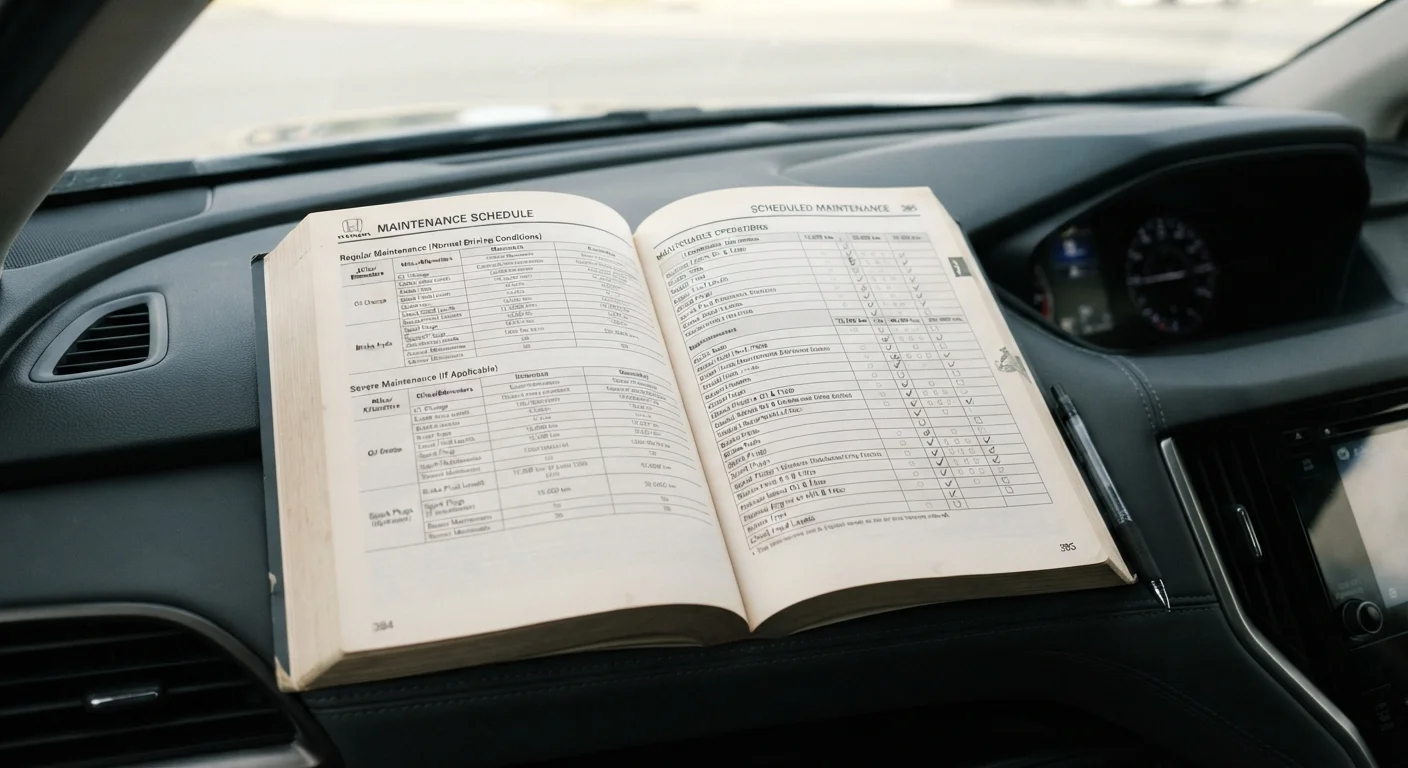
Key Takeaways
- Your owner's manual - not generic internet advice - is the definitive source for your car's service intervals.
- Skipping scheduled maintenance can void warranty coverage and lead to costly repairs down the road.
- Mileage and time both trigger service milestones - whichever comes first applies.
- "Severe" driving conditions often require shorter service intervals than most drivers assume.
- Keeping a maintenance log protects resale value and helps mechanics diagnose problems faster.
Vehicle Maintenance Schedule
A vehicle maintenance schedule is a manufacturer-specified list of service tasks - such as oil changes, filter replacements, and fluid checks - tied to mileage or time intervals. It tells you what needs attention, and when, to keep your car running safely and efficiently. Every vehicle has one, and it lives in the owner's manual.
Schedules are often split into "normal" and "severe" service tracks, reflecting different driving conditions such as frequent short trips, towing, or extreme temperatures.
What a Maintenance Schedule Actually Is
Think of a maintenance schedule as your car's health calendar. Automakers engineer every vehicle with specific service intervals - mileage or time thresholds at which certain components need attention. These intervals aren't arbitrary; they're based on engineering testing, fluid degradation rates, and component wear data specific to your engine and drivetrain.
The schedule is printed in your owner's manual and typically covers everything from oil changes and tire rotations to spark plug replacements and transmission fluid exchanges. Intervals are usually expressed in miles (e.g., every 5,000 or 10,000 miles) paired with a time limit (e.g., every 6 or 12 months) - and whichever threshold arrives first is the one that applies.
Online advice and shop recommendations can be useful starting points, but your owner's manual is the authoritative source for your specific vehicle. Generic rules of thumb - including the once-universal "change oil every 3,000 miles" guideline - may not reflect what your car actually needs. See our guide to oil change intervals for a closer look at how those numbers vary by vehicle and oil type.
Normal vs. Severe Service: Why It Matters
Most maintenance schedules include two tracks: normal service and severe service. Normal service applies to drivers who log primarily highway miles under moderate conditions. Severe service is triggered by conditions that put extra stress on your vehicle's systems.
Severe Service Is More Common Than You'd Think
Most maintenance schedules include two tracks: normal service and severe service. Severe conditions include frequent short trips under five miles, stop-and-go traffic, towing or hauling, and extreme temperatures. If any of these describe your regular driving, the severe-service column in your owner's manual applies - with typically shorter intervals between services.
Many drivers who consider themselves "normal" actually qualify for severe service. If you regularly drive short trips under five miles, sit in heavy traffic, tow, haul cargo, or live in an area with extreme heat, cold, or dust, the severe-service intervals in your owner's manual are the ones to follow - and they're typically shorter.
Checking seasonal car care guidance can help you identify which conditions affect your specific driving environment.
Key Service Milestones and What They Cover
While intervals vary by manufacturer and model, most schedules share a recognizable structure. Here's what you'll commonly encounter at major milestones:
- Every 5,000-10,000 miles: Oil and filter change (interval depends on oil type and engine), tire rotation, multi-point inspection.
- Every 15,000-30,000 miles: Air filter inspection or replacement, cabin air filter replacement, brake inspection.
- Every 30,000-60,000 miles: Transmission fluid check or change, coolant flush, spark plug inspection or replacement (varies widely by plug type).
- Every 60,000-100,000 miles: Timing belt replacement (if applicable - not all vehicles use belts), battery inspection, differential fluid change on applicable vehicles.
For a factual breakdown of how long individual components actually last, our reference on common car part lifespans provides useful context alongside your manual's guidance.
~40%
Drivers who skip or delay scheduled maintenance
Industry surveys consistently suggest a significant share of drivers fall behind on at least one scheduled service item at any given time.
2x
Cost multiplier for neglected vs. maintained repairs
Automotive industry estimates indicate that deferred maintenance frequently results in repair costs far exceeding what timely service would have cost.
60,000-100,000 mi
Typical timing belt replacement window
According to manufacturer service data, timing belt replacement intervals for belt-equipped engines commonly fall in this range, though exact intervals vary by model.
Staying on Top of Your Schedule
Knowing the schedule is only half the job - tracking it consistently is what keeps your car protected. A simple maintenance log, whether a notebook in the glovebox or a notes app on your phone, records the date, mileage, and work performed for every service visit. This documentation helps mechanics diagnose problems faster, supports warranty claims, and can meaningfully strengthen resale value. Our article on keeping a maintenance log explains exactly how to set one up.
Set a Reminder Before You Need One
Don't wait for a dashboard light to prompt you. Set a calendar reminder on your phone for your next scheduled service based on your current mileage and the interval in your owner's manual. Many service centers will also send reminders - but don't rely solely on them, especially if you switch shops.
Some services are straightforward enough for a capable home mechanic; others genuinely require professional tools and training. Before deciding what to tackle yourself, weigh the trade-offs covered in our guide to DIY maintenance vs. taking it to a shop. And if your dashboard flags an issue between scheduled services, our dashboard warning lights reference can help you interpret what you're seeing before your next appointment.