

| States with GDL laws | All 50 states + D.C. (Insurance Institute for Highway Safety (IIHS)) |
| Typical learner's permit hold period | 6-12 months (Varies by state law) |
| Common required supervised hours | 40-60 hours (Includes mandated night-driving hours in many states) |
| Age group with highest crash rate | 16-17 year olds (Insurance Institute for Highway Safety (IIHS)) |
| Passenger impact on teen crash risk | Risk more than doubles with multiple teen passengers (IIHS research findings) |
| GDL stages | 3 (Learner's Permit, Provisional License, Full License) (Standard U.S. GDL framework) |
What Is a Graduated Driver Licensing System?
A Graduated Driver Licensing (GDL) system is a structured, multi-stage framework that introduces driving privileges to new drivers incrementally, rather than all at once. All 50 U.S. states and the District of Columbia have adopted some form of GDL, though specific rules vary by state.
The core logic is straightforward: new drivers - especially teenagers - face a significantly higher crash risk than experienced adults. Research published by the Insurance Institute for Highway Safety (IIHS) consistently shows that crash rates are highest among 16- and 17-year-olds. GDL programs address this by limiting exposure to the highest-risk driving conditions until young drivers have built foundational skills and experience.
Most GDL systems follow three stages:
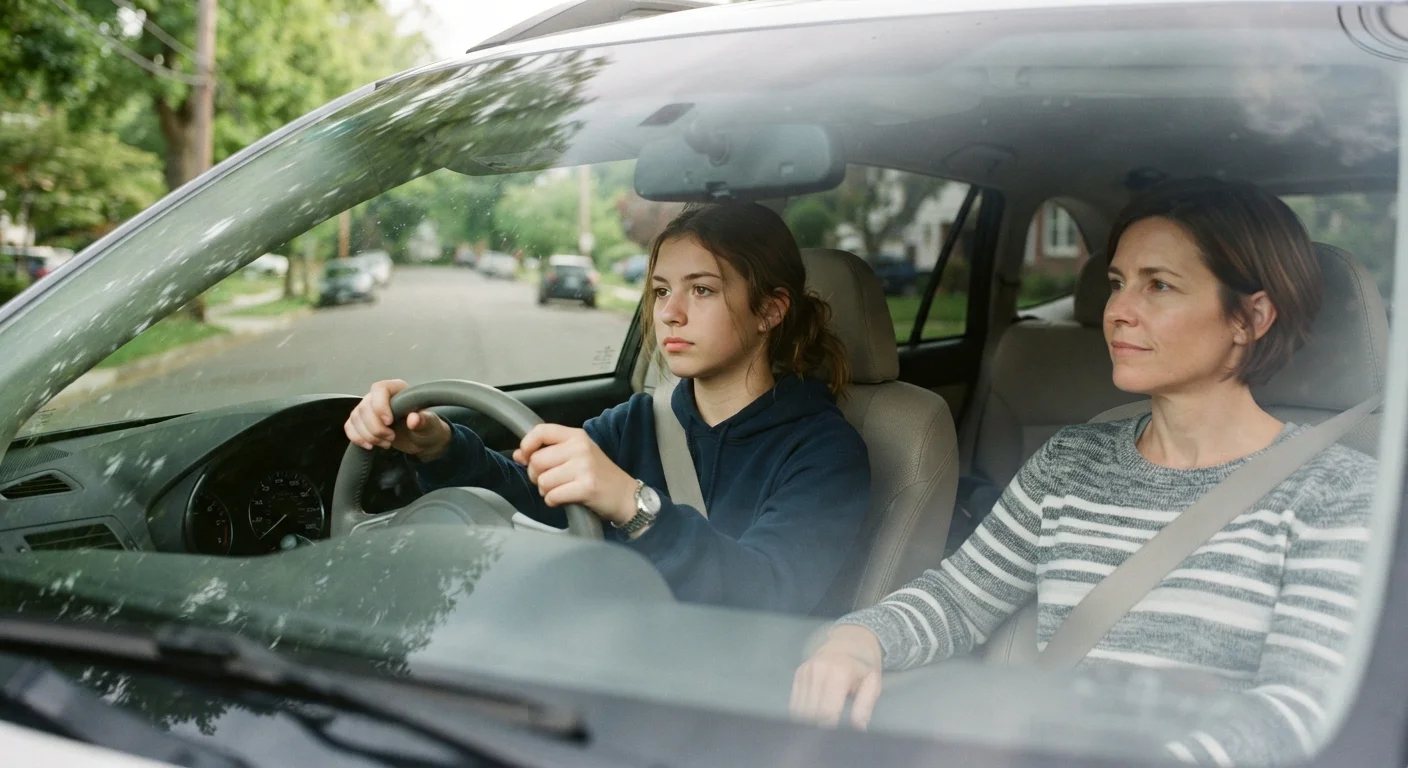
- Learner's Permit: The teen may only drive with a licensed adult supervisor. Minimum holding periods typically range from six months to one year.
- Provisional (Intermediate) License: Independent driving is permitted, but with restrictions on hours, passengers, and phone use.
- Full Unrestricted License: Granted after meeting age requirements and maintaining a clean record during the provisional period.
For a broader look at building skills throughout each of these stages, see our complete roadmap for new drivers.
| States with GDL laws | All 50 states + D.C. (Insurance Institute for Highway Safety (IIHS)) |
| Typical learner's permit hold period | 6-12 months (Varies by state law) |
| Common required supervised hours | 40-60 hours (Includes mandated night-driving hours in many states) |
| Age group with highest crash rate | 16-17 year olds (Insurance Institute for Highway Safety (IIHS)) |
| Passenger impact on teen crash risk | Risk more than doubles with multiple teen passengers (IIHS research findings) |
| GDL stages | 3 (Learner's Permit, Provisional License, Full License) (Standard U.S. GDL framework) |
Common Restrictions and Why They Exist
The restrictions attached to provisional licenses are not arbitrary - each one targets a proven crash-risk factor for teen drivers.
Nighttime Driving Limits
Most states prohibit unsupervised driving between 11 p.m. and 5 a.m. (times vary). Fatal crash rates for teen drivers spike dramatically after 9 p.m., when fatigue and reduced visibility compound inexperience. Understanding how darkness changes driving demands is critical - our article on night driving risks explains the specific hazards in detail.
Passenger Restrictions
Many states limit provisional license holders to one or zero non-family teen passengers during the first months. The reason: research shows that carrying multiple teen passengers more than doubles a teen driver's fatal crash risk. The social dynamics involved are more complex than most parents realize - see how passengers affect driver risk for the full picture.
Phone and Device Bans
Nearly all states prohibit any handheld - and often hands-free - device use for drivers under 18, separate from adult distracted-driving laws. Cognitive distraction impairs reaction time even when eyes remain on the road.
Seat Belt and Speed Requirements
GDL programs universally require all occupants to wear seat belts and expect adherence to posted speed limits. Violations during the provisional period can reset or extend restrictions.
Graduated Driver Licensing (GDL)
A multi-stage system that grants driving privileges progressively as new drivers gain experience. It begins with a supervised learner's permit and advances through a provisional license before full driving rights are granted.
Learner's Permit
The first stage of GDL, allowing a teen to drive only when supervised by a licensed adult. Most states require a written knowledge test before a permit is issued.
Provisional License
An intermediate driving credential that permits unsupervised driving but carries restrictions on nighttime hours, passengers, and device use. Violations can delay advancement to a full license.
Cognitive Distraction
Mental distraction that impairs a driver's ability to process road information, even when their eyes are forward. Hands-free phone conversations are a well-documented example.
Night Driving Restriction
A GDL rule prohibiting provisional license holders from driving unsupervised during late-night hours, typically between 11 p.m. and 5 a.m., when crash risk is elevated.
The Parent's Role: More Than a Signature
Parents and guardians are active participants in GDL programs - not just signatories on paperwork. Most states require parents to certify that their teen has completed a minimum number of supervised practice hours, often 40-60 hours including a mandated night-driving component.
Effective supervised practice means exposing teens to varied conditions: highway merging, wet roads, parking structures, and rush-hour traffic - not just comfortable neighborhood routes. Creating a practice log helps ensure coverage and gives both parent and teen a shared record of progress.
Parents also set the household rules that extend GDL's intent beyond its legal minimums. Consider establishing a family driving agreement that covers:
- Curfew expectations aligned with or stricter than state law
- Passenger limits during the provisional phase
- A clear, non-punitive process for calling home if a situation feels unsafe
- Consequences for traffic violations or GDL restriction violations
Modeling good habits matters too. Teens whose parents consistently demonstrate safe following distances, calm merging, and phone-free driving internalize those behaviors more durably than those who receive only verbal instruction. Our article on why tailgating is so dangerous illustrates one habit worth demonstrating clearly.
State GDL Rules Vary Significantly
While every U.S. state has a GDL system, the specific age requirements, permit hold periods, curfew hours, and passenger limits differ considerably. Always check your state's Department of Motor Vehicles (DMV) website for the exact rules that apply to your teen. Do not rely solely on what neighboring states or other parents describe.
Building toward fully independent driving is also a mindset shift. Encourage your teen to explore defensive driving principles early - the awareness strategies involved reduce crash risk at every experience level.