

Key Takeaways
- A stocked pantry reduces decision fatigue and makes nutritious meals the path of least resistance.
- Whole grains, legumes, healthy fats, and aromatics cover most of a balanced meal's nutritional base.
- Versatile staples work across many recipes, so variety doesn't require a large or expensive inventory.
- Proper storage extends shelf life and protects nutritional quality of pantry staples.
- Starting with a core list is better than aiming for a perfect pantry all at once.
Summary
22 items · 30-60 minutes to audit and organize
Why Your Pantry Shapes What You Actually Eat
Healthy eating rarely fails at the dinner table - it usually fails at the grocery store or, more precisely, in the absence of the right ingredients at 6 p.m. on a Tuesday. What's already in your pantry quietly determines your default meals, which is why stocking it intentionally is one of the highest-leverage habits you can build.
This checklist is designed to help you audit what you have, identify gaps, and fill your shelves with ingredients that make balanced cooking straightforward. If you're newer to thinking about nutrition in structured terms, our introduction to nutrition fundamentals offers useful context before you dive in.
Use the tool cards below to understand which storage supplies make your pantry function well, then work through the checklist groups systematically.
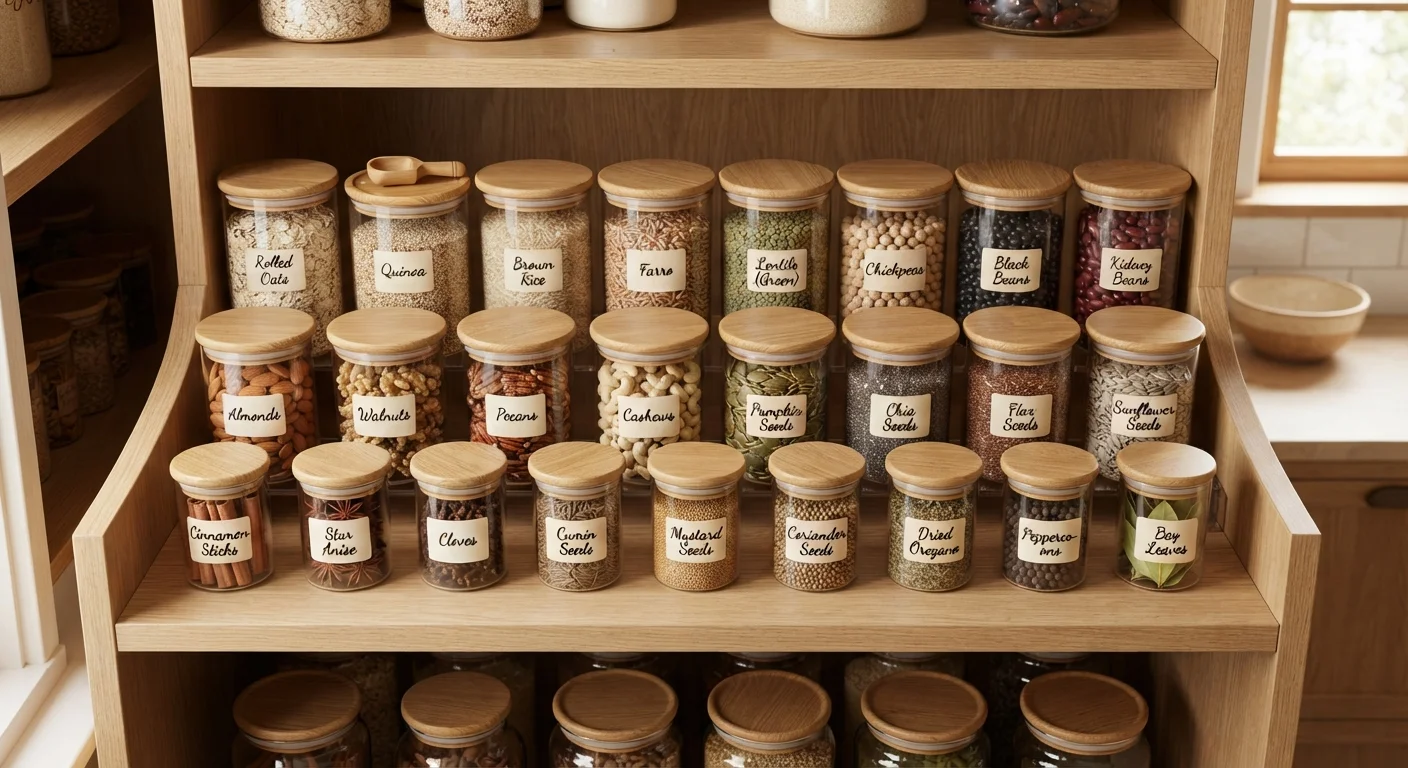
Airtight glass or BPA-free plastic containers
Protect whole grains, flours, nuts, and seeds from moisture, pests, and oxidation to extend shelf life.
Pantry inventory list (paper or digital)
Track what you have, quantities, and expiration dates so nothing goes to waste and restocking is efficient.
Can opener
Required to access canned legumes, tomatoes, and fish - core staples in this checklist.
Label maker or masking tape and marker
Label decanted containers with contents and date purchased to manage freshness at a glance.
How to Use This Checklist
Walk through your existing pantry first. Cross off items you already have in adequate quantity, and flag anything that's expired or stale - those don't count. Then use the checklist groups to identify what to add on your next grocery run.
Prioritize must items first. These are the workhorses that appear in the widest range of everyday meals. Once those are covered, layer in should items to expand your cooking flexibility. Nice-to-have additions are worth keeping if you use them regularly, but they're not the foundation.
Don't Restock Everything at Once
Buying every item on a full pantry checklist in a single trip can be costly and may result in food waste if items go unused before you build cooking routines around them. Start with the 'must' items and layer in others over two to three shopping cycles. A pantry built gradually tends to reflect how you actually cook.
For the pantry to function as intended, pairing it with a kitchen prep routine before cooking helps you move efficiently from ingredient to finished meal. And once you know what's on your shelves, building a balanced plate becomes much easier to do instinctively.
Whole Grains & Starchy Staples
Legumes & Plant Proteins
Healthy Fats & Oils
Aromatics, Acids & Flavor Builders
Condiments & Shelf-Stable Extras
Making the Most of What You Stock
Having the ingredients is only half the equation. Proper storage preserves both safety and nutritional quality. Whole grains and flours can go rancid, especially in warm kitchens - airtight containers and cooler shelves extend their life significantly. For a thorough reference on timelines and container choices, see our guide on safe food storage at home.
Spices deserve their own mention: a small, well-chosen collection does more work than a crowded cabinet of half-used jars. Our foundational spice collection guide walks through which ones earn their shelf space.
Check Expiration Dates Before You Cook
Pantry staples carry long shelf lives, but they're not indefinite. Oils can go rancid, canned goods lose quality after their best-by date, and whole grains can harbor insects if not stored correctly. Make it a habit to rotate stock - moving older items to the front - and discard anything that smells off or shows visible changes. Using degraded ingredients affects both flavor and, in some cases, nutritional value.
Finally, even a well-stocked pantry won't substitute for consistent habits around meals. Small patterns - skipping meals, relying on processed snacks when staples are available - can offset your best intentions. The article on habits that undermine a decent diet is worth a read alongside this checklist.