

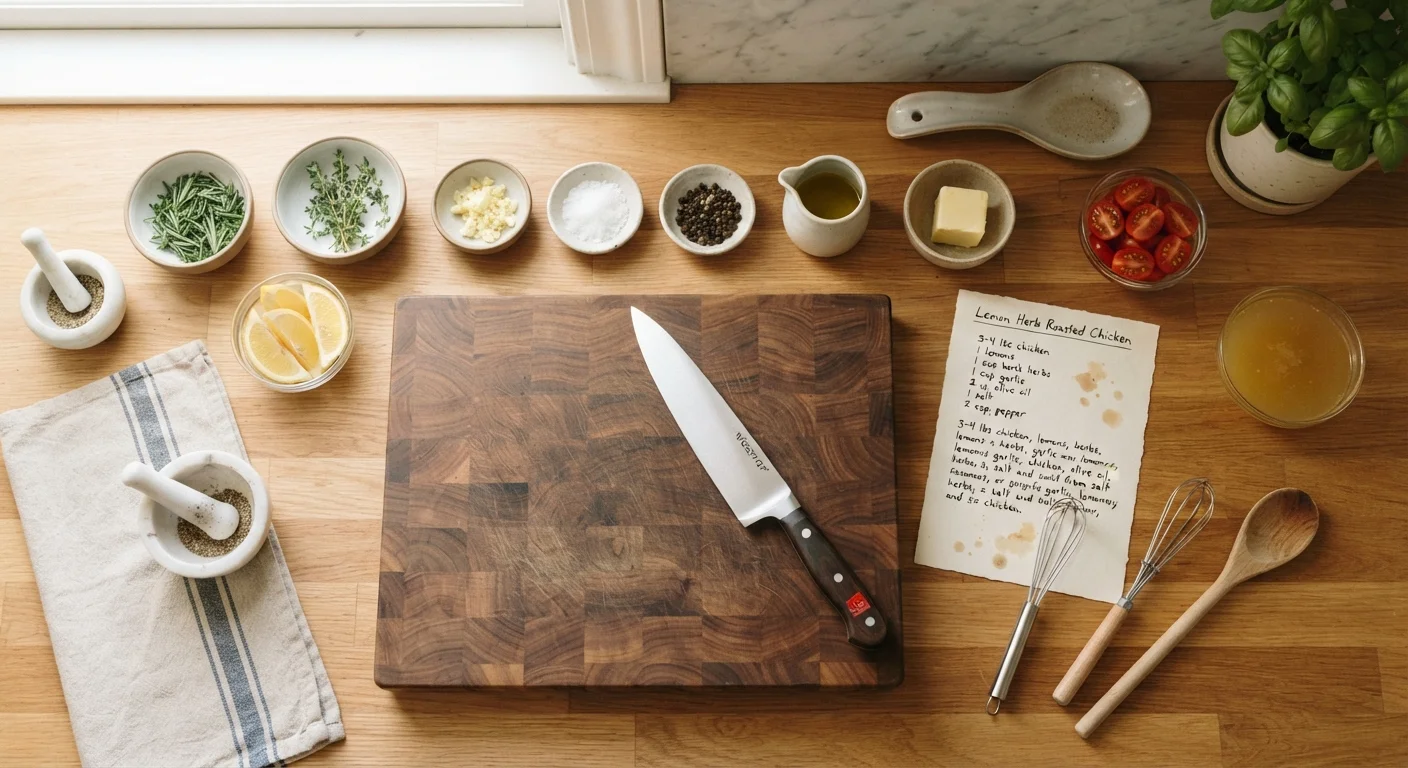
Key Takeaways
- Reading the full recipe before you start is the single most important prep habit you can build.
- Mise en place - having every ingredient measured and ready - reduces mid-cook errors significantly.
- Food safety habits like hand-washing and proper thawing protect your household from foodborne illness.
- A clean, organized workspace makes cooking faster and reduces the chance of accidents.
- Checking your tools and equipment before you begin prevents frustrating mid-recipe interruptions.
Summary
18 items · 15-30 minutes
Why Kitchen Prep Matters More Than You Think
Most cooking frustration doesn't happen at the stove - it happens before you ever turn on the heat. A scramble for the right pan, a missing ingredient, or a recipe step that assumes you already have something prepped can throw off an entire meal. The solution is a concept professional cooks call mise en place (pronounced meez-ahn-PLAS), a French phrase meaning "everything in its place."
Mise en place isn't a technique reserved for restaurant kitchens. It's a mindset: do the thinking and organizing upfront so that when you're cooking, your only job is to cook. This checklist walks you through the key steps to take before you turn on any burner.
If you want to deepen your prep skills further, our guide on reading a recipe like a pro unpacks the assumptions hidden in standard cooking directions - a perfect companion to this checklist.
Recipe Review
Ingredient Preparation
Equipment Check
Food Safety Basics
Workspace Organization
Tools, Safety, and Setting Yourself Up to Succeed
Beyond having your ingredients ready, two other factors determine whether your cooking session goes smoothly: the condition of your tools and your attention to food safety basics.
A dull knife, the wrong-sized pan, or a missing lid can force awkward mid-cook workarounds. Take two minutes to confirm your equipment is ready before you start. Sharp knives are especially important - dull blades require more force and create more risk of slipping. See our guide to knife skills every home cook actually needs for a refresher on technique and safe handling.
Food safety is equally non-negotiable. Improper thawing, cross-contact between raw proteins and ready-to-eat foods, and skipping hand-washing are among the most common sources of foodborne illness at home. For a deeper look at how to protect your kitchen, our article on cross-contamination in the home kitchen covers the common vectors and simple habits that reduce risk.
Cutting Board (two: one for proteins, one for produce)
Keeps raw proteins separated from fruits and vegetables to prevent cross-contamination.
Chef's Knife
Handles the majority of chopping, slicing, and mincing tasks during ingredient prep.
Small Prep Bowls or Ramekins
Hold pre-measured ingredients so everything is ready to add at the right moment.
Kitchen Scale
Provides more accurate measurements than volume cups, especially for baking.
Instant-Read Thermometer
Confirms that proteins reach a safe internal temperature during cooking.
Measuring Cups and Spoons
Ensures ingredient quantities are accurate before prep begins.
Never Thaw Proteins on the Counter
Leaving raw meat, poultry, or seafood at room temperature to thaw allows the outer surface to enter the bacterial danger zone (40°F-140°F) long before the center thaws safely. Thaw proteins in the refrigerator overnight, under cold running water in a sealed bag, or using the defrost setting on your microwave if you plan to cook them immediately. For more detail, consult food safety guidance from the USDA.