

Key Takeaways
- Cross-contamination - the transfer of harmful bacteria between surfaces, foods, or hands - is a leading cause of foodborne illness at home.
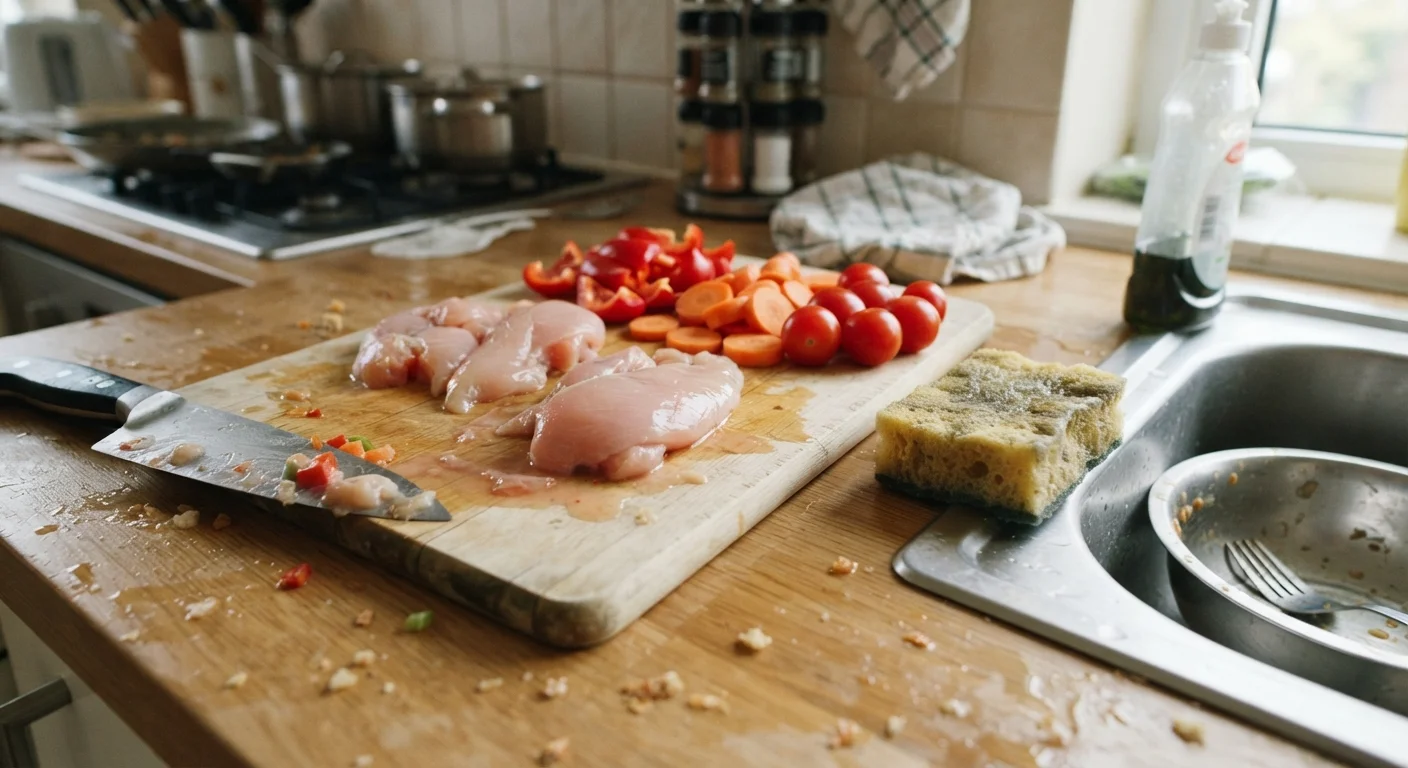
- Cutting boards, kitchen sponges, and unwashed hands are among the most common contamination vectors in home kitchens.
- Using separate boards for raw proteins and produce, and washing hands thoroughly between tasks, dramatically reduces risk.
- Cleaning and sanitizing are different steps; most home cooks do the first but skip the second.
- Simple, consistent habits - not expensive equipment - are the foundation of a safe home kitchen.
What Cross-Contamination Actually Means
Cross-contamination occurs when harmful microorganisms - most commonly bacteria like Salmonella, E. coli, or Campylobacter - are transferred from one surface, food, or object to another. In a home kitchen, this typically happens in three ways: food-to-food contact, surface-to-food contact, and hand-to-food contact.
The danger is that contamination is invisible. Raw chicken sitting next to a salad, a cutting board wiped down with a dirty sponge, or hands that touched raw meat and then grabbed a dish towel - none of these look alarming in the moment, but each can introduce pathogens to food that won't receive further heat treatment.
Understanding where these transfers happen is the first step to preventing them. For a broader look at how everyday patterns can quietly undermine your kitchen habits, see our piece on habits that tend to undermine an otherwise decent diet.
Cleaning vs. Sanitizing: Know the Difference
These two terms are often used interchangeably, but they describe distinct actions. Cleaning removes visible dirt and grease using soap and water. Sanitizing uses heat or a chemical agent to reduce the number of microorganisms on a surface to a safe level. For food-contact surfaces in the kitchen, both steps are necessary - cleaning first, then sanitizing.
The Most Common Contamination Hot Spots
Certain areas and tools concentrate risk more than others. Knowing them helps you direct attention where it matters most.
48 million
Americans affected by foodborne illness annually
According to the CDC, an estimated 48 million people in the US experience foodborne illness each year, with home kitchens a significant site of exposure.
~40%
Of foodborne outbreaks linked to home settings
The CDC and food safety researchers have estimated that a substantial share of foodborne illness cases originate in private homes rather than restaurants or commercial facilities.
- Cutting boards: Using one board for raw proteins and then immediately chopping vegetables on it - without washing and sanitizing in between - is one of the most frequent contamination events in home kitchens.
- Kitchen sponges: Sponges are among the most bacteria-laden objects in the average home. Wiping a surface with a damp sponge can spread bacteria rather than remove it.
- The sink and faucet handles: Rinsing raw poultry splashes water - and bacteria - onto surrounding surfaces. Faucet handles touched with contaminated hands become vectors for every subsequent contact.
- Refrigerator storage: Raw meat stored above ready-to-eat foods can drip onto items below. Proper storage order matters. Our guide on safe food storage at home covers this in detail.
- Reusable grocery bags: Bags that carry raw proteins and are then reused for produce without washing are a frequently overlooked transfer point.
Best Practices for Preventing Cross-Contamination
The following habits form the foundation of a lower-risk kitchen. None require special equipment - just intention and consistency.
Use dedicated cutting boards for raw proteins and separate boards for produce and ready-to-eat foods.
Raw meat, poultry, and seafood harbor pathogens that can survive on surfaces for hours. A board used for raw chicken and then for slicing tomatoes transfers bacteria directly to food that won't be cooked further. Color-coded boards make the separation intuitive and easy to maintain.
Wash hands for at least 20 seconds with soap and water after handling raw proteins, before touching produce, and after touching shared surfaces.
Hands are the most frequent vehicle for transferring bacteria from one surface to another. A quick rinse without soap is not sufficient - soap is necessary to disrupt the bacterial cell membrane. Most contamination events in home kitchens involve a hand-contact step.
Replace or regularly sanitize kitchen sponges, and use paper towels for high-risk wipe-downs.
A moist sponge is an ideal bacterial environment. Studies have found that kitchen sponges can harbor extremely high bacterial counts. Wiping counters with a contaminated sponge redistributes bacteria rather than removing it.
Store raw proteins on the lowest refrigerator shelf, below all ready-to-eat foods.
Even tightly wrapped raw meat can drip. Placing it on a lower shelf ensures any liquid falls away from produce, leftovers, or dairy rather than onto them. This is a standard practice in commercial food service and applies equally at home.
Distinguish between cleaning (removing visible debris) and sanitizing (reducing microbial load), and do both on food-contact surfaces.
Cleaning a surface with dish soap removes grease and food particles but does not kill bacteria. Sanitizing with a dilute bleach solution or a food-safe sanitizer is the step that actually reduces microbial risk. Most home cooks stop at cleaning.
Never rinse raw poultry in the sink before cooking.
Rinsing raw chicken is a common home kitchen habit, but food safety authorities including the USDA recommend against it. Tap water does not remove pathogens effectively and the splashing action spreads bacteria up to several feet onto nearby surfaces. Proper cooking temperatures kill any surface bacteria.
Proper Knife Handling Reduces Risk Too
A sharp knife controlled confidently means less chaotic cutting - and less chance of cross-contaminating surfaces mid-prep. If you're building kitchen fundamentals, our guide to knife skills every home cook needs is a natural companion to these food safety habits.
For a complete pre-cooking routine that incorporates these habits, see our kitchen prep checklist before your next meal.
Quick Wins You Can Act On Today
If overhauling your kitchen habits feels overwhelming, start with the actions below. Each one addresses a high-impact risk with minimal effort.
Food safety is a system, not a single action. Once these quick wins feel automatic, revisit the full practices above to close any remaining gaps. You can also explore core food safety rules for the broader framework these habits fit into.