

Key Takeaways
- Perishable food left out longer than two hours enters unsafe territory for bacterial growth.
- The 'danger zone' is 40°F to 140°F - the temperature range where bacteria multiply most rapidly.
- A food thermometer is more reliable than visual cues for confirming safe internal temperatures.
- Refrigerators should be kept at or below 40°F; freezers at 0°F.
- Cross-contamination - not just undercooked food - is a major cause of foodborne illness at home.
The Two-Hour Rule
The two-hour rule is a food safety guideline stating that perishable foods should not sit at room temperature for more than two hours. After that window, bacteria can multiply to levels that may cause illness. The rule applies to cooked food left out, raw ingredients on a counter, and anything sitting in the temperature "danger zone" between 40°F and 140°F.
At 90°F or above - common in summer or near a grill - the safe window shrinks to just one hour, because bacteria double faster at higher ambient temperatures.
Where These Rules Come From
Food safety guidelines in the United States are primarily developed by the USDA and the FDA, drawing on microbiological research into how and when pathogens like Salmonella, E. coli, and Listeria reach dangerous concentrations. The rules aren't arbitrary - they reflect the conditions under which bacteria double in number fast enough to cause illness in a healthy adult.
The two-hour rule is one of the most practical of these guidelines because it gives home cooks a single, memorable number to work with. You don't need to understand bacterial growth curves to apply it; you just need a clock. That simplicity is intentional. For a deeper look at how kitchen assumptions affect everyday cooking, see reading a recipe like a pro.
These Guidelines Target Healthy Adults
Standard food safety thresholds are designed to protect generally healthy people. Pregnant individuals, young children, older adults, and anyone with a compromised immune system face higher risk from foodborne illness and may need to take additional precautions. Consult a healthcare provider or registered dietitian for guidance specific to those situations.
The Danger Zone Explained
The phrase "danger zone" refers to the temperature range between 40°F and 140°F. Within this band, most foodborne bacteria multiply rapidly - some strains can double every 20 minutes under ideal conditions. Below 40°F, bacterial activity slows to a crawl. Above 140°F, most harmful organisms are killed.
This is why the two-hour rule exists: it's the estimated time it takes for food sitting at typical room temperature (around 70°F) to accumulate enough bacteria to potentially cause illness. At higher ambient temperatures, that window closes faster. On a hot summer day or near a grill, the safe limit drops to one hour.
48M
Estimated foodborne illness cases in the US annually
According to the Centers for Disease Control and Prevention (CDC), roughly 48 million Americans experience foodborne illness each year.
40°F-140°F
The bacterial 'danger zone' temperature range
The USDA identifies this range as the window where most foodborne bacteria multiply most rapidly.
1 hour
Safe window at 90°F or above
At high ambient temperatures - common outdoors in summer - the USDA shortens the safe holding window from two hours to one.
Understanding the danger zone also clarifies why thawing meat on the counter is a bad idea - the outside warms into unsafe territory long before the center thaws. Safe alternatives include thawing in the refrigerator, under cold running water, or in the microwave immediately before cooking.
Safe Internal Temperatures and Why Visual Cues Fail
One of the most common mistakes home cooks make is judging doneness by appearance. Chicken can look fully cooked - even slightly dry - while its thickest part is still below a safe temperature. Conversely, some ground beef browns well before reaching 160°F internally.
A food thermometer removes the guesswork. The USDA publishes specific internal temperature targets for different proteins: 165°F for poultry, 160°F for ground meats, and 145°F (with a three-minute rest) for whole cuts of pork, beef, veal, and lamb. Checking temperature at the thickest part, away from bone, gives the most accurate reading.
Keep a Thermometer Accessible
An instant-read food thermometer is one of the most useful tools in the kitchen. Keep it in a drawer near the stove so it's easy to reach mid-cook. Checking internal temperature takes five seconds and removes any guesswork about whether something is done and safe.
These same principles apply to leftovers. Reheating food to 165°F throughout - not just until it's warm - brings it back through the danger zone quickly and reduces risk.
Cooling, Storing, and Cross-Contamination
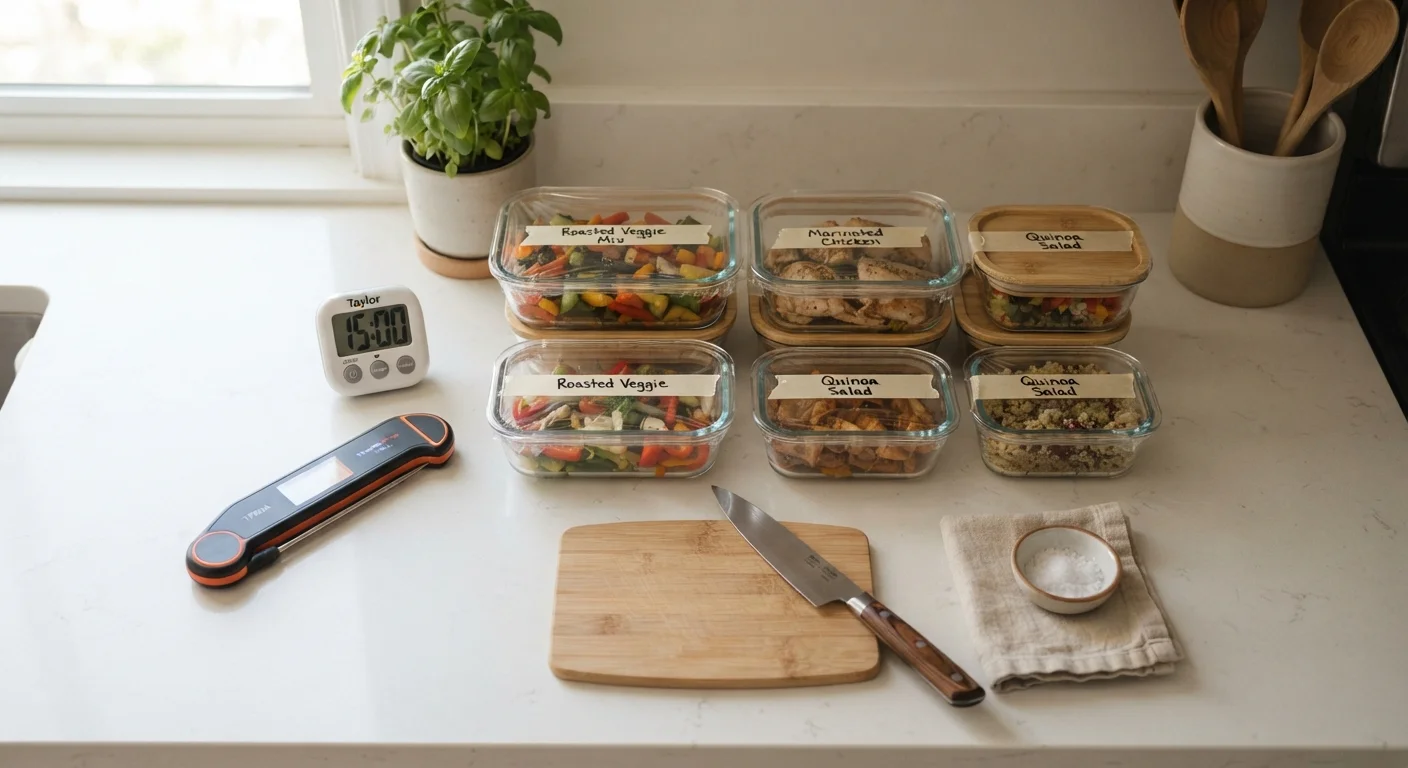
The two-hour clock starts when food finishes cooking, not when you sit down to eat. Leftovers that linger on the table during a long meal may already be approaching the limit before they reach the refrigerator. Dividing large batches into shallow containers helps food cool faster once it's stored.
Your refrigerator should hold at 40°F or below; your freezer at 0°F. If you're unsure whether your appliances are calibrated correctly, a simple refrigerator thermometer - available at most grocery stores - can tell you. For a full reference on storage times and container choices, see safe food storage at home.
Cross-contamination - the transfer of pathogens from raw food to ready-to-eat food via hands, surfaces, or utensils - is another leading cause of foodborne illness that doesn't involve temperature at all. Keeping raw meat, poultry, and seafood separate from produce and cooked food during prep is a habit worth building. Cross-contamination in the home kitchen covers the common vectors and the simple routines that reduce risk significantly.
This article is for general informational purposes only and is not a substitute for guidance from a qualified food safety professional or public health authority.