

| Safe fridge temperature | 40°F (4°C) or below (USDA FoodSafety.gov) |
| Safe freezer temperature | 0°F (−18°C) (USDA FoodSafety.gov) |
| Danger zone range | 40°F - 140°F (USDA Food Safety and Inspection Service) |
| Max time in danger zone | 2 hours (1 hour above 90°F) (USDA FoodSafety.gov) |
| Raw poultry fridge life | 1-2 days (USDA FoodSafety.gov) |
| Cooked leftovers fridge life | 3-4 days (USDA FoodSafety.gov) |
The Temperature Foundations of Safe Storage
Two numbers anchor everything in food safety: 40°F and 140°F. The range between them is what food scientists call the danger zone - the temperatures at which bacteria multiply rapidly. Keeping cold food below 40°F slows that growth to a crawl; keeping hot food above 140°F prevents it from starting.
Your refrigerator should be set at or below 40°F (4°C) and your freezer at 0°F (−18°C). Use an inexpensive appliance thermometer to verify this - the built-in dial settings on most refrigerators are not precise enough to trust on their own. Check it once a season and after any power outage.
For a fuller look at how and why these rules apply at home, see The Two-Hour Rule and Other Food Safety Basics Worth Knowing.
| Safe fridge temperature | 40°F (4°C) or below (USDA FoodSafety.gov) |
| Safe freezer temperature | 0°F (−18°C) (USDA FoodSafety.gov) |
| Danger zone range | 40°F - 140°F (USDA Food Safety and Inspection Service) |
| Max time in danger zone | 2 hours (1 hour above 90°F) (USDA FoodSafety.gov) |
| Raw poultry fridge life | 1-2 days (USDA FoodSafety.gov) |
| Cooked leftovers fridge life | 3-4 days (USDA FoodSafety.gov) |
How Long Does It Actually Last? A Practical Timeline
Timelines vary by food type, handling, and how cold your fridge runs. The guidelines below reflect USDA FoodSafety.gov recommendations for properly refrigerated food stored at 40°F or below.
| Food | Refrigerator (40°F) | Freezer (0°F) |
|---|---|---|
| Raw chicken or turkey | 1-2 days | 9-12 months |
| Raw ground beef or pork | 1-2 days | 3-4 months |
| Raw beef steaks/roasts | 3-5 days | 6-12 months |
| Cooked meat or poultry | 3-4 days | 2-6 months |
| Cooked fish | 3-4 days | 4-6 months |
| Hard-boiled eggs | 1 week | Not recommended |
| Opened deli meat | 3-5 days | 1-2 months |
| Soups and stews | 3-4 days | 2-3 months |
| Soft cheeses (opened) | 1-2 weeks | 6 months |
| Hard cheeses (opened) | 3-4 weeks | 6 months |
When you're ready to use frozen items, do it safely. Our guide on thawing meat safely covers the methods that work - and the ones that don't.
48M
Foodborne illness cases per year in the US
According to the CDC, approximately 48 million Americans experience foodborne illness annually, with improper home storage being a contributing factor.
40°F
Critical safe fridge threshold
The USDA identifies 40°F as the upper limit for safe refrigerator storage - above this, bacterial growth accelerates significantly.
Choosing the Right Containers
The container you use matters nearly as much as the temperature you store at. Here's what to know:
- Airtight glass or BPA-free plastic containers are the workhorses of the fridge. They limit moisture loss and prevent cross-contamination between foods. Glass also resists odor absorption and can go directly from freezer to oven (check manufacturer guidance).
- Resealable freezer bags are excellent for flat-freezing proteins, soups, and blanched vegetables. Press out excess air before sealing to minimize freezer burn.
- Plastic wrap and aluminum foil are stopgap solutions for short-term storage only - they don't seal tightly enough for multi-day storage of strongly aromatic or moisture-sensitive foods.
- Original packaging is often inadequate once opened. Rewrap meat tightly with plastic wrap, then a layer of foil, or transfer to a sealed container.
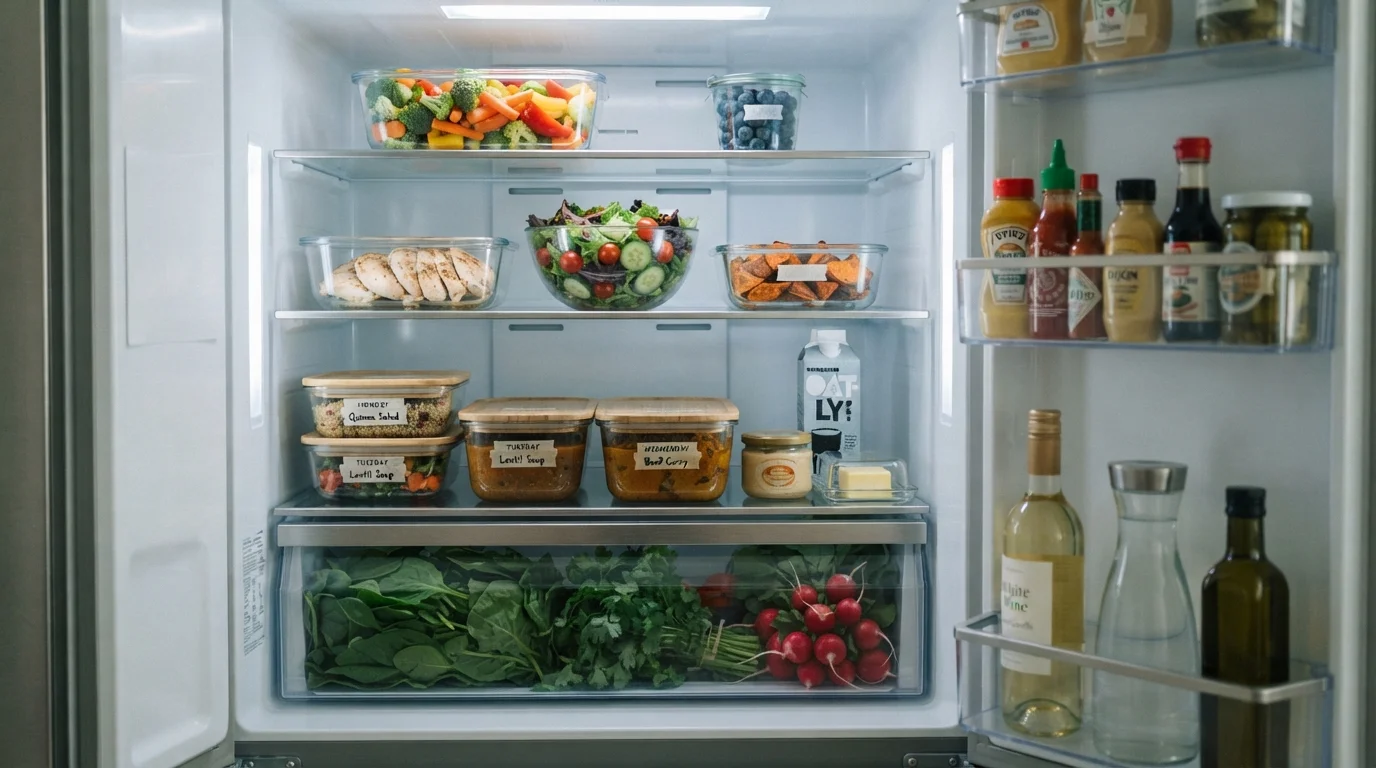
Label every stored container with the food's name and the date it was stored. A piece of masking tape and a marker is all you need. This single habit eliminates guesswork and reduces waste. If you're also building a well-stocked kitchen from scratch, stocking a smart pantry is a natural companion read.
Danger Zone
The temperature range between 40°F and 140°F where bacteria multiply most rapidly in food. Minimizing the time food spends in this range is the central goal of food storage safety.
Freezer Burn
Dehydration and oxidation that occur on food surfaces when improperly wrapped in the freezer. It doesn't make food unsafe, but it degrades texture and flavor significantly.
FIFO (First In, First Out)
A food storage practice of placing newer items behind older ones so the oldest stock is used first. It reduces waste and helps prevent forgotten food from spoiling.
Airtight Seal
A container closure that prevents air and moisture from entering or escaping. Airtight storage slows oxidation and moisture loss, extending freshness in both the fridge and freezer.
Where You Store Food Matters Too
Refrigerator placement isn't arbitrary. The bottom shelf is coldest and should hold raw meat, poultry, and seafood - always on a plate or in a container to prevent drips. The top shelves are best for ready-to-eat foods like leftovers, deli items, and dairy. The door is the warmest zone, suitable only for condiments and juices with preservatives, not eggs or milk.
In the freezer, keep items organized so older food stays accessible at the front - first in, first out. Avoid overpacking either appliance; air needs to circulate to maintain consistent temperature throughout.
For pantry and dry goods, cool, dark, and dry are the guiding principles. Store away from the stove and any direct heat source, which shortens shelf life significantly. To reduce the risk of cross-contamination between raw and ready-to-eat items throughout your kitchen, see Cross-Contamination in the Home Kitchen.
This article provides general food safety information based on established guidelines. For specific concerns about food safety or foodborne illness, consult a qualified food safety authority or healthcare professional.