

Key Takeaways
- Processing exists on a spectrum; canned beans and cheese puffs are not equivalent.
- The NOVA classification system groups foods by the degree and purpose of processing.
- Ultra-processed foods are consistently linked to poorer health outcomes in large observational studies.
- Minimally processed foods like frozen vegetables often retain most of their nutritional value.
- No single food determines diet quality - overall dietary patterns matter most.
- Consult a registered dietitian for personalized guidance on food choices.
Option A
Whole Foods
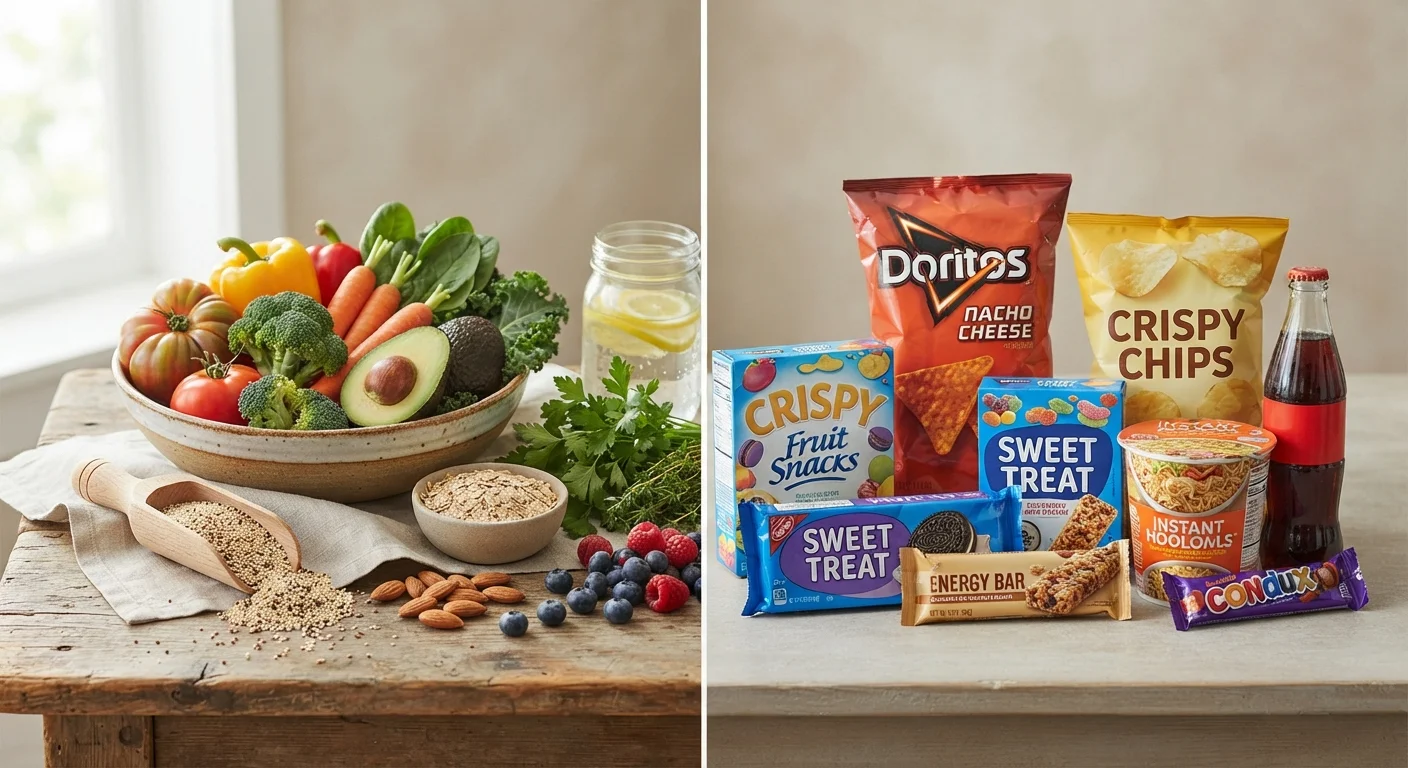
Minimally altered, nutrient-dense foods as found in nature.
Best for: People seeking maximum fiber, vitamins, minerals, and phytonutrients with the fewest additives.
Option B
Processed Foods
A broad category spanning light preservation to industrial reformulation.
Best for: Understanding requires nuance - not all processing is equal, and some forms are nutritionally benign.
If you want to maximize nutrient density in your daily diet
Whole Foods
Whole and minimally processed foods provide fiber, micronutrients, and phytonutrients with little alteration, aligning with the strongest evidence for long-term health.
If cost, access, or convenience is a real barrier
Processed Foods
Lightly processed options like canned legumes, frozen vegetables, and plain yogurt offer solid nutrition at lower cost and longer shelf life.
If you are trying to reduce ultra-processed food intake
Whole Foods
Swapping ultra-processed items for whole or minimally processed alternatives is the change most consistently supported by current nutrition research.
Why the Whole vs. Processed Distinction Is More Complex Than It Sounds
When nutrition conversations turn to "whole foods" versus "processed foods," the framing can suggest a clean binary - natural good, processed bad. The reality is considerably more layered. Nearly every food people eat has been processed in some way, whether washed, milled, cooked, fermented, or canned. The meaningful question is how much processing has occurred and what purpose it serves.
Researchers have developed classification frameworks to make these distinctions more rigorous. The most widely cited is the NOVA system, developed by nutritional epidemiologists at the University of São Paulo. NOVA groups foods into four categories based on the extent and intent of processing - not nutrient content alone. Understanding this spectrum is foundational to interpreting nutrition headlines. For a deeper look at why nutrition science produces conflicting findings, see why nutrition research is hard to interpret.
| Criterion | Whole / Minimally Processed Foods | Ultra-Processed Foods |
|---|---|---|
| Ingredient list | Short; recognizable whole ingredients | Long; includes additives and novel compounds |
| Fiber content | Generally high, naturally intact | Often low; fiber removed or not present |
| Micronutrient density | Naturally rich in vitamins and minerals | Often fortified to compensate for losses |
| Added sugar and sodium | Minimal or none | Frequently elevated for palatability |
| Shelf life and convenience | Shorter shelf life; requires preparation | Long shelf life; ready to eat |
| Cost and accessibility | Variable; fresh produce can be costly | Generally low cost; widely available |
| Health outcome associations | Linked to favorable long-term markers | Linked to higher chronic disease risk in studies |
The NOVA Spectrum Explained
Group 1 - Unprocessed or minimally processed foods includes fresh fruits, vegetables, plain meat, eggs, and milk. These are either unaltered or have had inedible parts removed. Frozen vegetables typically fall here: freezing preserves nutrients effectively and adds no additives.
Group 2 - Processed culinary ingredients covers items like flour, oil, butter, salt, and sugar - substances extracted from whole foods and used in cooking. They are rarely eaten alone but form the building blocks of home-prepared meals.
Group 3 - Processed foods are products made by combining Group 1 and Group 2 items with preservation in mind: canned fish, cheese, cured meats, bread with minimal ingredients. These have been significantly altered but generally remain recognizable as food.
Group 4 - Ultra-processed foods (UPF) are industrial formulations containing ingredients rarely found in a home kitchen - emulsifiers, flavor enhancers, hydrogenated oils, artificial colorings, and added sugars in combination. Examples include many packaged snacks, soft drinks, instant noodles, and reconstituted meat products.
~57%
US calories from ultra-processed foods
A 2016 analysis in BMJ Open estimated that ultra-processed foods account for roughly 57% of energy intake in the average American diet.
+10%
Mortality risk increase per UPF increment
A 2019 study in The BMJ found each 10% rise in ultra-processed food consumption was associated with a significant increase in all-cause mortality risk.
4 groups
NOVA food classification categories
The NOVA system, developed at the University of São Paulo, organizes all foods into four groups by degree and purpose of processing.
It is worth noting that NOVA classification is not without critics. Some researchers argue it conflates nutritional quality with industrial origin in ways that are imprecise. For a thorough look at what current evidence does and does not show, see what the research says about ultra-processed foods.
What the Evidence Actually Shows
A substantial and growing body of observational research associates high intake of ultra-processed foods with increased risk of cardiovascular disease, type 2 diabetes, obesity, and all-cause mortality. A 2019 analysis published in The BMJ found that each 10% increase in ultra-processed food consumption was associated with a significant rise in all-cause mortality risk - though causality remains difficult to establish conclusively because dietary patterns are notoriously hard to isolate in human studies.
Whole and minimally processed foods, by contrast, are consistently associated with favorable health markers across large population studies. This likely reflects their higher fiber content, greater micronutrient density, and the absence of additives whose long-term effects remain under study.
One important nuance: the relationship between added sugars and metabolic health is part of this picture. Added and natural sugars behave differently in the body, and many ultra-processed foods derive a significant portion of their calories from added sugars. Similarly, how nutrients are delivered - whole food versus supplement - affects bioavailability and health outcomes. See our comparison of nutrition from food versus supplements for more context.
Not All Processing Is Harmful
Pasteurization eliminates pathogens in milk. Fermentation produces beneficial microbes in yogurt and kimchi. Freezing preserves nutrients in vegetables picked at peak ripeness. Labeling all processed foods as harmful oversimplifies a complex picture. The concern in nutrition research centers primarily on ultra-processed foods - Group 4 in the NOVA system - not on every form of food preparation or preservation.
This article is for general informational purposes only and does not constitute medical or dietary advice. Consult a registered dietitian or qualified healthcare professional for guidance specific to your health needs.