

Key Takeaways
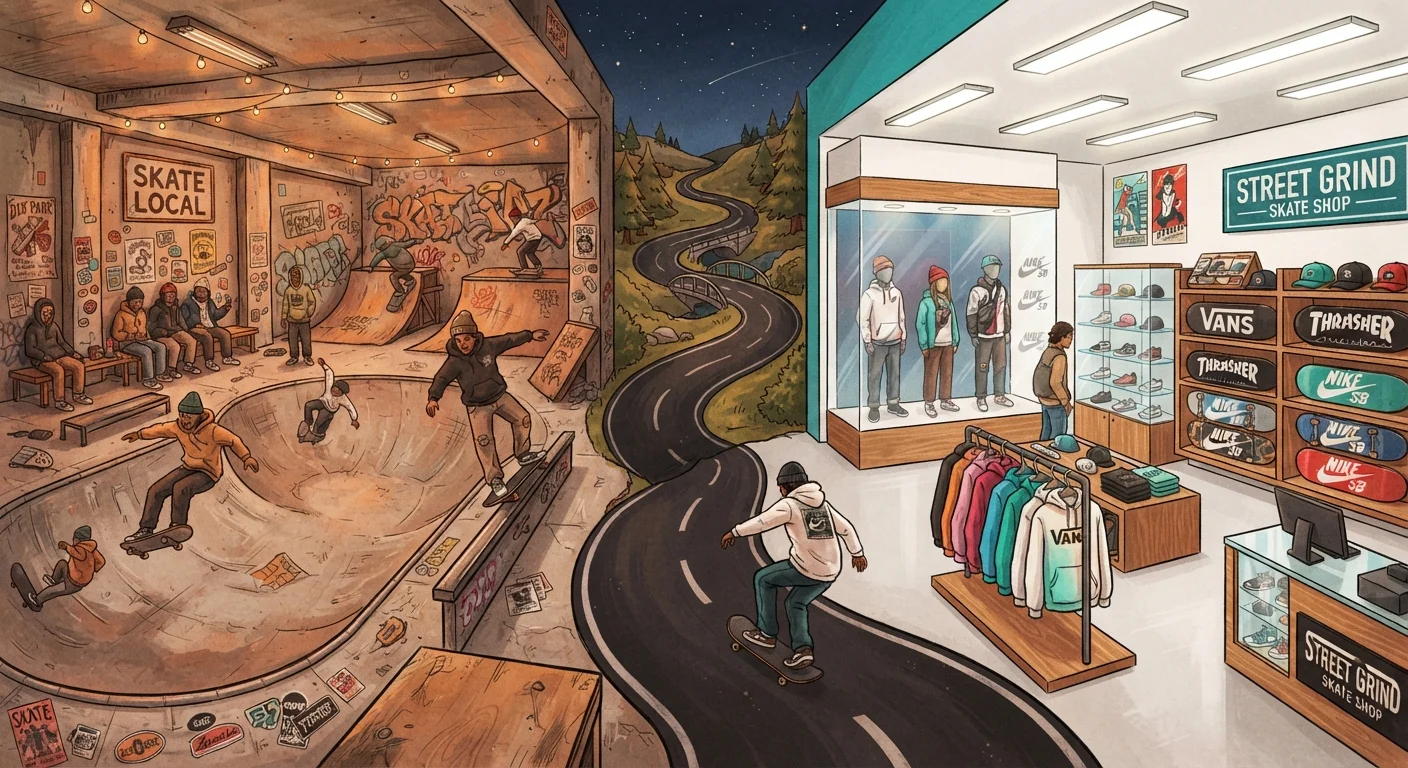
- Subcultures follow a recognizable arc: underground formation, media discovery, commercial adoption, and eventual mainstream absorption.
- Mainstreaming dilutes a subculture's boundary markers - the slang, rituals, and aesthetics that made insiders feel distinct.
- Commercial adoption is the most common accelerant, translating subcultural style into products anyone can buy.
- Original community members often experience mainstreaming as a loss of authenticity and shared identity.
- Some subcultures deliberately resist mainstream absorption; others splinter into newer, more exclusive niches.
- The internet has dramatically sped up the cycle, compressing what once took decades into months.
Subculture Mainstreaming
Subculture mainstreaming is the process by which a niche community's practices, aesthetics, or values move from the margins of society into widespread cultural acceptance. It typically happens gradually - through media coverage, celebrity adoption, or commercial interest - until the original group's identity markers become recognizable to nearly everyone. What starts as a tight-knit community often ends up as a trend.
Sociologists sometimes call this process 'co-optation' or 'diffusion of culture,' and trace it through Dick Hebdige's foundational work on subculture and style, which examined how dominant culture absorbs and neutralizes subcultural resistance.
The Life Cycle Every Subculture Seems to Follow
Skateboarding was a countercultural pursuit in parking lots and drainage ditches long before it became an Olympic sport. K-pop fandom thrived in online message boards years before stadium tours landed in the US. Cottagecore grew quietly on Tumblr before it became a Pinterest mood board and a retail aesthetic. Each of these followed a strikingly similar arc.
Sociologists describe this pattern in terms of three broad phases: formation, discovery, and absorption. In the formation phase, a small community builds shared identity through specific practices, aesthetics, and language - the boundary markers that signal who belongs. In the discovery phase, outside attention - often from journalists, celebrities, or algorithms - amplifies the subculture beyond its original community. In the absorption phase, commercial interests package the most accessible elements for mass consumption.
The speed of that journey has changed enormously. What once took decades now takes months. The internet removed the geographic friction that used to slow cultural spread, and platform algorithms are remarkably efficient at surfacing niche content to curious outsiders. To understand how communities create and defend those boundary markers in the first place, see how communities signal who belongs.
~10 yrs
Average time for a subculture to reach mainstream visibility
Cultural sociologists have observed that pre-internet subcultures typically took a decade or more to reach broad public awareness; that timeline has compressed significantly in the social media era.
71%
Of Gen Z identify with at least one niche online community
According to research by the Pew Research Center and related studies on youth digital life, the majority of younger Americans anchor part of their identity in subculture or fandom communities.
What Gets Lost in Translation
The most frequently mourned casualty of mainstreaming is authenticity - but that word covers several distinct losses worth naming separately.
First, there's the loss of exclusivity. Subcultural identity is partly built on the feeling of being part of something not everyone knows about. When that knowledge becomes universal, the social reward of membership diminishes. Second, there's the flattening of complexity. Commercial adoption tends to extract the most visually striking or emotionally accessible elements of a subculture and discard the rest. The result is a simplified version that doesn't carry the same meaning to insiders.
Third - and perhaps most painfully - there's the displacement of original community members. When mainstream adoption brings economic value, it often benefits outsiders more than the people who built the culture. This dynamic is closely related to debates about cultural borrowing. For a deeper look at that tension, the distinction between cultural appropriation and exchange is worth exploring.
“The process by which subcultures are incorporated into the dominant culture tends to involve the stripping away of their most transgressive or resistant elements, leaving behind a style without the substance.”
— Dick Hebdige, Cultural theorist and author of 'Subculture: The Meaning of Style'
How Subcultures Respond - and Sometimes Survive
Subcultural communities don't simply dissolve when the mainstream comes knocking. They adapt, often in predictable ways. Some members double down on esoteric knowledge or practices too involved for casual participants - a kind of authenticity arms race. Others splinter off into newer, less-visible communities and start the cycle again. A few embrace commercialization strategically, using mainstream visibility to fund the parts of the culture they actually care about.
What keeps a subculture genuinely coherent through all of this is the same thing that holds any community together: shared rituals, trust, and a sense of collective purpose. Understanding what makes communities actually stick together helps explain why some subcultures weather mainstreaming better than others.
Online fandoms offer a particularly vivid case study. K-pop fandoms, for instance, have maintained intense internal structure - hierarchies, rituals, shared vocabulary - even as the music itself achieved global mainstream status. The community survived commercialization partly because its social architecture was too complex to fully commodify. The sociology of fandoms explores exactly how that structure works.
If You're Part of a Subculture Facing Mainstream Attention
Consider documenting the culture's history, language, and practices before outside narratives take over. Communities that maintain their own archives and storytelling tend to retain more agency over how their culture is understood and represented - even after mainstream adoption arrives.
None of this is entirely new. Subcultures have been absorbed by dominant culture, mourned, and reconstituted for as long as there have been subcultures. What's different now is the pace - and the visibility of every stage of the process, playing out in real time on public platforms.