

Key Takeaways
- Fandoms function as genuine social communities with identifiable hierarchies, rituals, and group norms.
- Fan identity often shapes self-concept in meaningful, psychologically real ways.
- Belonging to a fandom meets fundamental human needs for connection and shared meaning.
- Fandom communities can mobilize real-world action, from charity to political organizing.
- The same dynamics that create belonging can also produce exclusion and toxic behavior.
What Is a Fandom, Sociologically Speaking?
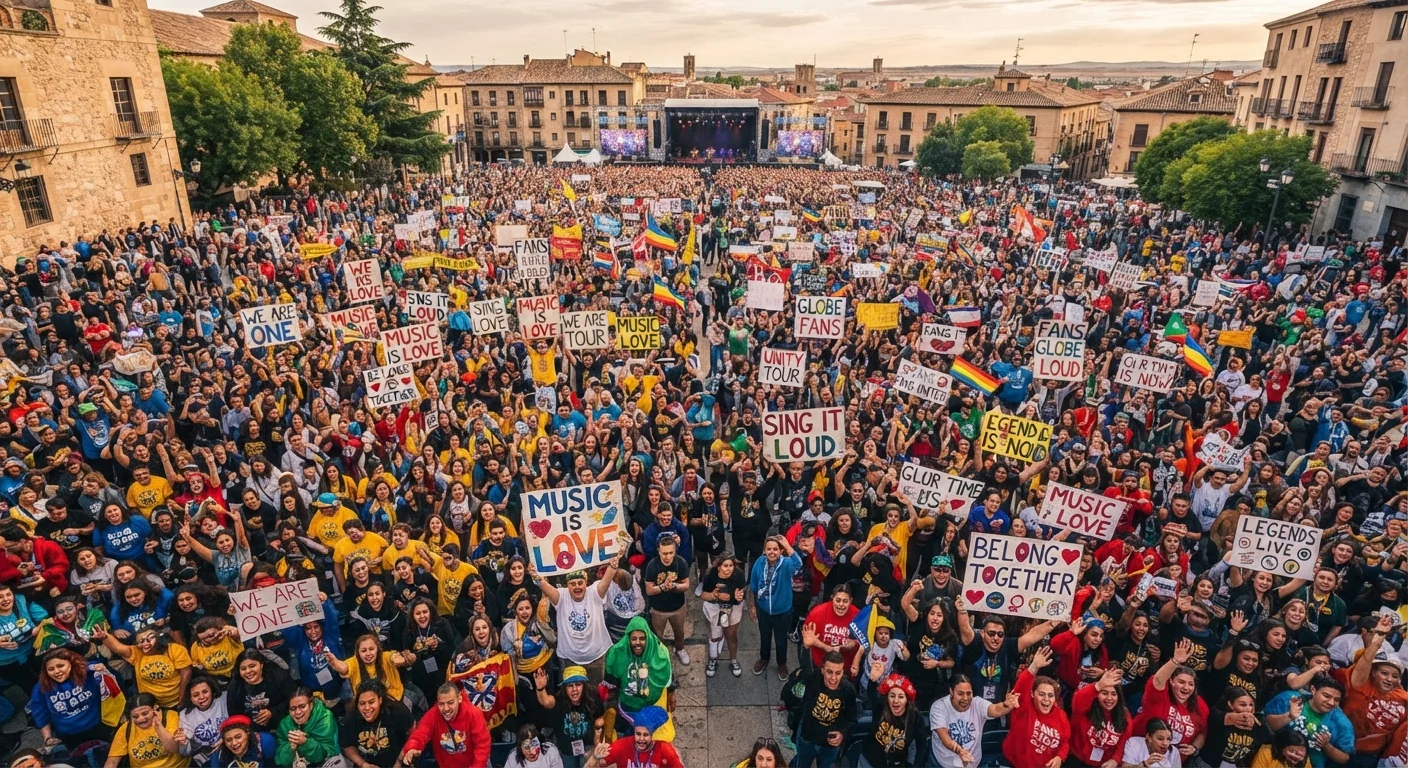
The word "fandom" gets tossed around casually - sports fans, K-pop stans, Trekkies, true-crime devotees - but sociologists treat it with more precision. A fandom isn't simply a collection of people who like the same thing. It's a community organized around collective enthusiasm, one that generates its own culture, language, norms, and social structure.
Scholars draw on the concept of interpretive communities to describe groups that develop shared frameworks for making meaning out of cultural objects - whether that's a band, a sports team, a TV franchise, or a fictional universe. What makes a fandom distinct from a passive audience is active participation: fan fiction, fan art, message boards, Discord servers, convention attendance, and the constant social labor of discussing, debating, and celebrating. As the distinction between communities and audiences makes clear, follower counts don't create communities - shared investment does.
85%
Fans who report fandom improves social connection
A 2021 survey by Fandom.com found the vast majority of self-identified fans said fandom had a positive impact on their sense of community and belonging.
3-in-4
US adults who identify as fans of something
Research by Nielsen and various entertainment analytics firms consistently finds the majority of American adults actively self-identify with at least one fandom.
$1B+
Annual fan-driven charitable donations
Fandom-organized charity campaigns - from One Direction fans to BTS's ARMY - have collectively directed hundreds of millions of dollars to causes annually, per media aggregated reporting.
Identity and the Fan Self
For many fans, fandom isn't just a hobby - it's a component of personal identity. Social identity theory, developed by psychologist Henri Tajfel, suggests that people derive a meaningful portion of their self-concept from the groups they belong to. Being a "Swiftie" or a die-hard Cubs fan isn't incidental; it can be as identity-anchoring as profession or hometown.
This attachment has real psychological weight. Research has found that strong fan identification can buffer against loneliness, boost self-esteem, and provide a sense of continuity during personal transitions. When a beloved team wins, fans often experience what researchers call BIRGing - Basking In Reflected Glory - a genuine uptick in mood and self-worth tied to group success.
If you're studying or trying to understand a fandom from the outside, observe before you engage. Every fandom has a learning curve of shared references and social norms that aren't obvious to newcomers.
Fandom communities place significant value on demonstrated cultural knowledge; entering without it can trigger gatekeeping responses that obscure how the community actually functions at its best.
When evaluating whether a fandom community is healthy for you, pay attention to whether enthusiasm for the shared object brings people together - or whether punishing deviation from group opinion is the primary glue.
Sociological research on community cohesion finds that groups sustained by positive shared identity are more resilient and less prone to toxic dynamics than those whose unity depends primarily on policing dissent.
That said, it's worth noting that fan identity exists on a spectrum. Some people hold their fandom lightly; others weave it deeply into who they are. Neither approach is inherently healthier - context and the individual's broader social life matter enormously.
Hierarchies, Rituals, and Unwritten Rules
Step into almost any established fandom and you'll notice it isn't flat. There are recognizable hierarchies: longtime fans who remember the early days, prolific fan-fiction writers with large followings, convention veterans who organize meetups. Status within a fandom is often earned through cultural capital - deep knowledge, creative output, or sustained dedication - rather than money or formal authority.
Rituals are equally important. Wearing a team jersey on game day, learning fandom-specific slang, participating in annual rewatch events, or following elaborate protocols at fan conventions - these are all rituals that reinforce group membership. Communities signal belonging and boundaries through exactly these kinds of shared codes and inside references.
“Being a fan is not passive consumption - it is active, creative, and deeply social. Fans don't just watch; they participate in the construction of cultural meaning.”
— Henry Jenkins, Media scholar and author of 'Textual Poachers: Television Fans and Participatory Culture'
There are also unwritten rules - sometimes called fandom etiquette - governing acceptable behavior: how to tag spoilers, which ships (romantic pairings) are off-limits to mock, how to treat new fans entering the community. Violating these norms can trigger swift social correction, or outright expulsion.
The Double-Edged Sword of Fandom Belonging
Fandom communities can be genuinely nourishing. For people who feel marginalized elsewhere - by geography, by identity, by niche taste - finding a group that shares your passion can be profoundly affirming. Online fandoms in particular have made it possible to connect across distance in ways that shift how we experience belonging entirely.
When Fan Passion Becomes Fan Harm
Harassment campaigns organized within fandoms - targeting creators, critics, or rival fan groups - have caused documented real-world harm, including job loss, mental health crises, and in some cases, threats of physical violence. This is not a quirk of any one community; it's a pattern that emerges predictably when strong in-group identity, anonymity, and low platform accountability intersect. If you're part of a fandom where this behavior is normalized, it's worth taking seriously - participation, even passive, can contribute to a culture of harm.
But the same mechanisms that create belonging can produce its shadow: gatekeeping, harassment, and what researchers call "toxic fandom" behavior. When group identity becomes too rigid, outsiders - and even insiders who express dissenting views - can face coordinated pile-ons, doxxing, or sustained campaigns of abuse. This isn't unique to any one fandom; it's a structural risk present wherever strong in-group identity meets anonymity and low social accountability.
The emotional intensity that makes fandom rewarding also makes betrayal feel catastrophic. When a creator pivots artistically, or a beloved figure turns out to have feet of clay, the sense of loss can be disproportionate - which is partly explained by the psychology of parasocial relationships.
When Fandoms Become a Force in the World
Fandoms don't just live online - they act in the world. K-pop fans have organized charity fundraising campaigns, coordinated to flood political hashtags, and reportedly purchased tickets to events with no intention of attending to manipulate crowd sizes. Sports fan groups have built hospitals, funded scholarships, and driven voter registration drives. These aren't fringe acts; they reflect the genuine organizational capacity that emerges when large groups share strong motivation and cultural infrastructure.
This mobilization potential makes fandoms sociologically fascinating. They demonstrate that the ingredients that hold communities together - shared identity, trust, rituals, and a sense of collective purpose - can generate real civic and social power, for better or worse.
It's also worth watching what happens when a fandom's object of affection goes mainstream. Subcultures that break through to mass audiences often see long-tenured fans grapple with identity loss - a tension between pride that their passion is recognized and grief that what made it special has diluted.
What Fandoms Tell Us About Human Connection
At bottom, fandoms are a window into something fundamental: human beings are meaning-making, community-seeking creatures. We don't just consume culture passively - we build worlds around it, argue about it, create from it, and find each other through it.
The sociology of fandoms reminds us that "serious" and "trivial" are often bad labels for what's actually happening. Whether someone's devoted to a Premier League club or a decades-old anime franchise, the underlying dynamics - identity, belonging, ritual, hierarchy, conflict, solidarity - are the same ones that animate every community humans have ever built.
Understanding that is less about explaining why fans are the way they are, and more about recognizing ourselves in them.