
Key Takeaways
- Third places are informal social spaces separate from home and work where community naturally forms.
- Sociologist Ray Oldenburg identified them as essential to civic health and social connection.
- Libraries, parks, barbershops, and diners are classic American examples of third places.
- Their decline is linked to rising loneliness and weakened neighborhood ties across the US.
- Digital spaces can partly substitute but don't fully replicate the benefits of physical gathering.
Third Place
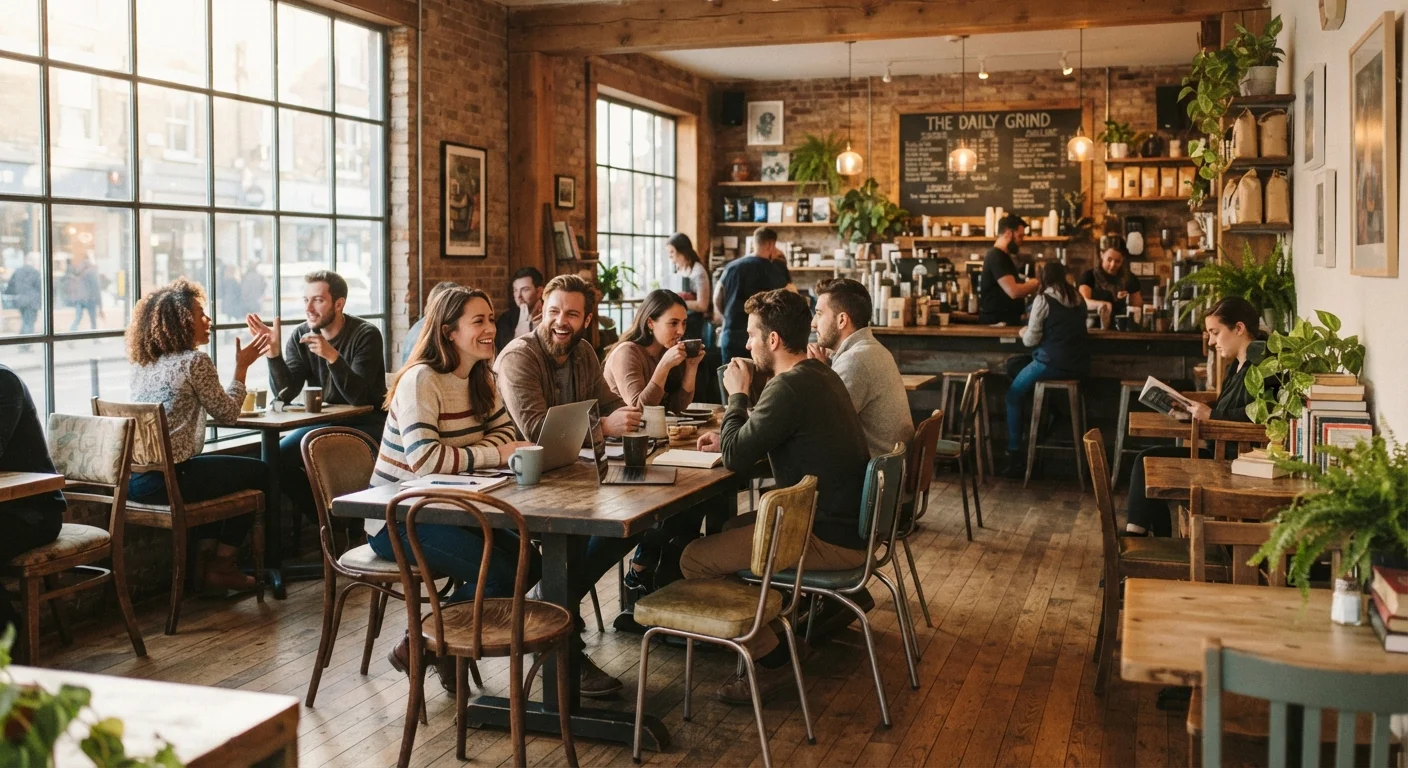
A third place is any location that is neither home (your first place) nor work or school (your second place) - it's the informal gathering spot where people come together simply to be around one another. Think coffee shops, barbershops, libraries, parks, and community centers. These spaces are characterized by their openness, low cost of entry, and the ease with which regulars and strangers can mix.
The term was coined by sociologist Ray Oldenburg in his 1989 book 'The Great Good Place,' where he argued that third places are essential infrastructure for a healthy democratic society.
The Idea Behind the Term
When sociologist Ray Oldenburg introduced the concept of the "third place" in 1989, he was naming something most people already felt but couldn't quite articulate: the particular comfort of a spot where you belong without obligation. Not the intimacy of home, not the performance of work - just a low-stakes place to land among other humans.
Oldenburg argued these spaces share a recognizable personality. They tend to be accessible on foot or by transit, cheap or free to inhabit, governed by a playful mood, and populated by a mix of regulars who give the place its social character. The conversation flows easily because no one has an agenda. That's surprisingly rare - and surprisingly powerful.
For a deeper look at the forces that hold communities together beyond any single location, see our piece on what makes a community actually stick together.
What Gets Built in These Spaces
Third places do social work that most people don't notice until it's gone. They create what researchers sometimes call "weak ties" - the friendly acquaintanceships with neighbors, regulars, and strangers that turn out to matter enormously for well-being and civic life. You might not invite your barbershop regular to your wedding, but you'd notice if he disappeared, and his presence week after week quietly anchors your sense of belonging to a place.
49%
Americans who report feeling lonely
According to a 2023 report from the U.S. Surgeon General on the epidemic of loneliness and isolation in the United States.
54%
People with no close friends outside family
Survey data from the Survey Center on American Life found a significant rise in social isolation over recent decades.
1 in 3
Americans who rarely or never visit communal public spaces
Research from the Pew Research Center has documented declining engagement with shared public spaces among US adults.
These spaces also function as informal information networks. Local news travels through diners. Job leads circulate in barbershops. Community concerns surface over coffee before they ever reach a city council meeting. In that way, third places aren't just socially pleasant - they're part of how neighborhoods actually govern themselves.
This dynamic plays out differently across communities. Our article on how communities signal belonging explores the subtle cues - shared references, rituals, and norms - that make some spaces feel welcoming and others feel closed.
Why They're Disappearing
The list of pressures squeezing out third places is long. Commercial rents have pushed independent coffee shops and diners out of neighborhoods where they once thrived. Suburban development patterns that prioritize driving over walking make casual drop-in culture structurally difficult. The rise of remote work has further untethered daily life from any fixed geography.
Public options - libraries and parks - have fared somewhat better precisely because they aren't subject to market pressures. But budget cuts, reduced hours, and the privatization of public space have eroded even these. A library that closes at 5 p.m. weekdays serves a much narrower slice of the community than one open through the evening.
How to Reclaim a Third Place Near You
You don't need to wait for urban planners to act. Becoming a genuine regular at a local café, library, or park - showing up consistently and being open to small conversations - is often enough to experience the social benefits firsthand. Over time, familiar faces accumulate and a casual community takes shape around you.
Digital Spaces: Supplement, Not Substitute
Online communities have absorbed some of the social energy that once flowed through physical third places. Neighborhood Facebook groups, subreddits organized around local interests, and Discord servers built around shared hobbies all carry elements of Oldenburg's definition - they're open, informal, and populated by regulars. But researchers who study social connection are cautious about declaring them equivalent.
The spontaneity of physical space is hard to replicate. Bumping into someone you half-know, having a conversation you didn't plan, absorbing the ambient presence of other people - these micro-experiences accumulate into something that scheduled video calls and message threads don't fully replace. It's worth reading how online belonging compares to rooted, place-based community for a fuller picture of what each offers.
“The third place is a generic designation for a great variety of public places that host the regular, voluntary, informal, and happily anticipated gatherings of individuals beyond the realms of home and work.”
— Ray Oldenburg, Urban sociologist and author of 'The Great Good Place'
If you're navigating a new city or group and trying to find your footing socially, the principles behind third places are directly useful. Our guide on building a sense of belonging in a new place draws on the same social science to offer practical starting points.